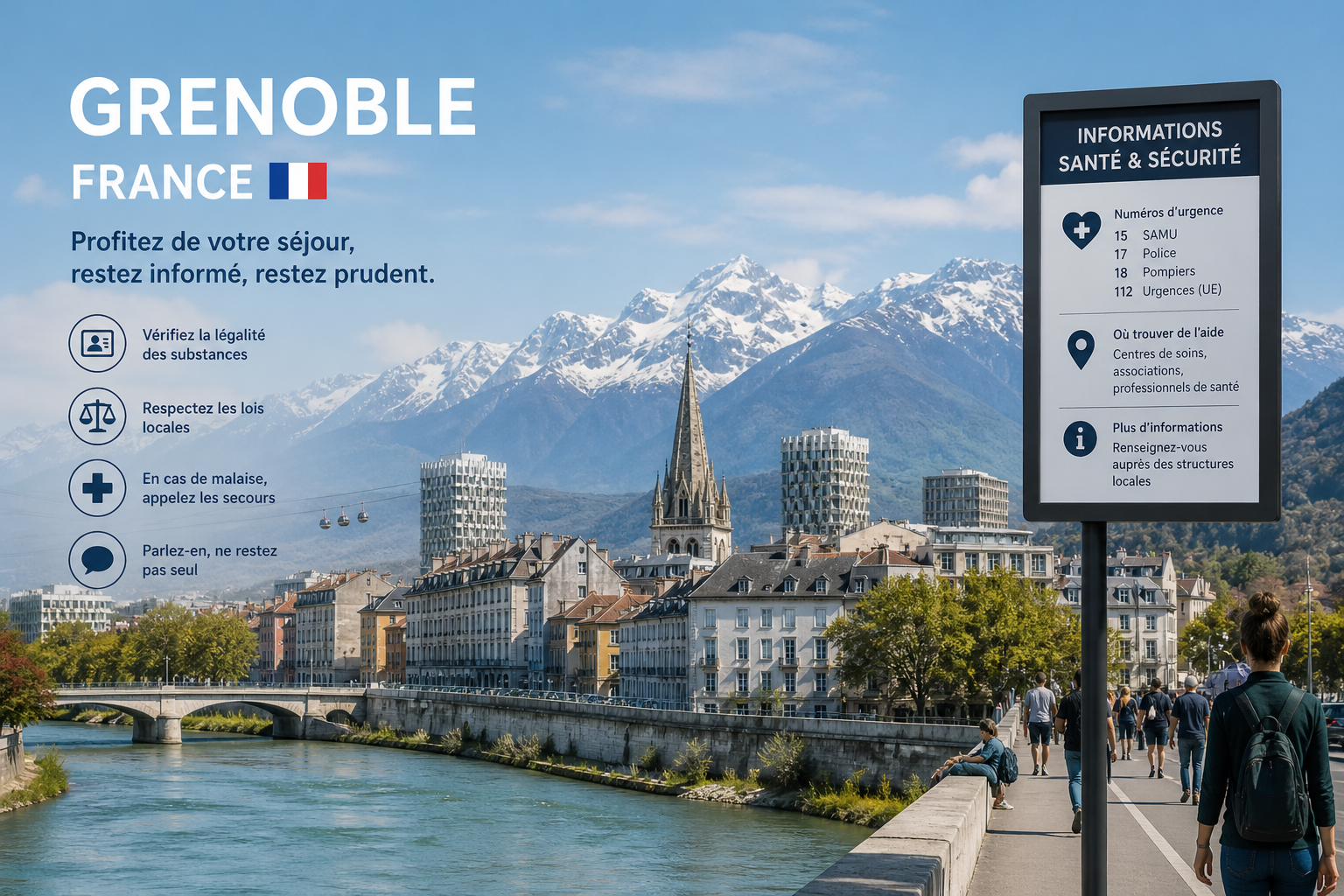
Understanding marijuana use in Grenoble requires separating local habits from French law. Grenoble is a university city and a gateway to the Alps, but it does not have a special cannabis regime. The same national rules apply in Grenoble as in Lyon, Paris, Marseille and other French cities. Recreational cannabis remains illegal, while CBD products are subject to specific conditions. This guide explains the legal position, practical risks and health considerations for residents and visitors without encouraging unlawful conduct.
What the law says about cannabis in Grenoble
French law prohibits the unauthorised use, possession, purchase, sale, transport and cultivation of cannabis containing prohibited levels of THC. There is no legal recreational dispensary system in Grenoble. A product being easy to find or commonly discussed does not make it lawful.
The legal position is national rather than municipal. In other words, cannabis laws in Grenoble are not different because the city is in the Auvergne-Rhône-Alpes region. Police and prosecutors apply French legislation, although the response to an individual incident can depend on the circumstances, the quantity involved, prior history and whether there are signs of supply or other offences.
For an accessible overview of official French administrative information, consult the French government Service-Public website. Rules and enforcement policies can change, so checking an official source is preferable to relying on informal advice or social media.
Possession and personal use
Small-scale possession or use can lead to a fixed penalty notice, commonly known as an amende forfaitaire délictuelle. The standard amount is generally €200, reduced to €150 when paid within the applicable period and increased to €450 when payment is late. A case may instead proceed through the courts, particularly when circumstances are more serious or the person does not accept the fixed penalty.
The maximum penalties under French law can be considerably higher than the fixed fine. Possession, use and related conduct may be treated differently depending on the facts. Distribution, importing, exporting, growing or supplying cannabis carries much more serious consequences than simple personal possession. Visitors should not assume that a small amount guarantees a harmless outcome or that foreign citizenship provides an exemption.
Public consumption and local settings
Using cannabis in a street, park, transport area, festival, bar, hotel common area or other public place can create additional practical problems. It may attract police attention, disturb other people and expose the user to a fine or further investigation. Grenoble’s public spaces, including busy central areas and places used by families and students, are not private consumption zones.
Private accommodation does not make possession or use legal. It can, however, raise separate questions about house rules, smoking restrictions, tenancy agreements, fire safety and complaints from neighbours. Hotels, hostels, holiday rentals and university residences may prohibit smoking or possession on their premises even when no criminal investigation occurs.
Weed in Grenoble: what visitors should know
People searching for weed in Grenoble may encounter offers through strangers, messaging apps, nightlife contacts or informal networks. These sources are not regulated and can involve scams, theft, coercion, contaminated products or products that contain a different substance from what was promised. Buying from an unverified seller also creates legal risk for both the buyer and the seller.
Do not carry cannabis across the French border, including in luggage, a vehicle or a parcel. Border and customs offences can be treated seriously, and the fact that cannabis is permitted or tolerated in another country does not authorise importing it into France. The same caution applies when travelling between France and Switzerland, Italy or Spain near the Alpine region.
Never purchase cannabis for another person, transport someone else’s package or agree to store a product without knowing what it is. Those actions can create a more serious legal situation than personal use alone. Avoid meeting unknown sellers in isolated locations, and do not hand over identification documents, bank details or personal information.
CBD in Grenoble: different rules, similar need for care
CBD is not the same as high-THC cannabis. French and European rules allow certain hemp-derived products when they meet applicable requirements, including limits on THC and conditions concerning the plant material and product category. A CBD product sold openly is not automatically risk-free or suitable for every person.
Labelling can be inaccurate, and some products may contain more THC than expected. Oils, flowers, vapes, foods and other formulations may also differ in strength and absorption. CBD can interact with medicines and may cause unwanted effects. It should not be treated as a guaranteed way to avoid a positive drug test.
Do not confuse a CBD shop with a recreational cannabis dispensary. A retailer may lawfully sell a compliant CBD product, but that does not mean it can sell high-THC cannabis. Anyone considering CBD in Grenoble should check the product label, the seller’s information and the current legal position rather than relying only on packaging claims.
For comparison, our guide to CBD rules and safety in nearby Lyon discusses the same national framework from another French city.
Health risks and responsible decisions
Cannabis affects people differently. Possible short-term effects include impaired attention, slower reactions, anxiety, panic, drowsiness, altered perception and problems with memory or coordination. High-THC products can be especially unpredictable for someone who is inexperienced, tired, stressed or using a product with unknown strength.
Frequent use can become difficult to control and may affect motivation, concentration, mood, sleep or relationships. Some people experience withdrawal symptoms after stopping regular use, such as irritability, restlessness, sleep disruption and reduced appetite. Risk may be higher for adolescents, people with a personal or family history of psychosis, and people living with certain mental-health conditions.
Public-health information from the World Health Organization’s cannabis health information can help readers understand recognised health concerns. Anyone who feels unwell after using cannabis should seek medical assistance rather than trying to manage severe symptoms alone.
When to seek urgent help
Call emergency services if someone has chest pain, trouble breathing, a seizure, loss of consciousness, severe confusion, extreme agitation, persistent vomiting or thoughts of self-harm. In France, call 15 for medical emergency assistance or 112 for the European emergency number. Stay with the person, provide responders with honest information about what may have been taken and do not give additional drugs or alcohol.
Driving, cycling and outdoor activities
Driving after using cannabis is illegal in France, and drug-driving rules are strict. A person may face legal consequences even if they no longer feel intoxicated, because testing and impairment do not operate in the same way as a personal estimate of sobriety. Do not drive, operate machinery or ride an e-scooter after using cannabis.
This matters particularly in Grenoble, where visitors may travel between the city, surrounding valleys and mountain resorts. Hiking, climbing, skiing, cycling and swimming also require alertness and coordination. Cannabis can increase the chance of poor judgement, falls, collisions and getting lost. Arrange a sober driver or use public transport and other lawful travel options.
Medical cannabis in Grenoble
Searching for medical cannabis in Grenoble can be confusing because medical access is not the same as recreational access. France has developed tightly controlled medical-cannabis arrangements and trials, but these do not create a general right to purchase ordinary cannabis from a shop or to grow it at home.
Patients should speak with a qualified French doctor or pharmacist about approved treatments and current eligibility. Do not substitute cannabis bought informally for prescribed medication, and do not stop an existing treatment without medical advice. Visitors carrying prescribed cannabinoid medicines should check French entry requirements before travelling, retain original packaging and carry relevant medical documentation. Rules may depend on the medicine, its ingredients, the quantity and the country of origin.
Local hospitals, pharmacies and healthcare professionals can provide more appropriate advice than informal sellers. A medical need does not remove the importance of checking travel documents, prescription requirements or restrictions on THC-containing medicines.
Practical advice for residents and travellers
- Assume that high-THC recreational cannabis is illegal in Grenoble unless an official source clearly states otherwise.
- Do not buy, sell, share, grow or transport cannabis, particularly across borders.
- Avoid public use and follow the smoking rules of hotels, rentals, residences and venues.
- Do not drive, cycle in traffic, ski, climb or use machinery after consuming cannabis.
- Keep medicines in their original packaging and verify travel requirements before bringing them into France.
- Seek urgent medical help for severe physical or psychological symptoms.
- Use current government or healthcare information when checking rules, since legislation and enforcement procedures can change.
How Grenoble compares with other French cities
The practical issues in Grenoble are broadly similar to those in other French urban areas: national prohibition of recreational cannabis, regulated conditions for certain CBD products, strict drug-driving rules and limited medical access. Local surroundings may change how people travel or where incidents occur, but they do not create a legal cannabis market.
For a wider comparison, see our guides to cannabis rules in Paris and cannabis use and practical risks in Angers. These comparisons should be read as general information, not as a substitute for legal advice about an individual case.
Conclusion
Marijuana use in Grenoble remains governed by French national law: recreational cannabis is illegal, possession and use can result in a fine or prosecution, and supply-related offences are far more serious. CBD products may be lawful only when they comply with applicable requirements, while medical cannabis is limited and controlled. The safest approach for residents and visitors is to avoid illegal purchases and public consumption, never drive after using cannabis, and obtain health or legal guidance from a qualified official source when circumstances are uncertain.