Cannabis culture in Nice is best understood through the contrast between a visible interest in cannabis and France’s restrictive legal framework. Nice is a Mediterranean city shaped by tourism, nightlife, migration, art and outdoor social life, but it does not have a legal recreational cannabis market. For residents and visitors, the most important questions concern the law, public behavior, CBD, health and the difference between cultural visibility and legal acceptance.
This guide explains how cannabis fits into the social landscape of Nice without romanticizing illegal sales or treating rumors as local fact. It also places the city in the wider French context, where possession and consumption remain prohibited even though cannabis is widely discussed in popular culture and public policy.
What cannabis culture in Nice actually means
The phrase “cannabis culture” can suggest a single organized community, but Nice does not have one officially recognized cannabis scene. Instead, the subject appears in several overlapping settings: private conversations, music and nightlife, online communities, CBD retail, political debates and public-health services. These settings should not be confused with a legal cannabis industry.
Nice’s international population and visitor economy can make cannabis more visible than in a smaller town. People may encounter references to cannabis in street art, music, fashion or informal conversations, particularly in areas with busy evening activity. Visibility, however, does not make possession or use lawful. A relaxed social atmosphere around the subject can create a misleading impression for travelers who assume that French rules resemble those in legal markets elsewhere.
A Mediterranean setting, not a separate legal regime
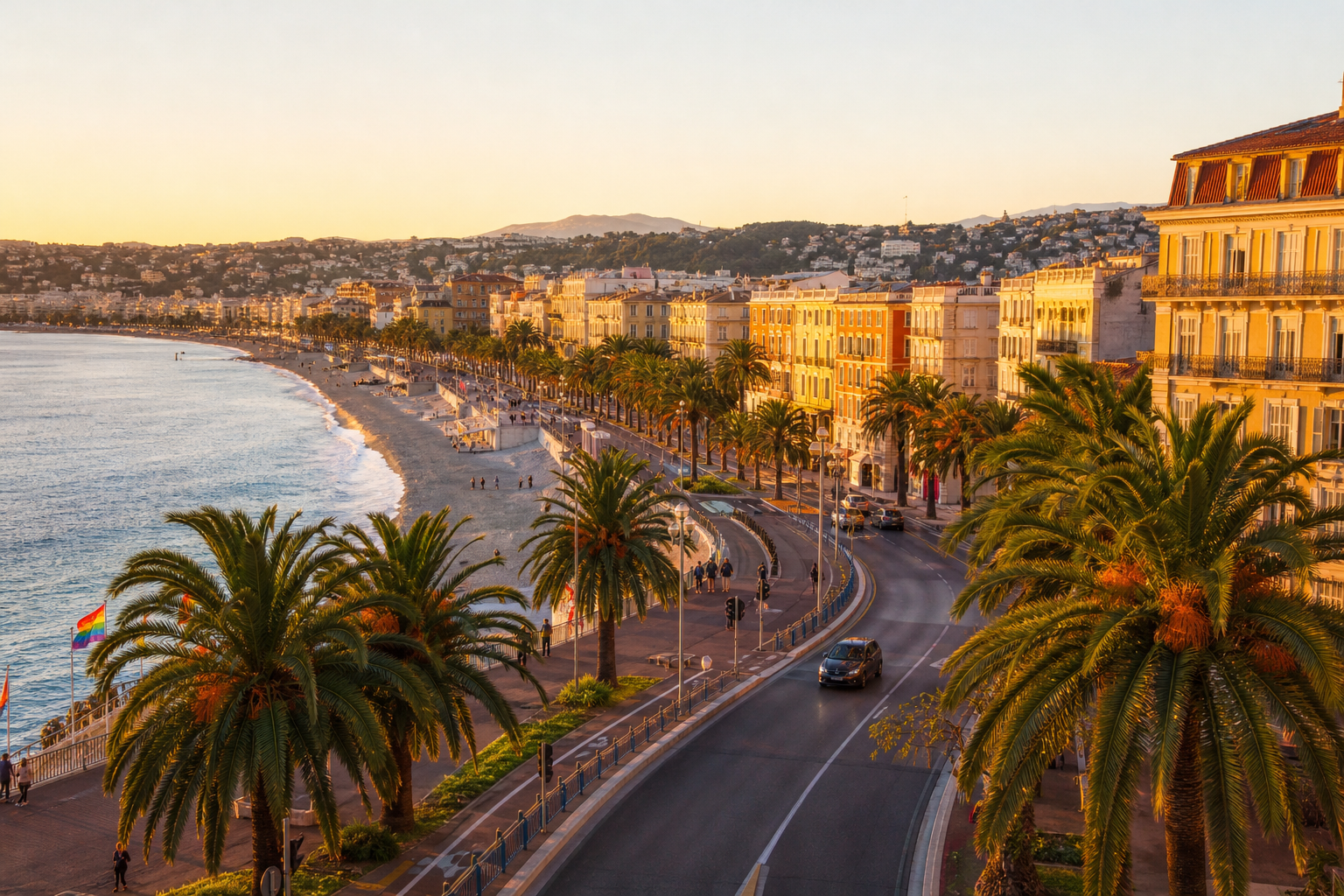
The French Riviera’s warm climate, terraces, beaches and outdoor lifestyle often shape how visitors imagine cannabis use in Nice. In practice, the city follows national French law. Local authorities can also enforce rules concerning public order, noise, litter, driving and behavior in public spaces. A beach, promenade, park or festival area is not a legal exception.
Cannabis laws in Nice and across France
Recreational cannabis remains illegal in France. The prohibition covers the unauthorized possession, purchase, sale, transport and use of cannabis. The legal response can depend on the circumstances, the substance involved, the amount, prior conduct and whether other offenses are alleged.
For certain straightforward personal-use cases, police may issue a fixed penalty notice rather than taking the matter through a full criminal process. That option is not the same as legalization, and it does not guarantee that every case will be handled in the same way. More serious conduct, including suspected supply, organized dealing, driving under the influence or possession connected to other offenses, can lead to much more serious consequences.
For an accessible overview of the official rules and possible penalties, consult the French government’s page on the fixed penalty for drug use. Rules and administrative procedures can change, so official information is more reliable than advice from social media, sellers or other travelers.
Public consumption and possession
Using cannabis in a street, park, beach, stairwell, hotel common area or other public place carries legal and practical risks. Even when no confrontation occurs, public use can draw attention, create complaints and expose other people to smoke. It can also become more complicated if police suspect possession, impaired behavior or involvement in supply.
Visitors should not assume that a private rental automatically provides complete legal protection. A landlord, hotel or accommodation provider may prohibit smoking or drug use, and neighbors can report odors or disturbances. Private space does not turn an illegal substance into a legal one.
Driving and travel risks
Driving after using cannabis is especially risky. French road rules treat drug-impaired driving seriously, and a person may face legal consequences even if they do not feel intoxicated. Cannabis can affect reaction time, attention, judgment and coordination, while combining it with alcohol increases uncertainty and risk.
Do not carry cannabis across the French border, bring it to or from the airport, or place it in checked or hand luggage. A prescription or legal purchase in another country does not automatically authorize importation into France. Travelers with prescribed medicines should check the requirements for those medicines before departure and carry appropriate documentation.
Weed in Nice: separating the market from the culture
Searches for weed in Nice often reflect curiosity about availability, not evidence of a regulated market. There are no licensed recreational cannabis dispensaries in Nice comparable to those found in some parts of North America. Informal sellers operate outside consumer-protection rules, so buyers cannot reliably verify contents, potency, origin or contamination.
Buying from an unregulated source can also expose people to scams, theft, coercion or legal trouble. Online menus, street approaches and recommendations from strangers should not be treated as trustworthy retail systems. This is particularly important for tourists, who may have limited knowledge of local neighborhoods and little support if a transaction goes wrong.
A useful distinction is between cultural visibility and commercial legality. Cannabis references may be common in media or conversation, while the underlying product remains prohibited. Treating the two as equivalent is one of the most common mistakes made by visitors.
CBD in Nice: a legal product with important limits
CBD is widely associated with wellness products, including oils, cosmetics, herbal preparations and other retail items. CBD in Nice is not the same as recreational cannabis. CBD itself is not generally treated like THC, but products must comply with French and European requirements, and the legal position can depend on the product’s ingredients, presentation, intended use and THC content.
Products sold through legitimate channels should have clear labeling and should not make unsupported medical claims. Consumers should be cautious with products that have vague ingredient lists, unusually strong promises or no information about testing. A product described as CBD may still contain trace cannabinoids, and some products can create problems for people subject to drug testing.
CBD should not be assumed to treat anxiety, pain, insomnia or another medical condition simply because it is sold in a shop. Anyone taking prescription medicines, managing a chronic condition or considering CBD for a child should speak with a qualified healthcare professional. For comparison, readers can review our guide to CBD laws and safety in Lyon, while remembering that national rules and product standards are more important than city branding.
The history and identity of the French Riviera
Nice has long been connected to travel, artistic exchange and international cultural influences. Those characteristics help explain why cannabis can appear in music, visual culture and nightlife conversations, but they do not establish a unique local tradition of legal consumption. The city’s identity is better described as cosmopolitan and socially varied than as defined by cannabis.
Hemp also has a separate history from drug cannabis. Hemp fibers, seeds and other industrial uses have been part of European agricultural and manufacturing traditions, while modern CBD products have created a new retail category. Keeping hemp, CBD and high-THC cannabis distinct makes discussions about Nice more accurate and avoids treating every cannabis-related product as identical.
Nightlife, tourism and social etiquette
Nice attracts visitors to the Promenade des Anglais, the Old Town, beaches, restaurants, clubs and cultural events. None of these environments should be treated as a cannabis-use zone. Smoke can affect children, people with respiratory conditions, workers and other guests, and public consumption can result in complaints or police attention.
- Do not smoke or vape cannabis in public places, on transport or around queues and crowded venues.
- Do not accept cannabis from strangers or carry packages for someone else.
- Do not drive, cycle in traffic or use a scooter after consuming cannabis.
- Respect hotel, rental and event rules about smoking and prohibited substances.
- Keep away from children and avoid exposing other people to smoke or vapor.
Travelers interested in the broader French context can also read our practical guide to cannabis laws and risks for visitors in Paris. The same national framework applies in Nice, even though the cities have different tourism patterns and social atmospheres.
Health and harm-reduction considerations
There is no risk-free way to use an illegal drug. Cannabis can impair attention and coordination, trigger anxiety or paranoia, and worsen symptoms for some people with mental-health vulnerabilities. Edibles can be particularly difficult to judge because effects may appear later and last longer than expected. Mixing cannabis with alcohol or other drugs increases the chance of impairment and poor decisions.
People who develop severe confusion, chest pain, difficulty breathing, loss of consciousness, extreme agitation or other urgent symptoms should seek emergency medical help. In France, call 112 for the European emergency number or 15 for medical assistance. Be honest with healthcare professionals about what was taken; accurate information helps them provide appropriate care.
For national information about prevention, treatment and drug-related risks, the French government’s official drugs information portal provides a more dependable starting point than anonymous forums. Anyone worried about their own use can speak confidentially with a doctor or an addiction-support service.
Medical cannabis and access to care
Medical cannabis is a separate issue from recreational use. France has developed tightly controlled pathways and experiments around cannabis-based medicines, but this does not mean that a visitor can legally purchase ordinary cannabis for self-treatment in Nice. A prescription from another country may not be sufficient for possession or importation.
Patients should ask their prescribing clinician and French authorities about documentation, approved medicines and border requirements before traveling. Do not substitute products from an informal market for prescribed treatment. For symptoms such as chronic pain, sleep problems or anxiety, a French doctor can discuss evidence-based options and referral to appropriate care.
How Nice compares with other French cities
Nice shares the main legal framework with Marseille, Paris and the rest of France. Local differences are more likely to involve demographics, tourism, policing priorities, nightlife patterns and access to health services than different cannabis laws. Our overview of marijuana laws and practical risks in Marseille offers a useful comparison, but it should not be read as evidence that cannabis is legal in either city.
This national consistency matters for visitors planning a trip along the Mediterranean coast. Moving from Nice to Cannes, Antibes, Monaco or Marseille does not create a recreational cannabis exception. Border crossings and travel between jurisdictions can add further legal complications rather than remove them.
Practical questions visitors often ask
Can tourists buy recreational cannabis in Nice?
No legal recreational retail system operates in Nice. Informal offers are unregulated and can involve legal, financial and personal-safety risks.
Can I use cannabis on the beach?
Beach use remains public use and is not a lawful exception. It can also disturb other visitors and create problems with local authorities or venue rules.
Is CBD the same as cannabis?
No. CBD products are different from high-THC cannabis, but legality depends on compliance, ingredients, labeling and THC limits. Never assume that every product labeled CBD is lawful or risk-free.
Can I bring cannabis prescribed abroad?
Do not assume that a foreign prescription authorizes entry into France. Check official requirements in advance and carry only medicines that meet the relevant rules and documentation standards.
Conclusion
Cannabis culture in Nice reflects a broad social conversation rather than a legal recreational market. Cannabis may appear in nightlife, media, tourism discussions and CBD retail, but French law continues to prohibit unauthorized recreational possession and use. The safest approach is to avoid illegal purchases and public consumption, never drive after using cannabis, and treat CBD and medical products with the same attention to labeling, documentation and health advice as any other regulated product.
For visitors, understanding the distinction between local atmosphere and national law is essential. Nice is welcoming and internationally minded, but that does not change the legal status of cannabis. Check current official guidance before traveling, respect public spaces and seek professional help whenever cannabis use raises health or safety concerns.