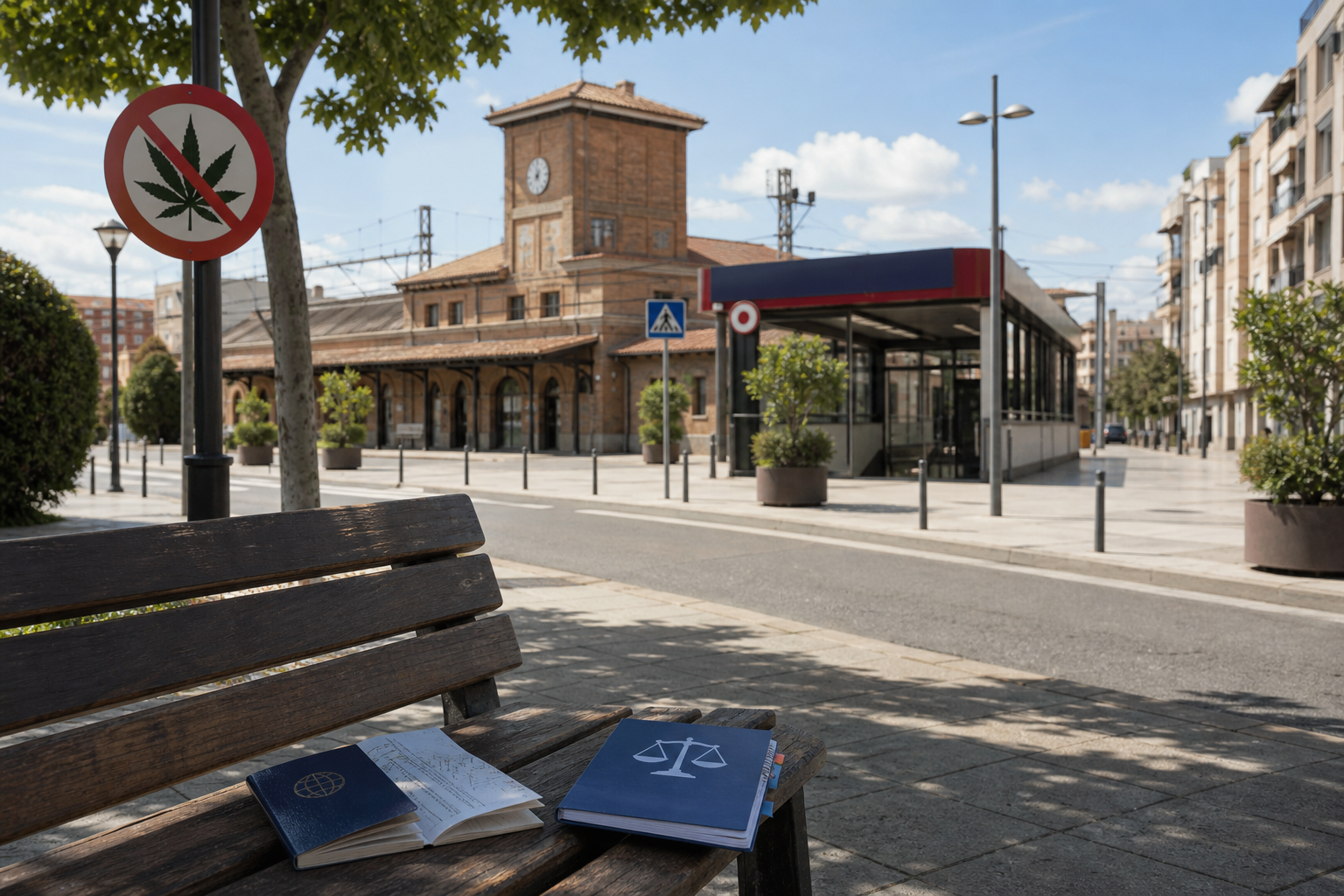
Understanding cannabis regulations for tourists in Majadahonda is important before arriving in this municipality west of Madrid. Spain is sometimes described as tolerant of private cannabis use, but that does not mean cannabis is legal everywhere, freely sold, or safe to carry as a visitor. The rules change significantly between private spaces, public places, roads and international borders.
This guide explains the practical position for visitors without encouraging illegal activity. It covers possession, consumption, cannabis clubs, medical products, driving, accommodation and travel. Local enforcement can depend on the circumstances, so anyone facing a police investigation, seizure or formal penalty should obtain advice from a qualified Spanish lawyer.
Cannabis regulations for tourists in Majadahonda: the basic position
Majadahonda follows Spanish national law. There is no separate tourist exemption and no municipal licence that allows visitors to consume cannabis in public. The most important distinction is between conduct in a genuinely private setting and conduct that is visible or takes place in public.
Private adult consumption is generally treated differently from public consumption, but this should not be confused with full legalisation. Spain does not operate a normal recreational retail market comparable with jurisdictions that license cannabis shops. Buying, selling, supplying or distributing cannabis can create criminal-law risks, while public possession or use can lead to an administrative sanction.
For visitors, the practical rule is simple: do not use cannabis in streets, parks, beaches, stations, shopping areas, nightlife venues or other places open to the public. A hotel room, apartment or private home may have a different legal context, but the property owner or accommodation provider can prohibit smoking, possession or drug use under its own terms.
Public possession and consumption
Spanish public-security law treats the unauthorised possession or consumption of drugs in public places, public establishments or collective transport as a serious administrative offence, even where there is no evidence of trafficking. Police may confiscate the substance and begin an administrative procedure.
Serious administrative offences under Spain’s Organic Law 4/2015 can carry fines from 601 to 30,000 euros, depending on the classification and circumstances. The law also provides for seizure of the substance. A fine is not automatic in every encounter, but tourists should not assume that a small amount will be ignored or that personal use prevents enforcement.
The official text of the Spanish Organic Law on public security is the appropriate reference for the statutory framework. If an officer issues paperwork, read it carefully, keep copies and note the deadline and method for any response or payment. Do not sign a document you do not understand without asking for clarification or legal assistance.
Weed in Majadahonda: where visitors should not consume
Searching for weed in Majadahonda can produce informal advice that overlooks the legal risks. Public visibility is a major problem. Avoid consuming cannabis or displaying it in locations such as:
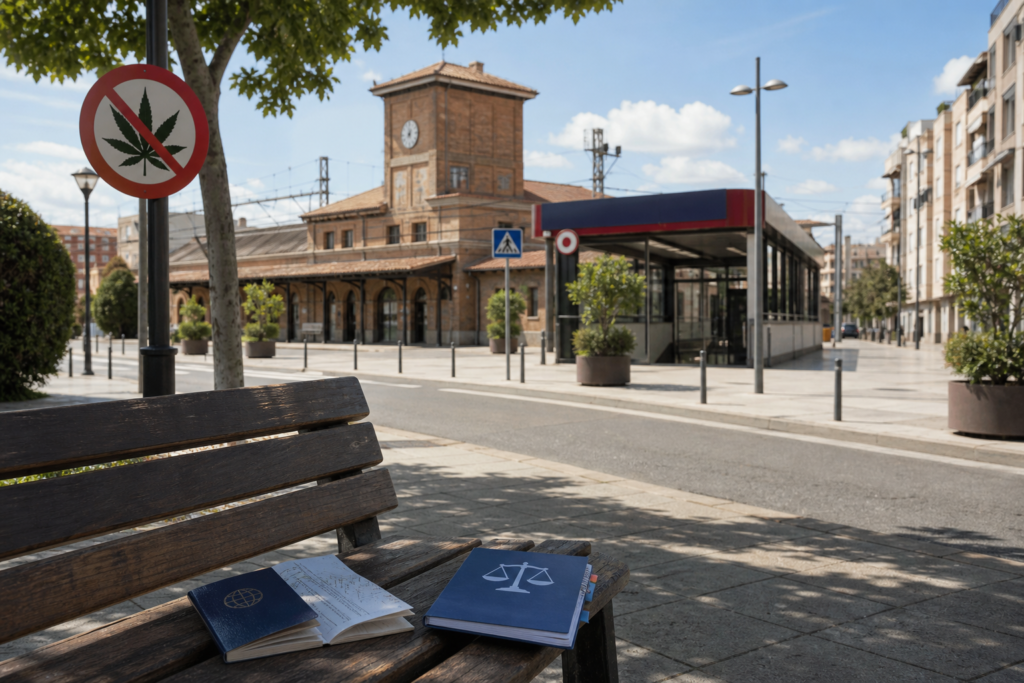
- Roads, pavements, plazas and public gardens.
- Railway stations, bus stops and other transport facilities.
- Shopping centres, restaurant terraces and nightlife queues.
- Hotels, hostels or holiday rentals where the house rules prohibit it.
- Schools, sports facilities and areas used by children.
- Vehicles parked in public areas, even when the vehicle is not moving.
Odour, smoking and possession in a bag can attract attention, particularly in busy or security-sensitive locations. A private setting is not a guarantee of immunity: trespass, nuisance, supply to another person, possession by a minor or other conduct may create separate issues.
Visitors comparing local guidance may also find our practical overview of cannabis laws for foreigners in nearby Pozuelo de Alarcón useful. The underlying national rules remain more important than the municipality name.
Cannabis in Majadahonda and private accommodation
Cannabis in Majadahonda should only be considered in a private setting where the adult occupant has permission and the conduct does not disturb others. Before consuming anything, check the accommodation agreement. Many hotels and short-term rentals ban smoking of all kinds, and a breach can lead to cleaning charges, eviction or loss of a deposit even if police are not involved.
Do not smoke on balconies if smoke or smell can affect neighbours, shared courtyards or public areas. Keep products away from children and do not leave them in communal spaces. Visitors should also avoid carrying cannabis through hotel lobbies, lifts, restaurants or other shared areas where possession can become a public-space issue.
Do not give cannabis to another person, sell it, advertise it or transport it for someone else. Sharing may be portrayed as harmless, but supply-related facts can be treated more seriously than simple private possession. The safest approach for a tourist is not to purchase, carry or distribute cannabis at all.
Cannabis laws in Majadahonda and social clubs
Some Spanish cities have private cannabis associations or social clubs. Their existence does not create a general right for tourists to buy cannabis, and a club is not the same as a licensed public dispensary. Legal interpretations and operating practices have varied, while local authorities and courts may examine issues such as the club’s purpose, membership, scale, premises and distribution model.
A visitor should not assume that an online listing, street invitation or membership card makes an activity lawful. Clubs may impose their own requirements, but those requirements do not override national criminal or public-security law. Consuming outside the premises, carrying products into public places or taking them across a border can create separate risks.
Majadahonda is part of the Madrid region, but guidance about clubs in central Madrid should not be treated as an official endorsement or a guarantee of legality in Majadahonda. If a venue cannot clearly explain its membership and private-premises rules, walk away rather than relying on informal promises. Our guide to how cannabis social clubs are discussed in Spain provides broader context, but it is not a substitute for current legal advice.
Buying, carrying and taking cannabis across borders
Spain’s informal tolerance of some private conduct does not create a legal recreational supply chain for visitors. Buying from an unregulated seller carries risks of fraud, unknown potency, contamination, theft and police action. Possession of a small quantity can still be problematic in public, and a larger quantity, packaging, cash or messages may lead authorities to investigate possible supply or trafficking.
Never take cannabis, cannabis resin, edibles, oils or plants across an international border. Do not put it in checked baggage, hand luggage, a rental car or a coach travelling to another country. Airport and customs rules are separate from local rules in Majadahonda, and Spain’s position does not protect a traveller from the law of the destination or transit country.
Do not mail cannabis or ask another traveller to carry it. Products labelled as CBD or hemp also require caution: a product’s label, cannabinoid content, intended use and import rules can matter. “CBD” is not a universal travel pass, particularly where products contain controlled levels of THC or are sold as foods, medicines or vape liquids.
Medical cannabis for tourists
Medical need does not automatically authorise a visitor to bring cannabis into Spain. Prescription medicines, controlled substances and cannabis-based preparations can be subject to documentation and import requirements. A foreign prescription may not function as a Spanish prescription, and a product legally supplied in one country may be restricted in another.
Visitors who use a prescribed cannabis-based medicine should contact the relevant Spanish authorities and their airline well before travelling. Ask specifically about the exact product, quantity, packaging, prescription, doctor’s letter and border procedure. Do not rely only on a photograph of a prescription or a generic medical certificate.
The Spanish Agency of Medicines and Medical Devices (AEMPS) is the official national medicines regulator and a sensible starting point for checking current information. A Spanish doctor or specialist pharmacist can explain whether a lawful treatment route is available, but tourists should not assume that a consultation guarantees access to the same product they use at home.
Driving, bicycles and public transport
Using cannabis before driving is unsafe and can lead to serious legal consequences. Spanish road rules impose drug-related restrictions, and roadside testing can create problems even when a driver does not feel impaired. Cannabis can affect reaction time, attention, judgement and coordination, with effects that may last beyond the period of noticeable intoxication.
Do not drive a rental car, scooter, motorcycle, bicycle or other vehicle after consuming cannabis. Do not let an impaired person drive, and do not carry cannabis in a vehicle as though a car were a private storage space. A traffic stop, collision or positive test can turn a travel issue into a much more serious matter involving fines, licence consequences, insurance disputes or criminal investigation.
Check current road-safety information through the Directorate-General for Traffic. If you are not fit to travel, use a licensed taxi or public transport and keep any substance out of public view and away from transport facilities.
What to do if police stop you
- Stay calm, polite and non-confrontational. Do not attempt to hide, discard or pass an item to someone else.
- Carry valid identification and provide accurate basic information when required.
- Ask what document or procedure is being used if property is seized or a report is issued.
- Request an interpreter if you do not understand Spanish well enough to follow the process.
- Keep copies of notices and record deadlines. A tourist should not ignore official correspondence after leaving Spain.
- Contact a qualified local lawyer if the matter involves alleged supply, a search, detention, driving, injury or a substantial quantity.
Do not assume that paying a penalty, if offered, ends every possible issue. The correct response depends on the document, the alleged conduct and the applicable procedure. Consular staff may help you understand available support, but they do not replace a Spanish lawyer.
A practical checklist for visitors
- Assume public consumption and public possession can be sanctioned.
- Read hotel, rental and event rules before smoking or carrying any product on the premises.
- Do not buy from street sellers or accept cannabis from strangers.
- Do not share, sell, advertise or transport cannabis for another person.
- Keep all cannabis products away from airports, borders and international transport.
- Never drive or cycle after using cannabis.
- Obtain professional advice for prescribed medicines before travelling.
- Seek legal help promptly if police issue paperwork or allege trafficking.
Conclusion
The safest interpretation of tourist cannabis rules in Majadahonda is that public use, public possession, unregulated buying, supply, driving and cross-border transport can all expose a visitor to significant harm. Private adult conduct may be treated differently, but it is not the same as a legal commercial market or a tourist entitlement.
Visitors can reduce risk by respecting accommodation rules, avoiding public places and vehicles, refusing informal purchases, and checking official guidance for any prescribed medicine. Spain’s cannabis framework can be fact-specific and may change, so current official information and qualified legal advice should take priority over social-media claims or advice from vendors.