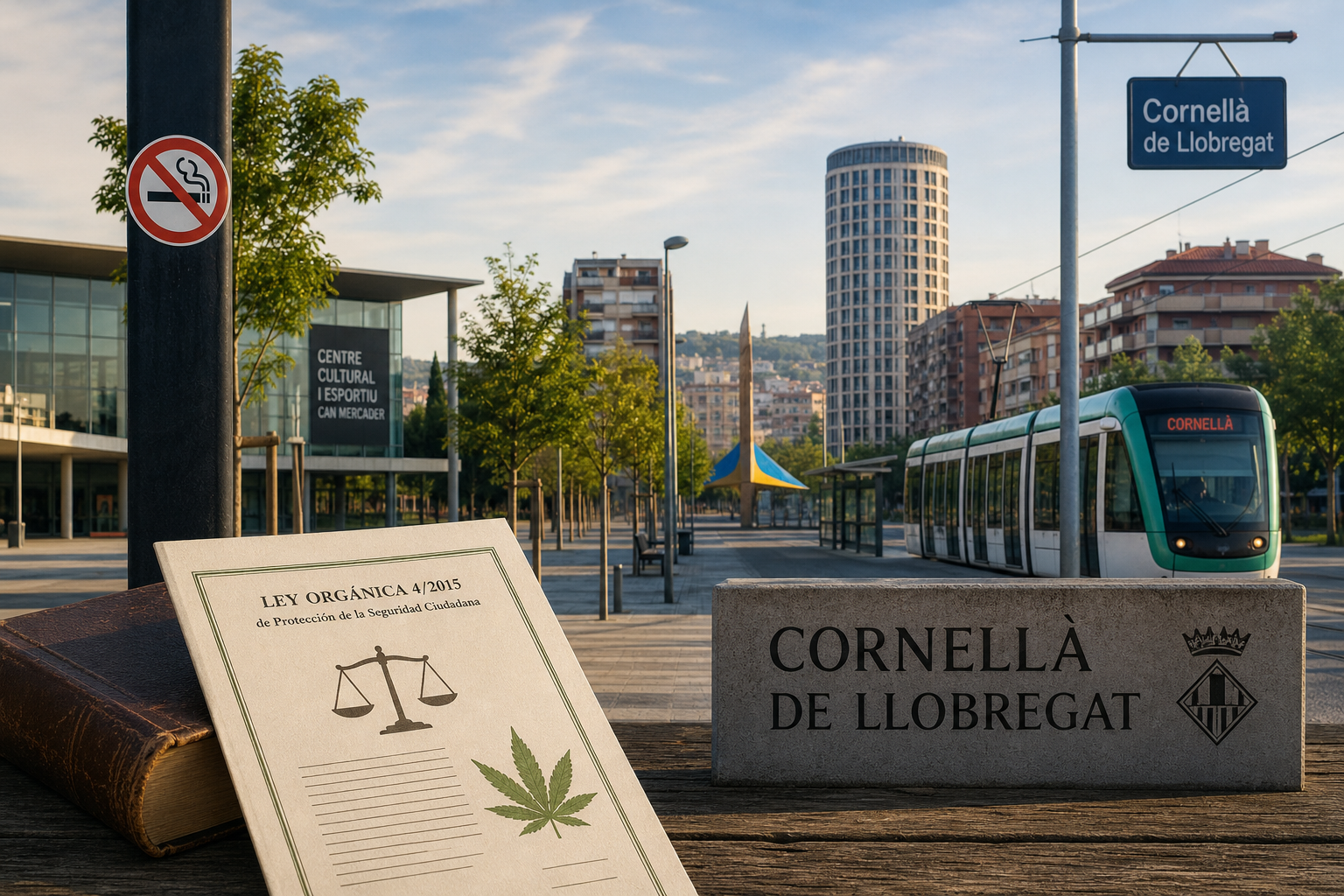
Cannabis laws in Cornellà de Llobregat are shaped mainly by Spanish national law, with local police and municipal authorities responsible for enforcement in public spaces. Spain does not have a general recreational cannabis market, and the fact that private consumption may be treated differently from public possession does not mean cannabis is legal in every setting.
This guide explains the practical position for residents, visitors and anyone searching for weed in Cornellà de Llobregat. It covers possession, consumption, cultivation, cannabis clubs, driving, CBD products, medical access and possible penalties. Laws and enforcement can change, so serious legal questions should be checked with a qualified Spanish lawyer or the relevant public authority.
How cannabis in Cornellà de Llobregat is regulated
Cornellà is part of Catalonia, but cannabis regulation is primarily a matter of Spanish state law. The municipality cannot create a fully legal recreational cannabis market that overrides national criminal or administrative rules. Local authorities may regulate public spaces, licensing, nuisance, commercial activity and inspections, while police apply national legislation.
The most important distinction is between conduct in a private setting and conduct in public. Spanish law has historically treated private possession and consumption differently from possession or consumption in public. That distinction is narrow: it is not a general authorization to buy, sell, carry or use cannabis wherever a person chooses.
For the current national framework, consult the official text of the Organic Law 4/2015 on public security. The wording of the legislation matters, particularly when deciding whether conduct occurred in a public place or involved supply to another person.
Public possession and consumption
Possessing or using cannabis in a public place can lead to an administrative sanction even when there is no evidence of sale. Public places may include streets, parks, beaches, transport facilities, stations, entertainment areas and other locations accessible to the public. Carrying cannabis through a public area can therefore create legal risk even if the intended use is private.
Under Spain’s public-security framework, serious administrative offences can attract fines from 601 to 30,000 euros. The amount is not automatically the maximum: authorities consider factors such as the circumstances, seriousness, repetition and other legally relevant details. Cannabis may also be seized, and a person may be required to identify themselves during an investigation.
In practical terms, smoking cannabis on a street, outside a venue, near a transport interchange or in another public area in Cornellà can result in police intervention. A private residence is treated differently, but private use does not protect conduct that affects neighbours, involves distribution or creates a public-order problem.
What happens after a public possession incident?
- Police may identify the person and seize the substance.
- The substance may be examined or weighed as part of the procedure.
- An administrative file may be opened for public possession or consumption.
- The person should check the notification carefully because deadlines may apply to allegations, payment or an appeal.
- Anyone who does not understand a notice should seek advice from a Spanish lawyer rather than ignoring it.
A fine is not the same as a criminal conviction, but it can still be financially significant. A public incident may also create practical consequences involving travel, employment, immigration or other proceedings, depending on the individual circumstances.
Sale, supply and trafficking
Supplying cannabis to another person is much more serious than simple possession for personal use. Selling, transporting for distribution, storing cannabis for a supply network or organizing a commercial operation may constitute a criminal offence under the Spanish Penal Code. The legal assessment depends on the evidence, quantity, role, location and circumstances.
Sharing cannabis is not automatically safe merely because money does not change hands. Authorities may examine whether the conduct involved distribution, repeated supply, an organized arrangement or access by vulnerable people. The presence of packaging, scales, large amounts of cash, messages or multiple separate portions can become relevant evidence.
The official Spanish Penal Code published by the Official State Gazette contains the national criminal provisions relevant to drug trafficking and related conduct. Anyone questioned about suspected supply should request legal assistance and avoid making assumptions based on informal advice or internet claims.
Are cannabis clubs legal in Cornellà?
Cannabis social clubs have existed in parts of Spain, including Catalonia, but their legal position is complex and should not be confused with licensed recreational dispensaries. A club’s existence does not guarantee that its activities comply with every national, regional and municipal requirement.
Membership rules, private premises and an internal approach to collective consumption may be presented as safeguards, but they do not create a nationwide right to purchase cannabis. Clubs can face scrutiny over public advertising, quantities, supply arrangements, premises licensing, nuisance, health and safety, or evidence that the organization is effectively selling cannabis.
Visitors should be particularly cautious. A membership card is not a permit to carry cannabis through public areas, sell it to others or take it across a border. A club cannot override rules on driving, public consumption, public possession or importation.
For broader context on practical issues affecting cannabis users in the Barcelona metropolitan area, readers may also review this guide to cannabis travel safety in Santa Coloma de Gramenet. Nearby municipal locations can have similar national rules, but local enforcement circumstances are not identical.
Cultivation and cannabis plants
Growing a small number of plants in a private home is not automatically a complete legal defense. Private cultivation may be assessed differently from cultivation that is visible from outside, affects neighbours, exceeds personal-use circumstances or appears connected to supply. The location, scale, visibility and purpose of the grow all matter.
Plants visible from a street, communal area or neighbouring property can create an additional public-order issue. Odour, electrical modifications, fire risks, water damage and unsafe equipment can also lead to complaints or inspections. Landlords, homeowners’ associations and municipal rules may create separate consequences even where no criminal charge is brought.
There is no universally safe plant count that guarantees legality in Cornellà. A person considering cultivation should obtain individualized legal advice before relying on the idea that a particular quantity is permitted.
Driving and cannabis use
Driving after using cannabis creates separate legal risks from possession. Spanish road-safety rules impose strict restrictions on driving with drugs present in the body, and driving while impaired can lead to more serious consequences. A person may be tested during a traffic stop or after an accident.
Do not drive, cycle in dangerous traffic conditions or operate machinery after consuming cannabis. Waiting until subjective effects disappear is not a reliable legal test, because impairment and detectable substances do not always follow the same timeline. The safest choice is to arrange another form of transport and keep cannabis out of the vehicle.
CBD products and hemp-derived items
CBD is not simply interchangeable with recreational cannabis. Product legality can depend on composition, intended use, labeling, cultivation rules and whether the product is marketed as food, cosmetics or another regulated category. A product described as hemp or CBD may still contain THC or fail to comply with Spanish and European requirements.
Consumers should avoid assuming that a product sold online or in a shop is automatically lawful. Check the label, certificate information and intended-use claims, and be especially careful with products carried across borders. CBD products may also create testing or employment concerns if they contain trace THC.
Medical cannabis in Cornellà
Medical cannabis in Cornellà should be understood within Spain’s healthcare and medicines framework, not as a general recreational exception. Access, prescribing, dispensing and eligible conditions depend on the applicable national rules and authorized healthcare channels. A person should speak with a qualified medical professional rather than self-medicating or relying on a club as a substitute for clinical care.
Prescription medicines containing cannabinoids are different from unregulated cannabis flower, oils or edible products. Patients should keep medication in its original packaging, follow professional instructions and ask about travel, driving and workplace implications. Carrying a medical product does not necessarily authorize public consumption or transport across international borders.
Practical guidance for residents and visitors
- Do not consume cannabis in streets, parks, beaches, stations, vehicles or other public spaces.
- Do not carry cannabis openly or assume that a small amount is exempt from public-possession rules.
- Never sell, distribute or transport cannabis for another person.
- Do not drive after consuming cannabis or keep cannabis accessible in a vehicle.
- Keep any lawful private activity away from public view and prevent nuisance to neighbours.
- Be cautious with cannabis clubs, especially claims that membership makes all possession or travel lawful.
- Check CBD labels and do not assume that “hemp” means a product is risk-free.
- If stopped or served with a notice, record the details and obtain legal advice promptly.
What visitors should know about weed in Cornellà de Llobregat
Visitors sometimes expect Barcelona-area cannabis policy to resemble a legal retail system. That assumption is unsafe. There is no ordinary walk-in recreational dispensary system comparable to regulated markets in some other countries, and tourists do not receive a special exemption from Spanish law.
Do not bring cannabis into Spain by air, rail or road, and do not take it from Spain into another country. Border and customs issues can involve much more serious consequences than a local public-possession incident. Accommodation rules also matter: hotels, short-term rentals and apartment communities may prohibit smoking or possession on the premises.
For a related comparison, this practical overview of cannabis laws for travelers in Reus explains why travel plans should be based on national rules rather than assumptions about local tolerance.
Conclusion
The key point about cannabis laws in Cornellà de Llobregat is that private circumstances do not equal full legalization. Public possession or consumption can lead to an administrative fine and seizure, while supply, trafficking and some cultivation cases can become criminal matters. Driving after use, carrying cannabis across borders and relying on a club’s membership rules create additional risks.
For a low-risk approach, avoid public consumption, do not supply cannabis, never drive after using it and treat CBD and medical products as regulated categories rather than automatic exceptions. Because outcomes depend on the facts and the law can develop, obtain current advice from an official authority or qualified Spanish legal professional when a real incident is involved.