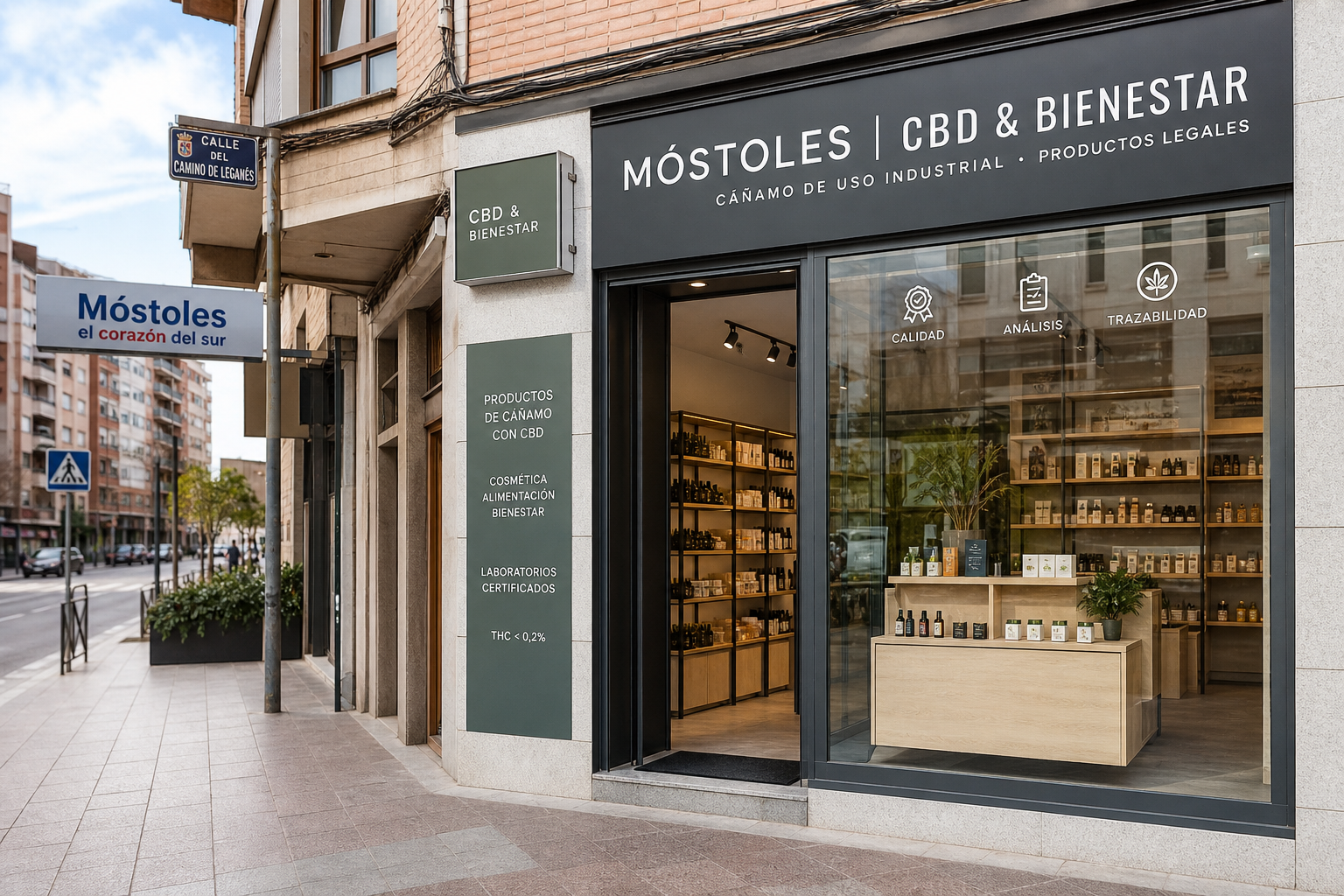
The Cannabis market in Móstoles is shaped by the city’s location in the Madrid metropolitan area, Spain’s complex cannabis rules and the difference between legal hemp products, medical access and prohibited retail sales. For residents, visitors and potential businesses, the important question is not simply whether cannabis is visible in the area, but which activities are lawful, regulated or exposed to enforcement.
Móstoles does not have a separate cannabis legal code. National Spanish law applies, while local authorities may enforce public-order, licensing and health rules. This guide explains the practical market landscape without treating informal supply as a legal retail sector. For broader national context, see this guide to cannabis in Madrid and the overview of weed law in Spain.
What the cannabis market in Móstoles actually includes
The phrase “market” covers several different activities that should not be confused. In Móstoles, as elsewhere in Spain, these may include lawful hemp-derived products, regulated medicines, private adult consumption, social-club activity and an illicit supply chain. Each category has different rules, risks and commercial requirements.
- Hemp and CBD products: shops may offer cosmetics, fibres, food products or other hemp-related goods, but product composition, labelling and intended use matter.
- Medical access: patients must follow the applicable Spanish healthcare and medicines framework rather than relying on informal sellers or unsupported health claims.
- Private adult use: private possession and consumption are treated differently from possession or use in public, but neither creates a general right to buy cannabis from a storefront.
- Social clubs: clubs are not equivalent to licensed dispensaries. Their legal position depends on their organisation and conduct, and court decisions have not created a simple nationwide retail model.
- Illegal supply: trafficking, commercial distribution and sales remain serious legal risks, regardless of the seller’s location or the product’s branding.
Cannabis laws in Móstoles: the main boundaries
Understanding cannabis laws in Móstoles starts with the distinction between criminal offences and administrative offences. Spanish law generally does not treat every form of personal possession in a private setting as a criminal offence. However, possession or consumption in public places can lead to an administrative penalty, even where there is no evidence of trafficking.
Traffic, distribution and selling cannabis can fall within criminal law. The circumstances can include the quantity, evidence of supply, organisation of the activity and potential harm to public health. Driving under the influence creates additional danger and possible legal consequences. Cannabis should never be used before driving, cycling in traffic or operating machinery.
The official text of Spain’s Organic Law 4/2015 on public security is the appropriate reference for public possession and consumption rules. Because enforcement decisions depend on facts, anyone facing a seizure, fine or investigation should obtain advice from a qualified Spanish lawyer rather than relying on a shop employee or online forum.
Public use and private spaces
Private premises are not automatically risk-free, especially if the activity involves nuisance, minors, unsafe storage, distribution or a business operating without the required permits. In public areas, including streets, parks, transport facilities and other accessible places, possession and consumption can expose a person to administrative action. Avoiding public use is therefore a basic harm-reduction and legal precaution.
Travelling through Móstoles
Moving cannabis across borders, bringing it through airports or carrying it between countries is particularly risky. Rules that may apply to private possession inside Spain do not provide permission to import or export cannabis. Visitors should not assume that a product purchased elsewhere in Europe can legally be carried into Spain or transported onward.
CBD in Móstoles: what buyers should check
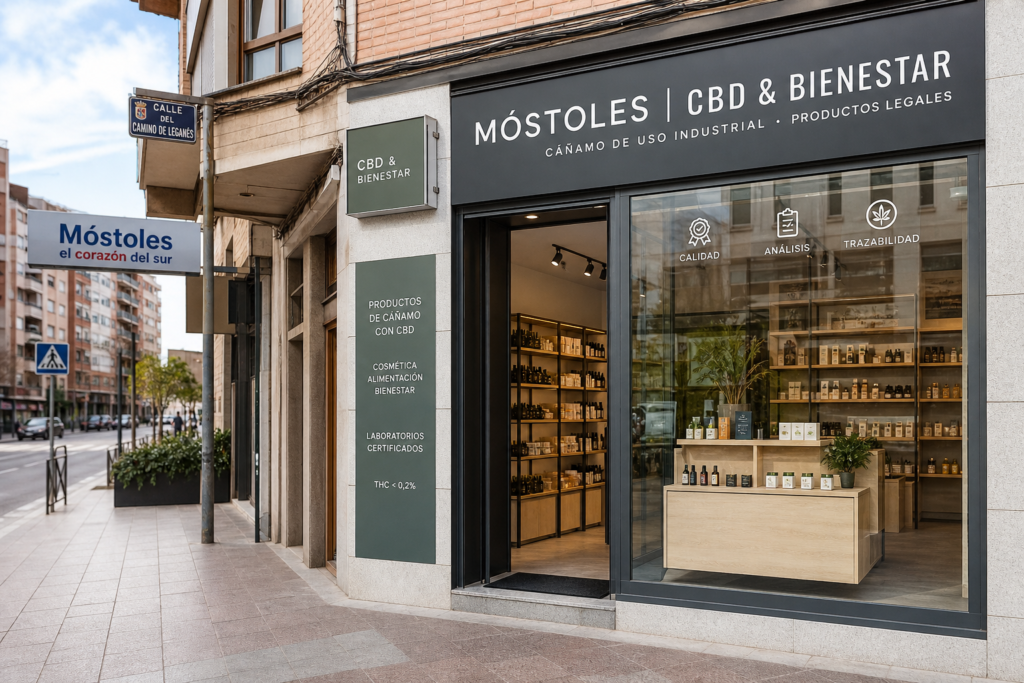
CBD is often the most visible part of the legal hemp economy. Yet “CBD” on a label does not by itself prove that a product is suitable for ingestion, compliant with Spanish rules or free from contaminants. The product category matters: cosmetics, food, supplements, vaping products and raw hemp materials can be subject to different requirements.
People considering CBD in Móstoles should inspect the label before buying. Useful checks include the manufacturer or responsible operator, batch information, ingredients, recommended use, storage instructions and a clearly stated cannabinoid profile. A certificate of analysis can be helpful, but it should correspond to the specific batch and come from a laboratory with credible testing procedures.
- Be cautious of products promising to treat anxiety, pain, cancer or other medical conditions.
- Do not assume that “natural” means risk-free or that CBD cannot interact with medicines.
- Ask whether the product is intended for topical use, food use or another lawful category.
- Avoid unsealed oils, products with unclear ingredients and sellers who cannot identify the responsible business.
- Keep all cannabinoid products away from children and pets.
Consumers with liver conditions, pregnancy, ongoing treatment or concerns about drug interactions should speak with a doctor or pharmacist. CBD products may also contain trace cannabinoids, and product quality can vary. A positive drug test is a potential concern for some users even when the product is marketed as hemp-derived.
Medical cannabis in Móstoles and the Spanish healthcare system
Interest in medical cannabis in Móstoles should be separated from the wellness market. A product sold as a supplement or cosmetic is not automatically an authorised medicine, and a private recommendation is not a substitute for clinical supervision.
Spain’s medical-cannabis framework is evolving. Patients should consult a licensed healthcare professional and use information from the Spanish Agency for Medicines and Medical Devices, AEMPS, the national medicines authority. The relevant route depends on the diagnosis, treatment history, authorised products and the professional’s assessment.
Patients should keep a record of the product, dose, timing, effects and adverse reactions, particularly when other medicines are involved. Drowsiness, impaired concentration and interactions can affect daily activities. Medical use also does not provide a defence for driving while impaired or for purchasing from an unlicensed seller.
Businesses and opportunities in the local market
For entrepreneurs, the most realistic lawful opportunities are not necessarily cannabis retail. Móstoles businesses may operate in adjacent areas such as hemp textiles, compliant cosmetics, laboratory services, education, packaging, agricultural technology or professional legal and regulatory support. Each activity requires its own registrations, permits, product controls and advertising review.
A proposed CBD shop should first define exactly what it will sell. A business handling cosmetics may face different obligations from one selling food, while a premises offering consultations, vaporizers or cultivation equipment may raise additional questions. Local planning, opening licences, consumer protection, fire safety and advertising rules also matter.
Businesses should avoid presenting cannabis as a guaranteed treatment, targeting minors or using packaging that resembles confectionery. They should also maintain supplier records, batch traceability and a process for withdrawing questionable products. A careful compliance review before signing a lease is usually less costly than correcting an unauthorised business model after opening.
What a responsible retailer should provide
- A clearly identified legal entity and contact details.
- Accurate product descriptions without unsupported medical claims.
- Invoices, batch information and traceability records.
- Staff who can explain intended use without encouraging intoxication.
- Age-appropriate sales procedures where required by the product category.
- A clear returns, complaints and product-safety process.
Safer choices for residents and visitors
Anyone searching for weed in Móstoles should be wary of unsolicited sellers, social-media accounts promising delivery and products with no verifiable origin. Informal cannabis may have unknown potency or contaminants, and a seller’s claim that a product is “legal” does not make it so.
Never combine cannabis with alcohol or other intoxicants, and do not drive after using it. Start with the assumption that edible products can take longer to produce effects and may last longer than expected; the safest option is to avoid unlabelled edibles entirely. People with a history of psychosis, severe anxiety or problematic substance use should seek professional advice before considering cannabis.
Do not consume in streets, transport areas, parks or around schools and children. Store products securely, avoid sharing with minors and seek medical help for severe confusion, chest pain, breathing problems or loss of consciousness. Emergency services should receive accurate information about what was consumed.
How the Móstoles market may develop
Future growth is likely to depend on regulation, enforcement, product testing and consumer education rather than on the rapid expansion of unlicensed shops. Medical access, if further formalised, may create demand for clinical training and quality-controlled products. The hemp sector may also expand in materials, cosmetics and agriculture, provided businesses respect product-specific rules.
Reliable market analysis should distinguish legal sales from estimates of illicit activity. Publicly available figures may combine different product categories or national and regional data, so claims about the size of the Móstoles market should be treated cautiously unless they identify a transparent methodology. Local demand alone does not establish that a commercial model is lawful.
Conclusion
The cannabis market in Móstoles is best understood as a regulated and restricted landscape, not as an ordinary recreational retail market. CBD and hemp products may be available within specific rules, medical access must follow the healthcare framework, and private use should not be confused with public possession, sales or trafficking.
For consumers, checking labels, avoiding informal supply and protecting health are essential. For businesses, the priority is a precise product classification, local licensing, traceability and professional legal advice. As Spanish policy develops, official government and medicines-agency information should take precedence over promotional claims or rumours about what is permitted.