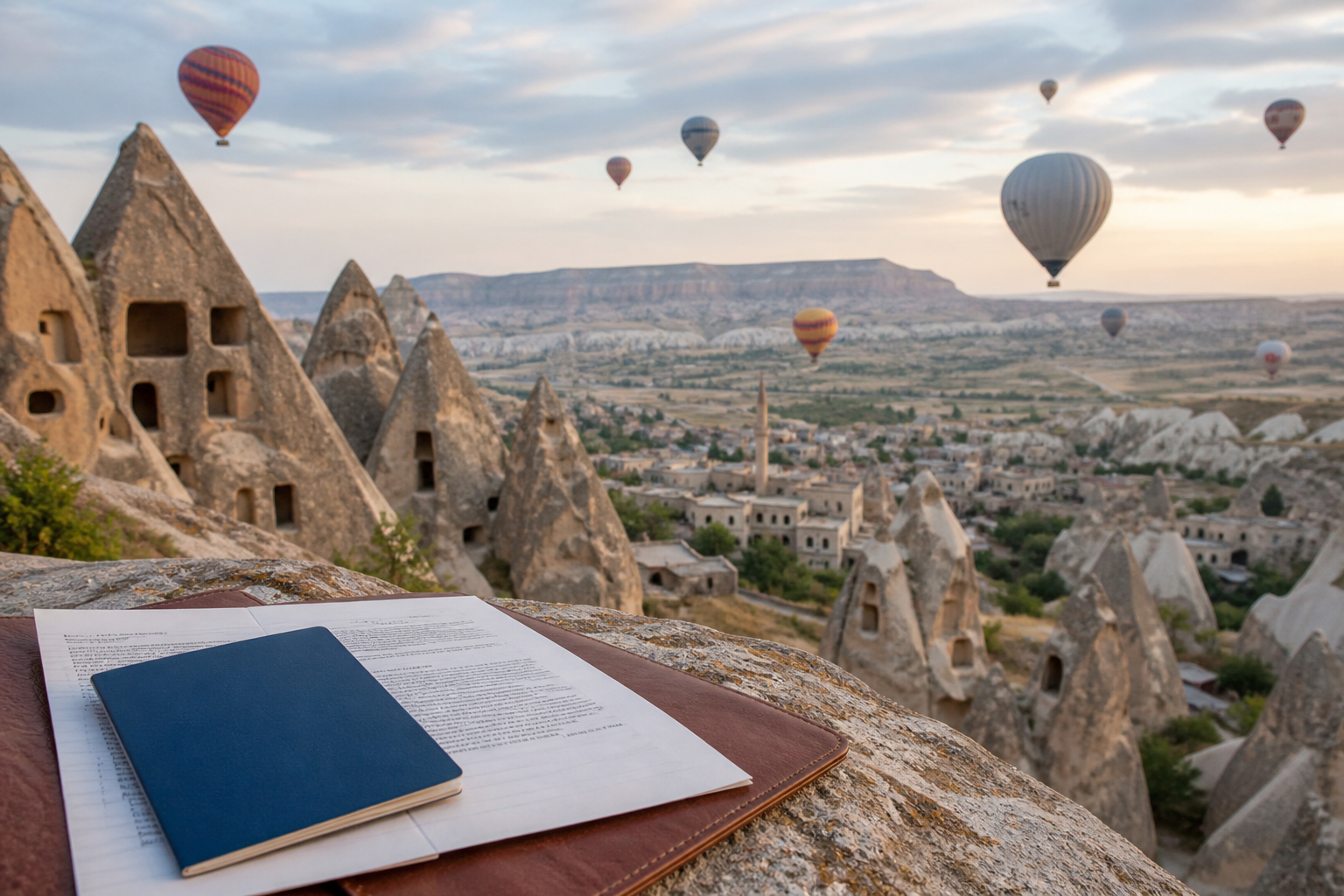
Understanding Cannabis laws for visitors in Nevşehir, Turkey is important before travelling to Cappadocia, Göreme, Ürgüp or any other part of the province. Turkey treats cannabis as a controlled substance, and visitors generally face the same criminal-law risks as residents. A holiday, foreign passport or small quantity does not create a legal exception.
This guide explains the practical issues travellers should consider, including possession, personal use, medical products, border crossings, driving and what to do if the police become involved. It is general information, not a substitute for advice from a Turkish lawyer or an official consular service. Laws and enforcement procedures can change, so check current official information before travelling.
Are cannabis and weed legal in Nevşehir?
No. There is no separate tourist cannabis market in Nevşehir, and provincial location does not change Turkey’s national drug laws. The same rules apply in popular visitor areas such as Göreme National Park, Avanos, Uçhisar, Ürgüp and Nevşehir city.
In practical terms, buying, possessing, using, producing, selling or transporting cannabis can expose a person to investigation and criminal proceedings. Informal claims that cannabis is tolerated in a particular resort, hostel or tourist district should not be treated as legal advice. Searching for weed in Nevşehir can also put a traveller in contact with people involved in scams, theft, police operations or more serious criminal activity.
Turkey’s main criminal provisions are set out in the Turkish Penal Code. The official legislation text is available through the Turkish Penal Code published by the official legislation portal. The wording and application of individual provisions can be complex, so anyone facing an investigation should obtain qualified legal advice rather than relying on online summaries.
How Turkish law treats possession and personal use
Visitors should not assume that a small amount is automatically overlooked or treated as a civil fine. Possession for personal use can still lead to police action, seizure, questioning and a criminal case. The legal consequences depend on the facts, including the substance, quantity, evidence of intended use, prior history and conduct during the investigation.
Personal-use allegations and supply allegations are not the same. Evidence suggesting sale, distribution, importation or involvement with a group can create much more serious exposure than a simple possession allegation. Messages, packaging, scales, multiple packets, money transfers and statements may all become relevant to an investigation.
What visitors should remember
- There is no reliable “tourist amount” that makes cannabis lawful.
- Public use can attract attention from police, venue security or other authorities.
- Possession of cannabis obtained from an unlicensed source remains risky even if someone describes it as traditional, natural or locally tolerated.
- Sharing cannabis with another person can create additional legal concerns beyond personal possession.
- Refusing to take responsibility for someone else’s bag or parcel is important; travellers should keep control of their luggage.
For broader context on how drug rules can affect travellers elsewhere in Turkey, see this practical guide to cannabis laws for travelers in Manavgat. The location differs, but the central point is the same: tourist status does not remove national criminal-law risks.
Cannabis in Nevşehir accommodation and public places
Hotels, guesthouses, hostels, campsites and short-term rentals may have their own rules in addition to Turkish law. A property manager can remove a guest for smoking, possession, damage, complaints or suspected illegal activity. Staff may also contact the police when they believe a controlled substance is present.
Smoking cannabis on a balcony, terrace, street, viewing point or near a tourist attraction is not made safe by being outdoors. Cappadocia’s valleys and scenic areas can feel remote, but they are not legal zones outside the national rules. Smoke can travel to other guests, families, guides and residents, creating complaints and increasing the chance of intervention.
Do not consume cannabis in a hotel room because a booking website, host or online forum suggests that the property is relaxed. A private room is not a guaranteed legal exception, and accommodation staff may have obligations under their own policies or local procedures.
Medical cannabis and prescription medicines
Medical cannabis in Turkey should not be confused with a general right to bring cannabis flower, oils, edibles or extracts into the country. Some cannabis-derived or controlled medicines may be subject to tightly regulated medical and prescription requirements, but the existence of a prescription in another country does not automatically authorize possession in Turkey.
Travellers who use a medicine containing a controlled substance should verify its status before departure with the Turkish authorities, their airline and a Turkish medical or legal professional. The product’s ingredients, concentration, dosage form, prescription documentation and import rules can all matter.
Before travelling with medication
- Check the active ingredients rather than relying only on a brand name or the words “hemp” or “natural.”
- Ask whether the medicine is permitted for personal entry into Turkey and whether prior approval is required.
- Carry the medicine in its original labelled packaging.
- Bring a current prescription and a doctor’s letter describing the treatment and dosage.
- Confirm the rules with an official Turkish authority before flying; do not depend solely on an online travel forum.
The official Turkish Ministry of Health website is a useful starting point for checking health-related information and identifying the appropriate authority. If the answer is unclear, obtain written confirmation before travel. A prescription, medical card or doctor’s note may explain a treatment, but it is not necessarily an import permit.
CBD, hemp products and cannabis edibles
CBD products can create particular confusion for international visitors. A product sold legally in one country may be restricted in another, especially when it contains trace amounts of THC or is marketed as a cannabis product. Oils, gummies, vape cartridges, cosmetics, herbal mixtures and supplements can have different ingredients and classifications.
Do not assume that a label saying “CBD,” “hemp,” “THC-free” or “wellness” guarantees entry or possession is lawful. Border officials may assess the actual product, its labelling and the applicable rules. Edibles can be especially difficult because their contents may not be obvious from the packaging, while vape cartridges can be mistaken for ordinary nicotine products.
When in doubt, leave cannabis-related products at home and buy only ordinary, clearly lawful travel supplies after arrival. Travellers should never repackage oils, capsules or powders into unlabelled containers.
Airports, buses and travelling around Cappadocia
Carrying cannabis into Turkey, out of Turkey or between provinces creates additional risk. Customs and security checks can take place at airports, bus terminals and other transport points. Nevşehir Kapadokya Airport and nearby transport routes are not exceptions to national drug controls.
Never carry a package for a new acquaintance, accept a stranger’s luggage or leave your own bag unattended. Do not place cannabis in checked baggage or hand luggage, and do not assume that a sealed parcel is harmless because another person asked you to transport it.
Crossing a national border with cannabis can involve more serious consequences than possessing it locally. The same caution applies to travelling onward to another country, where the destination and transit states may impose separate restrictions.
Driving, hot-air balloons and cannabis impairment
Driving after using cannabis is unsafe and can create legal problems, even where a visitor believes the effect has worn off. Impairment can affect attention, reaction time, coordination and judgement. Rental-car agreements may also prohibit drug-impaired driving and allow the company to charge for damage or refuse coverage.
Visitors should not use cannabis before driving through Nevşehir, joining an organised tour or operating any vehicle. The same principle applies to scooters, motorcycles, bicycles in traffic and recreational activities that require concentration. Do not board a hot-air balloon or participate in an excursion while impaired; operators may refuse participation for safety reasons.
What to do during a police encounter
If police question you about cannabis, remain calm and respectful. Do not argue, make threats, destroy evidence or sign a document you do not understand. Ask for an interpreter if needed and request access to a lawyer. Contact your embassy or consulate as soon as practical, while remembering that consular staff cannot cancel Turkish proceedings or guarantee release.
- Provide accurate identity information when required.
- Ask what is happening and whether you are being detained or questioned as a witness.
- Request a qualified Turkish lawyer before making detailed statements about the allegation.
- Use an interpreter for documents or questioning that you cannot understand fully.
- Tell officials about urgent medical needs or prescribed medicines.
- Keep copies of your passport, insurance, emergency contacts and accommodation details in a secure place.
Do not rely on a friend, hotel employee or informal translator to provide legal representation. If you are arrested or detained, ask the authorities how to contact your consulate and seek independent legal advice promptly.
Safer choices for a cannabis-free visit
The simplest way to reduce legal risk is not to buy, carry or use cannabis in Nevşehir. Visitors can enjoy Cappadocia’s landscapes, underground cities, museums, food, walking routes and cultural sites without bringing controlled substances into the trip.
Be cautious with nightlife offers that promise cannabis, unusually cheap excursions or private parties. Scams can involve counterfeit products, sudden demands for money or threats to report a visitor. Do not meet unknown sellers alone, invite them to accommodation or provide passport details to anyone claiming to arrange cannabis.
If you take prescribed medication, plan the trip around lawful access and documentation. A pharmacist or doctor can help with ordinary travel-health needs, while a Turkish lawyer or relevant authority is the appropriate source for controlled-substance questions.
Key takeaways for visitors
- Cannabis is not legalized for recreational use in Nevşehir.
- Foreign visitors can face Turkish criminal-law consequences for possession, use, supply or transport.
- There is no dependable small-quantity exemption for tourists.
- Medical authorization from another country may not permit importation.
- CBD, hemp products, oils and edibles should be checked before travel and not assumed legal.
- Do not carry packages for others or cross borders with cannabis products.
- If questioned, request an interpreter and a Turkish lawyer, and contact your consulate.
Conclusion
The rules on cannabis laws in Nevşehir are best understood as part of Turkey’s national controlled-substance framework, not as a relaxed local policy for tourists. Whether you are staying in Göreme, visiting Ürgüp or passing through Nevşehir Airport, possession and use can create consequences that are disproportionate to the short-term benefits of experimenting while travelling.
For a low-risk trip, leave cannabis and uncertain CBD products at home, verify any prescription medicine before departure and treat offers of cannabis in Nevşehir as a warning sign rather than a tourist service. When a legal question is urgent or personal, consult an official Turkish authority or qualified local lawyer.