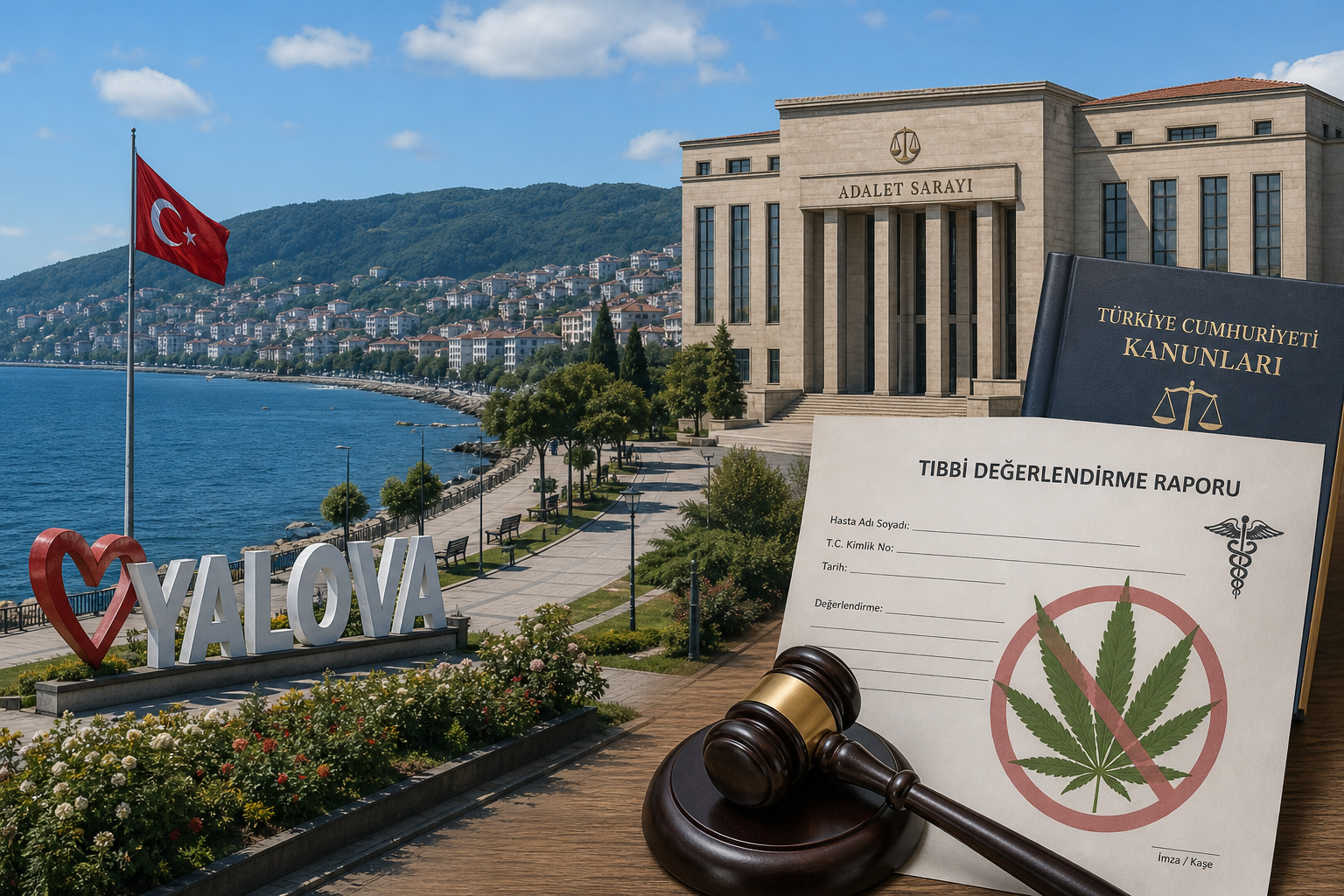
Questions about cannabis legalization in Yalova should be answered through Turkish national law, not by assuming that local customs or the city’s location near Istanbul create a separate cannabis policy. Yalova does not have a recreational cannabis market, and buying, possessing, growing, selling, or transporting cannabis can expose a person to serious legal consequences.
This guide explains the practical position for residents, visitors, and people considering cannabis for health reasons. It is general information, not legal or medical advice. Turkish rules and enforcement can change, so anyone facing an investigation, arrest, prescription question, or border issue should obtain advice from a qualified Turkish lawyer and consult an authorized healthcare professional.
Is cannabis legal in Yalova?
In practical terms, recreational cannabis is not legal in Yalova. The city follows Turkey’s national criminal and controlled-substance framework. There is no ordinary legal retail system where adults can purchase cannabis for personal use, and a claim that cannabis is tolerated in another part of the country does not create a lawful exception in Yalova.
The same basic point applies whether someone refers to the substance as marijuana, weed, hashish, or cannabis. The form, amount, packaging, and surrounding circumstances may affect how authorities assess an incident, but they should not be treated as a safe possession allowance.
For a broader comparison of how possession issues are discussed in another Turkish city, see this practical guide to cannabis possession regulations in Menemen. The legal principles remain national, even when the local setting differs.
Understanding cannabis laws in Yalova
People searching for cannabis laws in Yalova are often looking for a simple quantity threshold or a local rule. That approach can be misleading. Turkish authorities may consider the facts of the case, including whether the substance appears intended for personal use, whether there are signs of supply or distribution, and whether the person is connected to cultivation or organized activity.
Possession and personal use
Possessing cannabis for personal use can still create criminal exposure. A small amount should not be interpreted as automatically legal, and carrying cannabis in a vehicle, hotel, rented apartment, or public place can lead to police involvement. The consequences may depend on the circumstances and the judicial process, so online claims about a universally “safe” amount are unreliable.
Personal use and supply are not the same legal allegation. Evidence such as multiple packages, scales, messages, cash, or contact with buyers could cause authorities to examine an incident as potential distribution rather than simple personal possession. Only a lawyer familiar with the case can explain how those facts may be treated.
Sale, supply, and sharing
Selling cannabis is clearly high risk. Giving cannabis to another person, arranging a delivery, or sharing it at a party may also create legal problems even when no money changes hands. Visitors should not assume that a private setting, friendship, or informal exchange removes the risk.
Online advertising, social-media messages, and delivery arrangements can create additional evidence. Do not use local listings or social groups as proof that a seller is legitimate or that an activity is protected by law.
Cultivation and production
Growing cannabis plants at home is not a legal workaround. Cultivation, harvesting, processing, or storing plant material may bring separate issues from possession. Indoor growing equipment, seeds, plants, and communications about production can all attract scrutiny.
Industrial hemp is a distinct regulatory subject and should not be confused with growing cannabis for psychoactive use. Permission, approved varieties, land requirements, and agricultural controls may apply to hemp-related activity. Anyone considering a commercial or agricultural project should confirm the current rules with the relevant Turkish authorities before planting or importing seeds.
Weed in Yalova: public use and private spaces
Searching for weed in Yalova may produce informal offers, but an apparent local supply does not make the product lawful. Public use can bring added problems because it may attract police attention, affect bystanders, and create concerns about disorder or driving impairment. Smoking near parks, waterfront areas, transport locations, nightlife venues, or crowded public spaces is especially unwise.
A private apartment, hotel room, holiday rental, or boat is not automatically a legally protected place for cannabis use. Property owners may involve security or police, and a landlord or hotel may impose separate consequences for smoking, damage, or breach of house rules.
Medical cannabis in Yalova
Medical cannabis in Yalova is not equivalent to recreational access. Turkish medical products are subject to national health and medicines regulation, and access depends on the specific product, its authorization status, the diagnosis, and the prescribing and dispensing process. A person should not assume that a foreign cannabis prescription automatically authorizes possession or use in Turkey.
Some cannabis-derived or cannabinoid-containing medicines may be regulated differently from unprocessed cannabis flower or illicit resin. The product’s packaging, active ingredients, authorization, and prescription documentation matter. A product purchased abroad or online may still be unlawful to bring into Turkey.
For current health-system information, consult the Turkish Ministry of Health. For medicine authorization and regulatory information, the Turkish Medicines and Medical Devices Agency is the appropriate official institution to check. If a doctor believes a cannabinoid-based treatment may be appropriate, ask about lawful, approved alternatives and the documentation required before travel.
Questions patients should ask
- Is the exact medicine authorized for use in Turkey?
- Does the prescription need to come from a Turkish-licensed physician?
- What quantity and packaging may be carried?
- Are customs or import permissions required?
- Is the medicine safe with current prescriptions, alcohol, or other substances?
Do not replace a prescribed treatment with cannabis obtained from an unregulated source. Product strength, contamination, labeling, and interactions may be uncertain, while delaying appropriate care can worsen the underlying condition.
Traveling to Yalova with cannabis
Travel creates separate risks. Ferries, buses, cars, airports, hotels, and border crossings can involve identification checks, luggage searches, or security procedures. Bringing cannabis from another Turkish city into Yalova remains risky, and bringing it across an international border can create customs and controlled-substance issues even when the product was lawful where it was purchased.
Foreign visitors should be particularly careful with cannabis in Yalova. A residence permit, tourist status, or foreign medical card does not guarantee an exemption from Turkish law. Do not carry cannabis, cannabis oils, edibles, vape cartridges, seeds, or plant material unless an authorized Turkish professional and the relevant authorities have confirmed that the specific product may be possessed and transported.
For related travel planning, this guide to cannabis laws for travelers in Turkey highlights why visitors should verify national rules before carrying any controlled or prescription product.
What to do after a cannabis-related police encounter
A person questioned by police should remain calm and avoid making assumptions based on advice from friends or social media. Do not resist a search or attempt to hide, destroy, transfer, or dispose of a substance. Ask for a lawyer and, if necessary, a qualified interpreter. A foreign national should also ask about contacting their consulate, while understanding that consular staff cannot cancel Turkish proceedings.
Do not sign a document that you cannot understand. Request an accurate translation and legal explanation before signing statements or waivers. Keep copies of prescriptions, medical records, and purchase documentation for lawful medicines, but do not alter or manufacture evidence.
Legal procedures can depend on the allegation, evidence, location, and personal circumstances. A lawyer can explain rights, reporting obligations, possible treatment options, and whether a person must remain available to authorities.
Safer decisions for residents and visitors
- Do not buy cannabis from street sellers, social-media accounts, or delivery services.
- Do not carry cannabis in luggage, vehicles, hotels, ferries, or across borders.
- Do not drive, cycle, or operate equipment after using an intoxicating substance.
- Keep prescription medicines in original packaging and verify travel requirements in advance.
- Use a licensed doctor or pharmacist for health concerns instead of relying on unregulated cannabis.
- Seek legal advice promptly if police, customs, or prosecutors become involved.
What could change in the future?
Drug policy can develop through legislation, regulations, court decisions, and health-authority guidance. A news story about industrial hemp, a newly authorized medicine, or a proposal for reform does not necessarily legalize recreational cannabis. Look for a formal announcement from a Turkish public authority and check the effective date before relying on it.
Until a clear national change takes effect, the safest assumption is that recreational cannabis remains prohibited in Yalova. Businesses should also avoid advertising cannabis products or offering consumption spaces without specialist advice on licensing, advertising, medicines, agriculture, and criminal law.
Conclusion
Cannabis legalization in Yalova has not created a local recreational market or a general right to possess cannabis. Possession, use, supply, cultivation, and cross-border transport can all carry significant risks under Turkey’s national framework. Medical products may follow a separate, tightly controlled route, but a foreign prescription or an online purchase is not enough by itself.
For residents and travelers, the practical choice is to avoid unregulated cannabis and verify any medical or travel issue through official Turkish institutions and qualified professionals. When legal uncertainty exists, local legal advice is safer than relying on rumors about weed in Yalova or informal claims about what is tolerated.