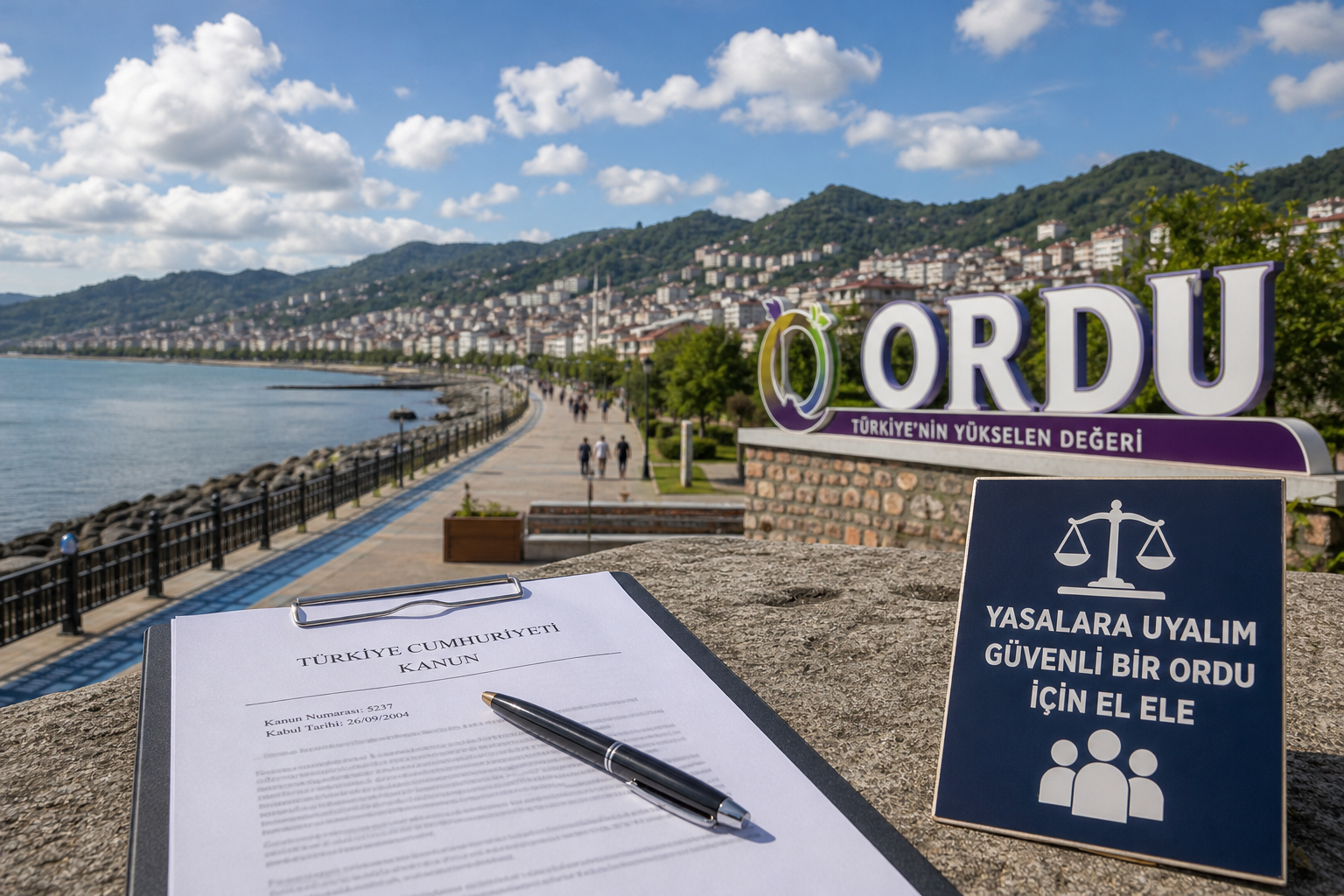
Understanding Cannabis public consumption laws in Ordu is important for residents, visitors and anyone trying to interpret Turkey’s drug rules. Ordu does not have a separate legal system for cannabis. The main rules come from Turkish national law, and conduct in public places can create additional practical and legal concerns involving police intervention, identification, evidence collection and public order.
This article explains the general legal position without suggesting that cannabis is safe or lawful. It focuses on public consumption, possession for personal use, possible criminal procedures and sensible steps to take if an incident occurs. Laws and enforcement practices can change, so a qualified lawyer should be consulted for advice about a specific case.
Is cannabis legal in Ordu?
No. Recreational cannabis is not legal in Ordu or elsewhere in Turkey. Buying, selling, supplying, transporting, cultivating or possessing cannabis may expose a person to criminal investigation or prosecution. Personal use is also not a legal exception simply because the amount is small or the substance is used privately.
Turkish law distinguishes between conduct connected with personal use and more serious activities such as supply or trafficking. That distinction does not make personal use lawful. The legal outcome can depend on the facts, including the substance involved, quantity, packaging, communications, prior history and whether authorities believe another person was supplied.
For anyone searching for cannabis in Ordu, the key point is that the city’s location on Turkey’s Black Sea coast does not create a local cannabis market or a recreational-use exemption. Local conditions may affect how an incident unfolds, but they do not replace national criminal law.
What do cannabis public consumption laws in Ordu prohibit?
Using cannabis in a street, park, beach, vehicle, café, rented accommodation open to others or another publicly accessible place can attract immediate attention. The act of consumption may provide evidence of use, while any remaining cannabis, smoking equipment or messages about obtaining the substance may create additional issues.
The Turkish Penal Code, including provisions addressing use and possession of narcotic or stimulant substances, is published through the country’s official legislation system. Readers should consult the official Turkish Penal Code text for the current statutory wording and obtain legal advice before relying on a general explanation.
Public consumption can also create practical problems beyond the drug allegation. Police may investigate complaints about smoke, disorder, driving, disturbance near schools or behavior that appears to endanger other people. A public setting may also produce witnesses, security-camera footage or other evidence that would be less likely to exist in a private setting.
Public places and private premises
A private room is not automatically a safe or lawful place to use cannabis. Possession and use remain relevant under national law, and a landlord, hotel, host or property manager may impose additional rules. A hotel or holiday rental can also involve complaints, eviction, police contact or damage claims if other guests are affected.
Public consumption is especially risky because it can expose other people to smoke and may be interpreted as a visible breach of public order. Moving from a park or seafront to a car does not solve the problem. Drug use in a vehicle may raise separate concerns, particularly if the person is driving or appears impaired.
How personal-use possession may be treated
Possessing cannabis for personal use may be investigated under the provisions dealing with use or possession for use. A person may face questioning, seizure of the substance, forensic examination and referral to prosecutors or courts. The eventual process depends on the evidence and the decisions of the relevant authorities.
Personal-use allegations should not be confused with trafficking allegations. Larger quantities, multiple packages, scales, customer messages, cash records or evidence of delivery can lead authorities to consider a supply-related offence. Those allegations are generally much more serious than a simple claim of personal use.
It is also unsafe to assume that a small quantity guarantees a particular result. There is no reliable public rule that makes a specific amount automatically lawful. Substance testing, the circumstances of discovery and the person’s conduct can all matter.
For a broader comparison of how possession issues are discussed in another Turkish locality, see this guide to marijuana possession laws in Düzce. The comparison should not be read as evidence of different local cannabis rules: the underlying national framework remains important.
What can happen after public cannabis use?
Possible consequences vary, but an incident may involve several stages:
- Police may stop, identify or search a person when legal grounds exist.
- Suspected cannabis and related items may be seized for examination.
- The person may be taken to a police station for questioning and formal procedures.
- Prosecutors may assess whether the facts indicate personal use, possession, supply or another offence.
- A court or prosecutor may impose or seek measures that depend on the allegation, evidence and procedural history.
- Foreign nationals may face immigration, travel or residence consequences in addition to criminal proceedings.
These are possibilities, not a prediction of the result in every case. A person should not assume that a warning, referral, treatment-related measure or other outcome is automatic. The applicable procedure can depend on the file and the decisions of judicial authorities.
Driving and cannabis
Driving after using cannabis creates a separate and serious safety concern. Impairment can affect reaction time, attention, judgment and coordination. If police suspect drug-impaired driving, the investigation may involve roadside procedures, medical assessment or testing under the applicable rules.
Never drive after consuming cannabis, and do not ride with an impaired driver. If a vehicle is stopped, passengers should avoid interfering with police procedures and should ask for a lawyer if they are questioned about suspected criminal conduct.
Enforcement in Ordu: what should people expect?
There is no dependable way to predict how an individual incident in Ordu will be handled. Police attention may follow a complaint, visible smoking, a traffic stop, conduct near a sensitive location or information obtained during another investigation. Enforcement can also be affected by whether the person cooperates, whether there are witnesses and whether other offences are suspected.
Ordu includes urban neighborhoods, coastal areas, parks, transport locations and rural districts. None of these settings should be treated as a cannabis-use zone. A quiet beach, an isolated road or a private-looking outdoor area does not remove the risk of police action or prosecution.
People looking for public cannabis use in Ordu should therefore focus less on finding a supposedly tolerated location and more on understanding that visible use carries avoidable legal and safety risks. Local custom or online claims are not a substitute for the law.
For context on the broader issue of consumption and legal exposure, this overview of cannabis consumption in Malatya discusses the national-law context without implying that Turkish cities have separate legalization systems.
Health and public-safety concerns
Legal risk is only one reason to avoid public cannabis use. Cannabis can affect memory, attention, coordination and reaction time. Effects may be stronger or less predictable when products have unknown strength or are combined with alcohol, sedatives or other substances.
Smoking also creates secondhand exposure and may be especially inappropriate around children, people with respiratory conditions, schools, hospitals, public transport and crowded venues. Edible products can cause delayed effects, which increases the risk of consuming more than intended.
Turkey’s national health institutions provide public-health information and services. The Turkish Ministry of Health website is an appropriate starting point for official health guidance and information about accessing healthcare.
When urgent medical help is needed
Seek emergency medical assistance if someone has severe confusion, loss of consciousness, chest pain, seizures, extreme agitation, breathing problems or a suspected poisoning. Tell medical staff what may have been consumed, if known. Health emergencies should be treated as emergencies rather than managed to avoid embarrassment or possible legal questions.
What to do if police become involved
A calm, lawful response can help prevent an already difficult situation from becoming more complicated:
- Do not run, resist, threaten officers or attempt to destroy suspected evidence.
- Follow lawful instructions and avoid making unnecessary statements about other people.
- Ask clearly for a lawyer before answering detailed questions about suspected criminal conduct.
- If Turkish is not your strongest language, request an interpreter and do not sign documents you do not understand.
- Ask what procedure is being conducted and keep copies of documents when they are provided.
- Contact a Turkish criminal-defense lawyer promptly, especially if a search, detention, test or formal statement is involved.
- If you are a foreign national, contact your embassy or consulate for consular information, while understanding that consular staff cannot cancel Turkish proceedings.
Do not rely on internet comments, informal assurances or a friend’s previous experience. Similar-looking incidents can have different outcomes because the evidence and legal circumstances differ.
Medical cannabis and hemp are not a general recreational exception
References to medical products, hemp, CBD or industrial uses should not be treated as permission to possess or consume recreational cannabis. Product composition, authorization, importation, labeling and prescription requirements may differ, and a product sold or prescribed in another country may not be lawful to bring into Turkey.
Travelers should not carry cannabis flower, oils, edibles, vape cartridges or other cannabis products into Turkey without specific, current legal confirmation. Airport and border controls can create serious consequences, and a product described as CBD may still contain controlled cannabinoids or fail to meet Turkish requirements.
Practical takeaway for residents and visitors
The safest legal conclusion is straightforward: cannabis is not lawful for recreational public consumption in Ordu. Weed in Ordu is not regulated like alcohol in a designated venue, and there is no reliable public-use exemption based on a park, beach, residence, hotel or small quantity.
Avoid carrying, buying, sharing or consuming cannabis. Do not drive after using any intoxicating substance, and do not transport cannabis across borders. If authorities become involved, remain calm, request legal assistance and seek qualified advice based on the actual facts.
Conclusion
Turkish national law governs cannabis laws in Ordu, and public consumption can expose a person to investigation for use or possession as well as additional concerns involving public order, driving and the safety of others. Local geography and informal attitudes do not legalize cannabis.
For current cases, the most dependable approach is to read the official legislation, obtain advice from a Turkish lawyer and use official health services when safety is at issue. General online guidance can explain the framework, but it cannot predict the result of a specific incident.