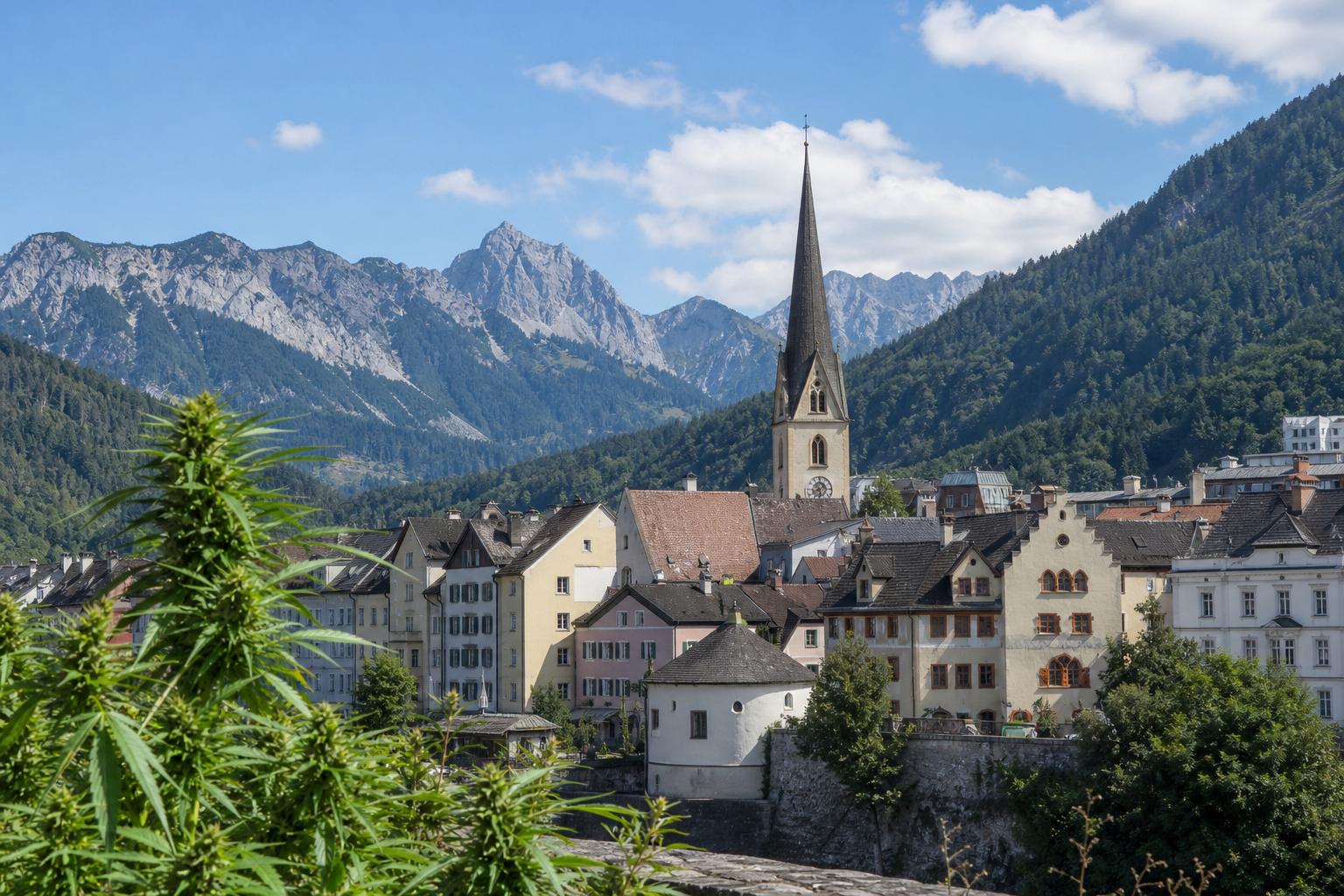
Cannabis trends in Bludenz are shaped less by an open recreational market than by Austria’s national laws, changing attitudes toward CBD, medical access and the needs of residents and visitors. Bludenz is a small Alpine city in Vorarlberg, close to major valleys, ski areas and cross-border travel routes. That setting can create curiosity about cannabis, but it does not create a separate local legal regime.
This guide explains the practical picture without treating online claims or informal conversations as evidence of a local market. It covers what people should know about weed in Bludenz, how CBD differs from intoxicating cannabis, why tourism requires extra caution and where to look for reliable information. Laws and product rules can change, so readers should confirm current requirements with Austrian authorities before buying, carrying or using any cannabis-related product.
Cannabis trends in Bludenz and the wider Austrian context
Bludenz follows Austrian federal law. Municipal authorities do not have the power to legalise recreational cannabis sales or establish licensed adult-use dispensaries independently. As a result, the most visible developments are likely to involve education, low-THC hemp products, medical discussions and harm-reduction awareness rather than a regulated recreational retail scene.
There is no reliable basis for assigning a precise consumption rate or identifying a uniquely “Bludenz” cannabis culture without a city-specific study. It is more accurate to discuss the factors that influence local interest: the city’s student and working populations, nearby tourism, access to pharmacies and healthcare, and connections with other Vorarlberg communities.
Readers researching cannabis in Bludenz may encounter products or services advertised using terms such as hemp, CBD, legal cannabis or wellness cannabis. These labels are not interchangeable. The product’s THC content, intended use, formulation, seller and legal classification all matter.
Cannabis laws in Bludenz: what the national rules mean locally
Austria generally treats cannabis containing significant amounts of THC as a controlled narcotic. Recreational possession, acquisition, production and supply can create legal problems, even where a person describes the amount as small or intended only for personal use. Personal-use circumstances may affect how authorities or prosecutors handle a case, but they should not be mistaken for a general permission to possess cannabis.
Buying cannabis from an informal seller also carries risks beyond criminal law. The product may be mislabelled, contaminated or much stronger than expected. Bringing cannabis across a border can create additional offences because customs and import rules apply separately from rules about possession inside Austria.
The Austrian Legal Information System provides the official legislation database for checking current statutory wording. It is a more dependable starting point than social-media posts, old travel pages or claims that Austria has adopted the same rules as another European country.
CBD is not automatically risk-free
CBD, or cannabidiol, is not the same substance as intoxicating THC and does not normally produce the same psychoactive effect. However, a CBD product can still raise legal and safety questions. Product composition, THC traces, advertising claims, food regulations and the intended method of use may all be relevant.
Consumers should be cautious with flowers, oils, gummies, vapes and other products sold online or in shops. A product described as “legal” may not be legal in every form, and a laboratory certificate from an unknown source may not provide meaningful assurance. Packaging should identify the producer, ingredients, batch information and appropriate warnings. When information is incomplete, avoiding the product is the safer option.
People taking prescription medicines should also ask a pharmacist or doctor before using CBD. Cannabinoids can interact with medicines, and products sold as supplements are not a substitute for medical evaluation.
Where local interest is developing
CBD and hemp retail
One of the most visible parts of the local conversation is likely to be hemp and CBD retail rather than high-THC cannabis. Interest can include cosmetics, fibre products, foods, oils and other non-intoxicating preparations. Availability does not, however, prove that every product meets Austrian requirements.
Anyone comparing CBD shops in Bludenz should ask straightforward questions: Is the product intended for food, cosmetics or another use? Does the label disclose ingredients and THC content? Is the seller transparent about testing and storage? Does the product make medical claims that would require proper authorisation? These questions help distinguish responsible retail from aggressive marketing.
Medical conversations
Medical cannabis in Bludenz should be understood through the Austrian healthcare system, not through recreational dispensary language. Some cannabinoid-based medicines may be available when prescribed and medically appropriate, but a doctor decides whether a treatment is suitable. The process depends on the medicine, diagnosis, clinical evidence and applicable prescribing rules.
Patients should speak with a qualified healthcare professional about symptoms, existing medicines, possible side effects and alternatives. They should not replace prescribed treatment with unregulated flowers, oils or imported products. A pharmacy is a better source of product and prescription information than an anonymous online vendor.
The Austrian Federal Ministry of Social Affairs, Health, Care and Consumer Protection is an appropriate official source for broader health and consumer-protection information. Medical questions should still be addressed directly with a doctor or pharmacist.
Tourism and cross-border awareness
Bludenz’s location makes travel an important part of the discussion. Visitors may arrive from other Austrian regions or from neighbouring countries where cannabis rules differ. Those differences do not travel with the visitor. A product purchased legally elsewhere may still create problems when carried into Austria, and a prescription or foreign medical document may not automatically authorise transport across a border.
Do not carry cannabis, THC products or unidentified CBD products across international borders without confirming the applicable rules in advance. Drivers should never operate a vehicle while impaired, and a person who feels affected should not assume that coffee, fresh air or a short wait makes driving safe.
For broader regional context, readers can compare this guide with information about cannabis regulations in Feldkirch and the practical overview of cannabis in Dornbirn. These neighbouring-city articles provide context, but they do not replace Austrian law or professional advice.
Safer choices for residents and visitors
Legal compliance is only one part of responsible decision-making. Cannabis can affect attention, coordination, memory and reaction time. Effects may be unpredictable when potency is unknown or when cannabis is combined with alcohol, sedatives or other drugs.
- Do not drive, cycle in traffic, ski or operate machinery after using an intoxicating product.
- Avoid combining cannabis with alcohol or medicines that cause drowsiness.
- Keep all cannabis-related products away from children and pets.
- Do not consume an unfamiliar product when its ingredients or THC content are unclear.
- Be especially cautious with edibles because effects can take longer to appear and may last longer than expected.
- Seek medical help for severe anxiety, chest pain, confusion, loss of consciousness or other alarming symptoms.
Visitors should also consider accommodation rules. A hotel, holiday rental or campsite may prohibit smoking, vaping or possession regardless of what a guest believes the law permits. Public use can create nuisance and may be restricted by local rules or property policies. Respecting neighbours, shared spaces and Alpine environments is part of safer travel.
How to evaluate cannabis information in Bludenz
Search results can mix current law with outdated articles, commercial promotions and advice written for another country. A useful source should identify the jurisdiction, explain the date or legal basis of its claims and distinguish THC products from CBD and hemp goods.
- Check Austrian government or legal sources for the rule itself.
- Confirm whether the information concerns possession, sale, cultivation, prescription medicines, food or cosmetics.
- Look for product-specific details rather than relying on the word “cannabis.”
- Ask a pharmacist or doctor about health issues and drug interactions.
- Do not infer legality from the fact that a product is displayed in a shop or advertised online.
It is also important to separate a trend from an anecdote. A new shop, a local discussion group or a rise in online searches may indicate interest, but none of these alone proves widespread use or a change in policy. For Bludenz, the most defensible conclusion is that cannabis remains a topic influenced by national regulation, public-health concerns, CBD commerce and regional tourism.
Conclusion: a careful view of Bludenz’s cannabis landscape
The cannabis picture in Bludenz is best understood as a regulated and evolving issue rather than an established recreational market. Cannabis laws in Bludenz are primarily Austrian laws: high-THC recreational cannabis is not a normal legal retail product, medical access depends on healthcare rules, and CBD products require careful attention to formulation and compliance.
Residents and visitors can make better decisions by checking official sources, using pharmacies and healthcare professionals for medical questions, avoiding informal sellers and never transporting uncertain products across borders. As interest develops, accurate information and practical harm reduction will be more useful than exaggerated claims about a local cannabis boom.