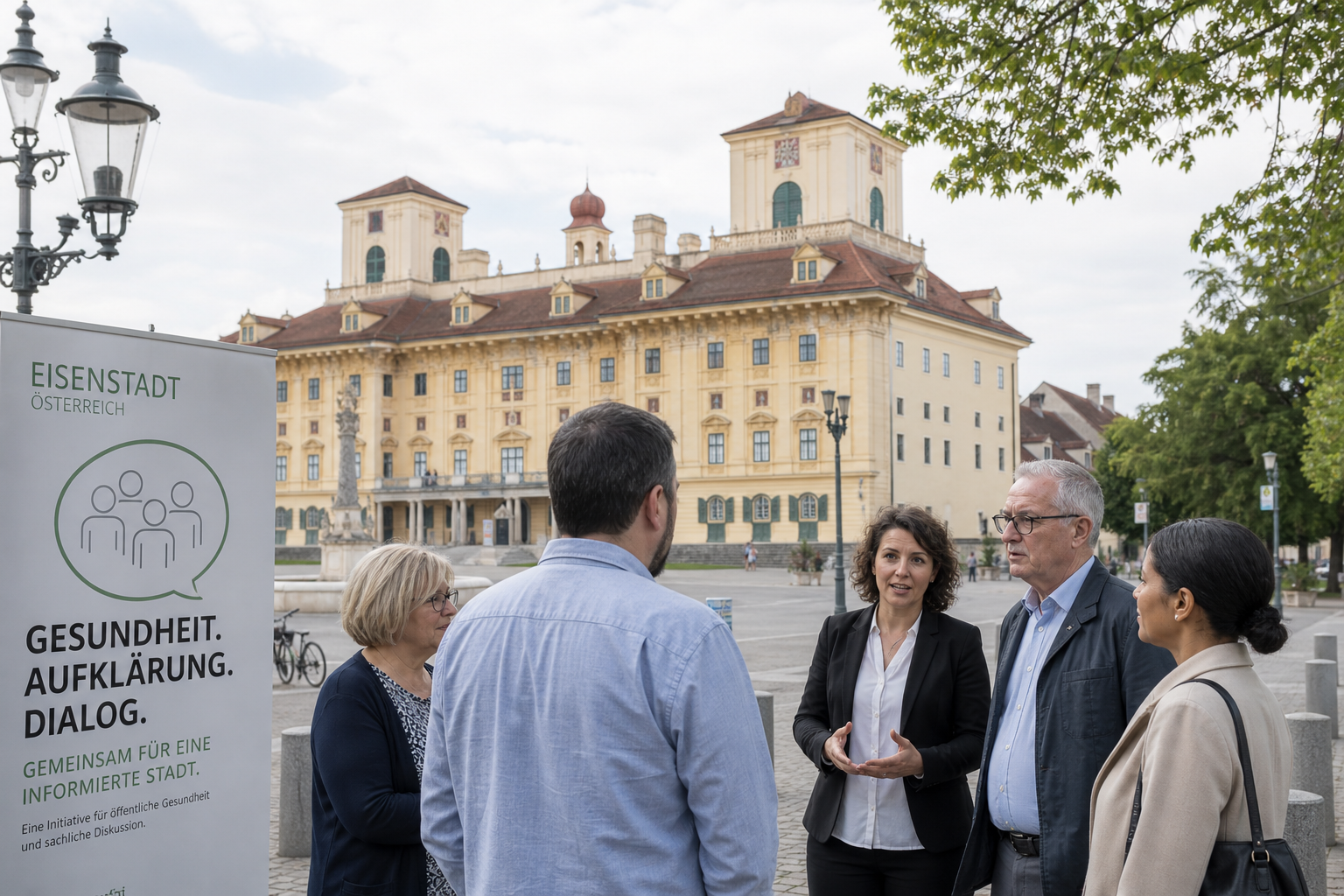
The Cannabis community in Eisenstadt is best understood as a mix of private conversations, health-focused information, CBD interest and wider cultural debates rather than as a clearly defined public scene. Eisenstadt is the capital of Burgenland, a compact city with close connections to surrounding towns and Vienna. Those connections shape how residents find information, access healthcare and discuss cannabis policy.
Anyone searching for weed in Eisenstadt should separate social curiosity from the legal and health realities. Austria does not treat recreational cannabis as an ordinary retail product, and buying, possessing, supplying or cultivating cannabis can create legal problems depending on the circumstances. At the same time, medical questions, CBD products, prevention work and public discussion are legitimate subjects. This guide explains the local context without presenting illegal purchasing or use as safe, normalised or risk-free.
What the cannabis community in Eisenstadt looks like
There is no reliable basis for assuming that Eisenstadt has a formal cannabis club, a regulated recreational market or a single organisation representing cannabis users. In a smaller regional capital, community activity is more likely to be informal. People may encounter the topic through friends, online forums, harm-reduction discussions, medical appointments, CBD retailers or national policy debates.
This distinction matters. A group of adults discussing cannabis is not necessarily a legal association for cultivation or distribution. Austrian law does not allow local branding or membership language to override national rules. A responsible community therefore focuses on accurate information, personal boundaries, health awareness and respect for public spaces.
Local identity and regional connections
Eisenstadt’s location in Burgenland gives the subject a regional dimension. Residents may travel to Vienna or other towns for specialist healthcare, cultural events and regulated retail categories such as legal hemp products. Cross-border proximity can also create confusion: rules in neighbouring countries do not automatically apply in Austria, and bringing cannabis across a border can carry serious consequences.
Local discussion is also influenced by ordinary community concerns. These include impaired driving, youth protection, workplace expectations, privacy, housing rules and the difference between CBD products and intoxicating THC products. A useful cannabis conversation addresses these practical issues instead of relying on slogans about either total safety or inevitable harm.
Cannabis laws in Eisenstadt and across Austria
The same national framework applies in Eisenstadt as elsewhere in Austria. Cannabis products containing controlled levels of THC are generally subject to Austria’s narcotics legislation. Recreational possession, acquisition, production and supply can be unlawful, even when the amount appears small. The consequences depend on factors such as the substance, quantity, conduct, prior history and whether the matter involves supply or personal use.
In some personal-use situations, Austrian authorities may use health-oriented measures or conditional procedures rather than treating every case identically. That should not be mistaken for legalisation. Police, prosecutors and courts apply the relevant rules to the facts of each case, and only an appropriate Austrian legal professional can advise on an individual situation.
For a current legal reference, readers can consult the Austrian Legal Information System, which publishes official laws and regulations. A web search, social-media post or seller’s claim is not a substitute for checking the applicable legislation.
Public use, driving and possession
Using cannabis in a park, near schools or at a public event can create additional practical and social risks even apart from the underlying drug law. Smoke and odour can affect other people, and public consumption may draw attention from law enforcement or create conflict with venue rules. Keeping cannabis away from children and avoiding consumption around people who have not consented are basic community responsibilities.
Driving after using cannabis is particularly risky. Feeling calm or capable does not prove that reaction time, attention or judgement are unaffected. Do not drive, cycle in traffic or operate machinery after consuming an intoxicating product. Combining cannabis with alcohol or sedating medicines can increase impairment.
Travellers should be especially cautious. Do not assume that a product purchased legally in another country may be carried into Austria. Border controls and national drug laws can apply even when a product was permitted where it was bought.
CBD and legal hemp products in Eisenstadt
Some people who search for cannabis in Eisenstadt are actually looking for CBD, hemp cosmetics, seeds, food products or other non-intoxicating items. These categories are not interchangeable with recreational cannabis. Product legality can depend on THC content, intended use, ingredients, labelling, food rules and how the item is marketed.
Consumers should buy only from transparent businesses that provide clear product information and a receipt. Be cautious when a seller promises to diagnose, cure or treat a medical condition, or when packaging does not identify ingredients and responsible-use instructions. “Hemp” and “CBD” labels do not guarantee that a product is free from contamination or suitable for every person.
Questions to ask before buying a hemp product
- What exactly is the product, and is it intended for food, cosmetics or another permitted use?
- Does the packaging identify ingredients, dosage information and the responsible business?
- Is there credible evidence about THC content and batch testing?
- Could the product interact with prescription medicines or affect an employment drug test?
- Does the seller make medical claims that should instead be discussed with a healthcare professional?
Rules for novel foods, extracts and other hemp-derived products can change or depend on how a product is classified. When in doubt, check official guidance rather than relying on an online advertisement.
Medical cannabis in Eisenstadt
Medical cannabis in Eisenstadt should be approached through the Austrian healthcare system, not through informal suppliers. A patient with pain, nausea, spasticity or another condition should speak with a doctor about evidence-based treatment options and the risks of cannabis-based medicines. The appropriate product, prescription requirements and reimbursement questions depend on the diagnosis and the medicine involved.
Medical use is not a general permission to possess any cannabis product. A prescribed medicine has a defined composition, route of administration and dosage. Unregulated flower, oils or edibles may contain unexpected amounts of THC or contaminants and may not be equivalent to a prescribed treatment.
The public Austrian health portal provides general health information and can help readers find reliable starting points for conversations with doctors and pharmacists. Visit Austria’s official health information portal for guidance from the national health information system. Seek urgent medical help for severe confusion, chest pain, difficulty breathing, loss of consciousness or other alarming symptoms after consuming a cannabis product.
Building a safer and more informed local culture
A constructive cannabis community does not need to promote consumption. It can create value by sharing accurate information, challenging myths and encouraging people to seek help early. This is particularly important for young people, people with a history of psychosis or severe anxiety, pregnant individuals and anyone taking medicines that affect the central nervous system.
Practical harm-reduction principles
- Do not use cannabis before driving, working at height, caring for children or making safety-critical decisions.
- Avoid mixing cannabis with alcohol, sedatives or other intoxicating substances.
- Edibles can take longer to produce effects and may last much longer than expected; never assume that a delayed effect means more is needed.
- Keep all cannabis-related products locked away from children and pets.
- Do not share products when someone is vulnerable, inexperienced or unable to give informed consent.
- Use private, lawful settings and respect neighbours, smoke-free rules and public-space expectations.
- Ask a doctor or pharmacist about interactions, especially when using antidepressants, sleep medicines, pain medicines or seizure treatments.
Harm reduction does not eliminate legal or health risks. It simply recognises that clear information can reduce preventable injury, unsafe driving and delayed medical care.
Reliable information and community discussion
Local readers can compare Eisenstadt’s situation with broader Austrian discussions about prevention, regulation and access. For example, our guide to cannabis awareness in Ansfelden examines laws, health and safer choices from another Austrian local perspective. Our article on cannabis culture in Innsbruck also shows how community attitudes can differ between regions without changing the national legal framework.
Other useful comparisons include cannabis legality in Wiener Neustadt and cannabis information in Leonding. These comparisons are helpful for identifying recurring questions, but they should not be read as legal advice or as proof that a particular local activity is permitted.
How to recognise responsible information
Good sources explain uncertainty, distinguish CBD from THC, identify the jurisdiction and avoid promises of guaranteed effects. They do not publish private personal details, encourage sales to minors or present unverified products as medicine. A responsible local discussion also leaves room for people who do not want to consume cannabis and for residents affected by substance-related harm.
What visitors and residents should remember
Visitors should not treat Eisenstadt as a destination for recreational cannabis purchasing. Austria’s rules apply to residents and tourists alike. Avoid carrying cannabis across borders, do not drive after use and do not rely on a seller’s statement that a product is legal. Residents considering medical treatment should use qualified healthcare professionals and keep documentation for prescribed medicines when travelling, while checking the rules that apply to their route.
For community organisers, the safest approach is to centre events or online discussions on law, health, prevention, history, hemp products and patient education. Clear age boundaries, no unlicensed sales and no encouragement of illegal consumption help protect participants and the wider community.
Conclusion
The cannabis community in Eisenstadt is better viewed as an evolving conversation than as a single, established public network. Questions about weed in Eisenstadt, CBD, medical treatment and Austrian policy all require different answers. The national legal framework remains central, while local culture is shaped by Eisenstadt’s size, Burgenland identity and links to Vienna and neighbouring regions.
The most useful community approach is informed and realistic: understand the law, distinguish medical products from unregulated cannabis, avoid impaired driving, protect young people and seek professional advice when health concerns arise. That approach supports safer choices without overstating what is legal or promising benefits that evidence cannot support.