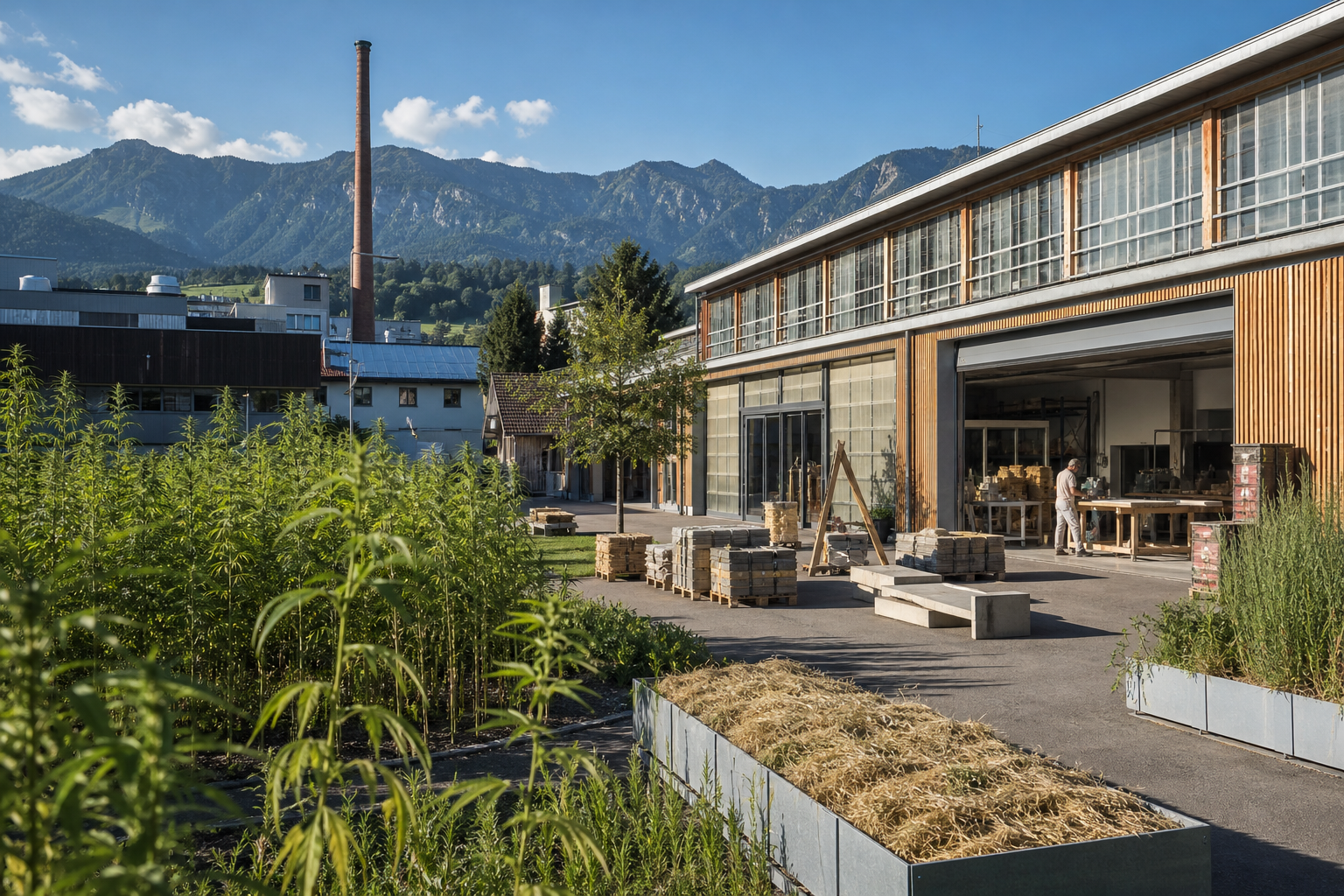
The Cannabis industry in Hohenems, Austria is better understood as a developing hemp, wellness and regulated-medical market than as a recreational cannabis scene. Hohenems is a small city in Vorarlberg with connections to Dornbirn, Feldkirch, Bregenz and the wider Rhine Valley. Local businesses therefore operate within Austrian law while also serving a region shaped by cross-border commerce, tourism and manufacturing.
For residents and visitors searching for cannabis in Hohenems, the most important distinction is between industrial hemp, low-THC CBD products, prescription medicines and prohibited high-THC cannabis. These categories are not interchangeable. A product labelled “hemp” or “CBD” is not automatically legal, safe or suitable for every use.
Cannabis industry in Hohenems, Austria: what the local market includes
Hohenems does not have a separately regulated cannabis framework. Businesses in the city are subject to national Austrian rules, product-specific requirements and, in some cases, additional rules for food, cosmetics, medicines, tobacco-related goods or agricultural production.
The local industry can include several legitimate segments:
- Industrial hemp: cultivation and processing of approved low-THC varieties for fibre, seed, food ingredients, building materials or other commercial uses.
- CBD and hemp products: retail products that must meet the legal requirements applying to their formulation, intended use, packaging and marketing.
- Medical products: authorized medicines and pharmacy-based preparations supplied through the Austrian healthcare system.
- Professional services: testing, packaging, logistics, agricultural consulting, compliance work and product development.
- Research and innovation: opportunities connected with plant science, sustainable materials, extraction technology and regulated health products.
This means that a visible cannabis business may be selling legal hemp goods rather than recreational cannabis. A shop name, green branding or a cannabis leaf symbol does not prove that a product contains legal levels of THC or that the seller is authorized to make medical claims.
Cannabis laws in Hohenems and across Austria
Austria regulates cannabis primarily through national law, so the same basic rules apply in Hohenems as elsewhere in the country. The cultivation, possession, sale and supply of cannabis containing prohibited levels of THC can lead to criminal consequences. Personal possession is not the same as legal retail, and decriminalization discussions should not be confused with a general right to buy or sell cannabis.
The legal position can depend on the plant material, THC content, purpose, product category and conduct involved. Anyone planning to cultivate, import, process or sell hemp should obtain specialist advice before beginning operations. The official Austrian Legal Information System is the appropriate place to consult current statutes and regulations rather than relying on an old social-media summary or an informal shop description.
Low-THC hemp is subject to conditions involving approved varieties and permitted uses. CBD products may also be affected by rules on novel foods, cosmetics, medicines, tobacco-related products, advertising and consumer protection. Products sold as food or supplements require particular caution because legality may depend on the ingredient, formulation and authorization status. “Natural” is not a legal category.
Why product classification matters
A business selling hemp seed oil is operating in a different legal category from a business selling CBD flowers, cosmetics or a medicinal preparation. Each category can have different rules for ingredients, testing, claims, labelling and distribution. A product that is lawful in one European country may not be lawful to import or sell in Austria.
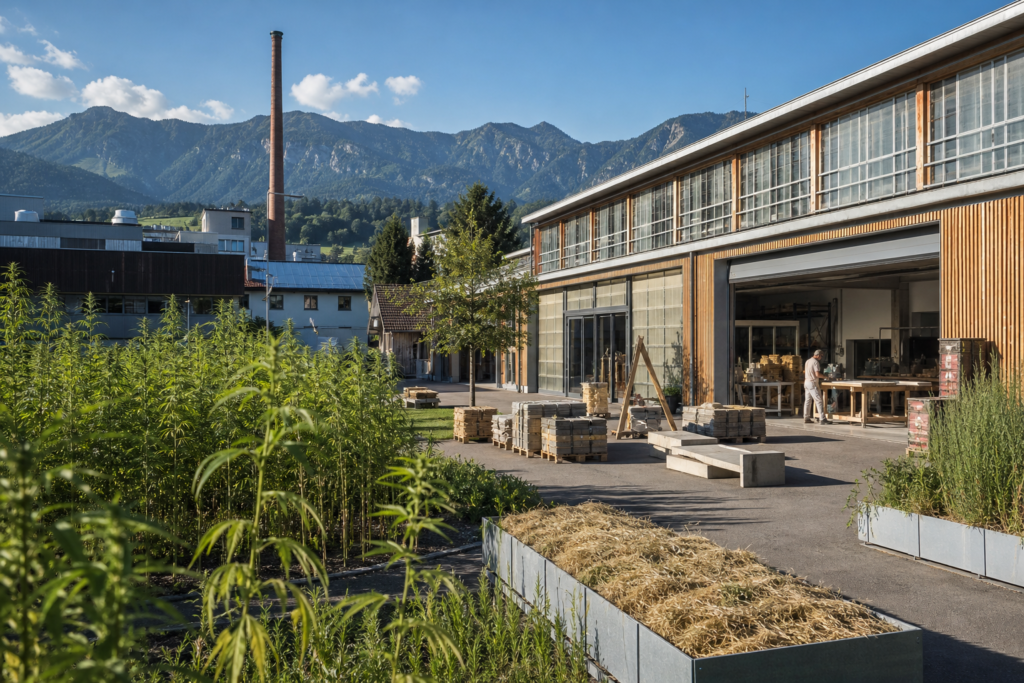
Businesses should document the source of plant material, laboratory results, batch information, storage procedures and intended market. They should also avoid claims that a product treats anxiety, pain, insomnia or another medical condition unless those claims are permitted for an authorized medicine. Consumers should be cautious when a seller promises guaranteed therapeutic results or says that Austrian rules do not apply because the item is “just hemp.”
Hemp businesses and economic opportunities in Hohenems
Hohenems has characteristics that can support a small but varied hemp economy. Its location in the Vorarlberg Rhine Valley offers access to regional transport networks, established manufacturing capabilities and nearby commercial centres. That does not guarantee success, but it may benefit companies that focus on traceable supply chains, specialist manufacturing or business-to-business services rather than trying to imitate a recreational dispensary model.
Potential opportunities include the production of hemp-based textiles, insulation, composite materials, food ingredients and personal-care products. Farmers may also investigate whether cultivation suits local soil, climate, contracts and rotation plans. Agricultural activity must still comply with seed, cultivation, environmental and THC-related requirements.
For entrepreneurs, the strongest business case is usually built around a clearly defined product and a defensible compliance process. Before investing, a company should consider:
- Whether the proposed activity is cultivation, processing, wholesale, retail, food production, cosmetics or medicine.
- Which Austrian authority or professional adviser can confirm the required permits and registrations.
- How THC and contaminant testing will be performed and recorded.
- Whether labels and advertising avoid unauthorized health or therapeutic claims.
- How products will be recalled if testing or regulatory checks identify a problem.
- Whether insurance, banking, transport and cross-border sales create additional restrictions.
Businesses considering CBD or medical product development should also review the information provided by the Austrian Federal Office for Safety in Health Care. Its remit is relevant to medicines and health-related regulatory questions, although a business may need advice from other Austrian authorities depending on the product.
CBD products and consumer questions in Hohenems
People searching for weed in Hohenems may actually be looking for CBD products, hemp cosmetics or legal alternatives to high-THC cannabis. CBD is not intoxicating in the same way as THC, but products can vary substantially in quality and composition. Some may contain measurable THC, inaccurate cannabinoid levels, contaminants or ingredients that are unsuitable for ingestion.
Consumers should check the product category, ingredients, batch or lot information, recommended use and responsible seller details. Independent laboratory testing is more useful than a large percentage printed on the front of a package. A certificate should identify the tested batch and show enough information to evaluate cannabinoids and relevant contaminants.
Extra caution is appropriate for oils, flowers, vapes, edibles and imported products. Vaping liquids and edible products may present additional risks because formulation and dosing can be difficult to assess. CBD can also interact with medicines, particularly when used regularly or at higher amounts. People who are pregnant, breastfeeding, under medical treatment or managing liver disease should speak with a qualified healthcare professional before use.
Buying a CBD product does not create permission to drive after taking a potentially THC-containing product. Drivers should also remember that impairment and drug-driving rules are separate from the question of whether a product was marketed as legal hemp.
Medical cannabis in Hohenems: access and realistic expectations
Medical cannabis in Hohenems is accessed through Austria’s medical system, not through an unrestricted recreational dispensary network. A patient should discuss symptoms and treatment options with a doctor, who can determine whether an authorized medicine or pharmacy preparation is clinically appropriate. The exact route depends on the condition, product, prescription and current reimbursement or dispensing rules.
Patients should not assume that cannabis flower, CBD oil or an imported product is a substitute for prescribed treatment. Medical products require reliable composition, dosing instructions and professional monitoring. A doctor or pharmacist can explain possible adverse effects, interactions and whether a patient should avoid driving or operating machinery.
Visitors should be especially careful when travelling with cannabis-based medicines. Carrying a product across a border can involve the laws of both the departure and destination countries, even when the medicine was legally prescribed at home. Original packaging, a prescription and supporting medical documentation may be helpful, but they do not automatically guarantee permission to travel. Confirm requirements with the relevant authorities before departure.
How Hohenems compares with the wider Vorarlberg market
Hohenems is part of a connected regional market rather than an isolated cannabis economy. Residents may compare products and information from nearby cities, but a business registered elsewhere still has to comply with Austrian rules when selling into Hohenems. Nearby coverage can provide useful context: our guides to cannabis policy in Bregenz, cannabis regulations in Feldkirch and the cannabis guide to Dornbirn discuss related regional questions without changing the national legal framework.
Cross-border proximity may increase interest in cannabis products, but it also increases the importance of checking customs, transport and import rules. Switzerland, Germany and Austria do not have identical cannabis laws. A product purchased legally in one jurisdiction may be restricted in another.
Safer choices for residents, visitors and businesses
A responsible local cannabis culture depends on accurate information rather than aggressive marketing. Consumers should avoid unlabelled products, sellers who refuse to explain ingredients, and offers that promise unusually strong effects at very low prices. They should never drive while impaired or combine cannabis with alcohol or other sedatives.
Businesses can contribute to a safer market by using age controls where required, keeping clear records, training staff and referring medical questions to qualified professionals. They should also separate educational content from unsupported promotional claims. For local authorities and community organizations, practical information about risks, legal boundaries and disposal of unwanted products is more useful than assuming every hemp product has the same effect.
Conclusion
The cannabis industry in Hohenems is most likely to develop through compliant hemp production, specialist manufacturing, CBD-related commerce, medical products and professional services. Recreational high-THC cannabis remains a separate legal issue and should not be treated as an ordinary retail category.
For consumers, the safest approach is to identify the product category, check current Austrian rules and seek medical advice when health issues are involved. For entrepreneurs, success depends on testing, transparent labelling, accurate advertising and early regulatory guidance. Hohenems may benefit from the wider Vorarlberg economy, but every cannabis-related activity still needs to fit the applicable Austrian legal framework.