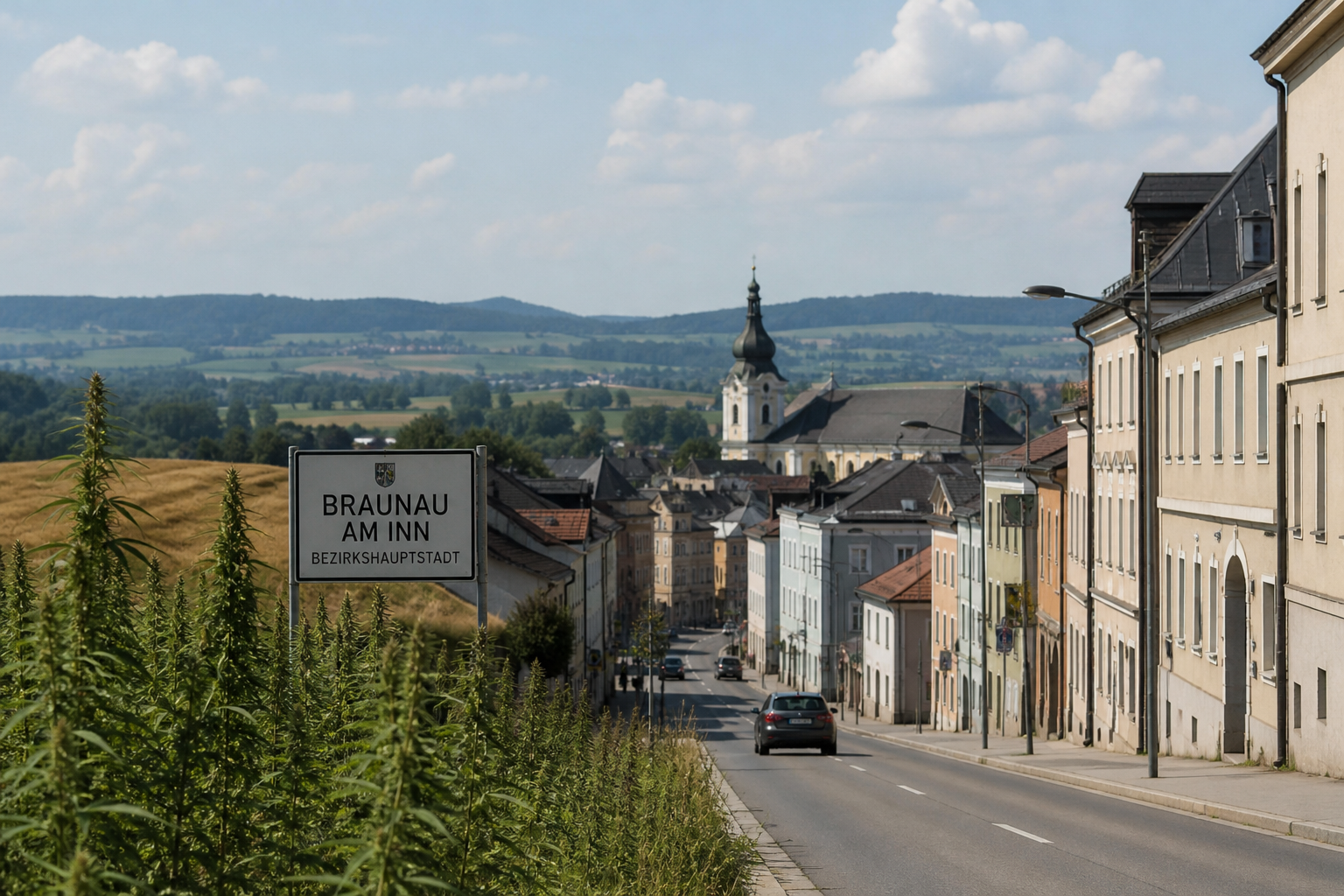
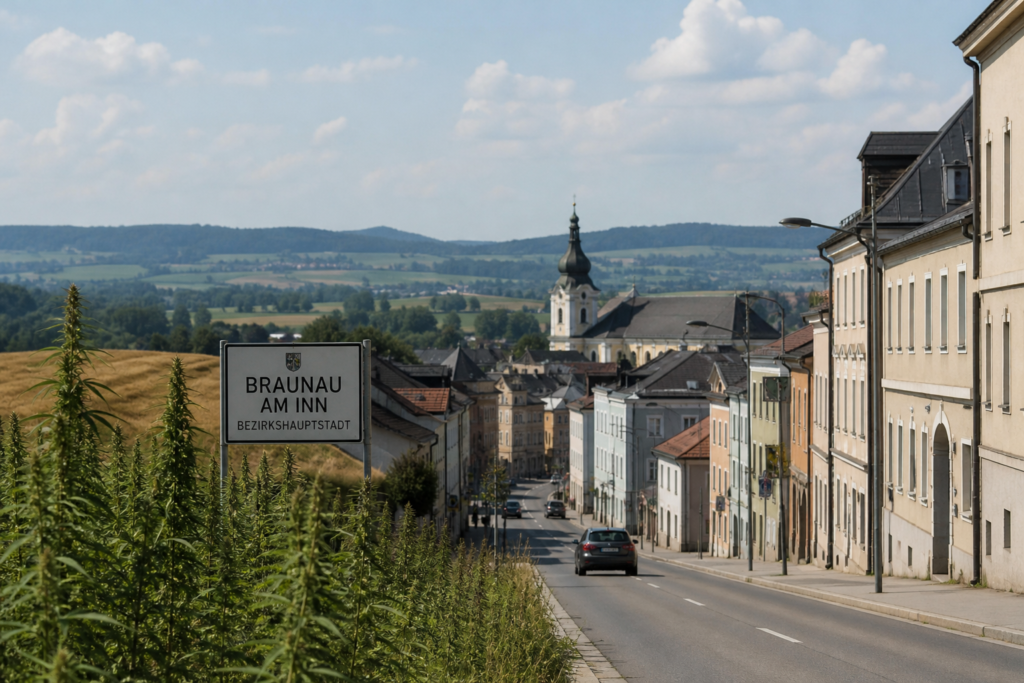
The Marijuana industry in Braunau am Inn, Austria is best understood as a regulated collection of hemp, CBD, pharmaceutical, agricultural and advisory activities rather than a legal recreational marijuana market. Braunau am Inn is a district town in Upper Austria near the German border, so local businesses and consumers may encounter cross-border questions in addition to normal Austrian rules.
For residents, visitors and prospective businesses, the important distinction is between industrial hemp, low-THC products, medicinal preparations and cannabis intended for intoxication. These categories are not interchangeable. A product sold as hemp or CBD is not automatically legal in every form, and a medical product is not the same as a recreational product.
This guide explains the market context, practical legal issues and responsible questions to ask when researching weed in Braunau am Inn. It does not replace advice from an Austrian lawyer, pharmacist, doctor or relevant authority.
What the marijuana industry in Braunau am Inn, Austria actually includes
There is no simple local industry label covering every cannabis-related activity. In Braunau am Inn, the broader sector may include agricultural hemp, food and cosmetic products, CBD-related retail, laboratory or testing services, pharmacies, logistics, packaging, legal advice and health information. Some businesses may operate from the district while serving customers throughout Upper Austria or online.
That does not mean Braunau has a licensed network of recreational marijuana dispensaries. Austria’s framework distinguishes controlled cannabis containing intoxicating levels of THC from permitted hemp-related products and medicines. The commercial opportunity is therefore shaped by compliance, product formulation, documentation and sales channels.
Hemp, CBD and marijuana are different categories
Industrial hemp can be cultivated and processed for fibre, seeds, food ingredients or other lawful purposes when it meets applicable requirements. CBD describes a cannabinoid, not a universal legal status. A CBD oil, flower, cosmetic or food supplement can be subject to different rules depending on its ingredients, THC content, intended use, packaging and route to market.
Products marketed with therapeutic promises deserve particular caution. A seller cannot simply turn a consumer product into an approved medicine by using medical language on a website or label. Businesses need to establish whether a product is a cosmetic, food, novel food, medicinal product or another regulated category before advertising it.
Cannabis laws in Braunau am Inn: the national framework
Municipal location does not create a separate cannabis regime. The same Austrian federal framework generally applies in Braunau am Inn as elsewhere in the country. Possession, supply, cultivation and preparation of cannabis can create criminal or administrative consequences, especially where the material is intended for intoxication or is handled commercially without authorization.
Rules can depend on the substance, quantity, purpose, evidence of supply and the person’s circumstances. Consumers should not assume that a small amount, a foreign purchase or a product described as “natural” removes legal risk. Anyone dealing with a specific incident should obtain professional legal advice rather than rely on a general online summary.
The Austrian government’s official public-services portal is a useful starting point for checking current information about national rules and public authorities. Because regulations and enforcement guidance can change, current official material should take priority over older articles, social-media posts or retailer claims.
Why the German border matters
Braunau am Inn’s position near Bavaria can make cross-border shopping and travel seem convenient, but cannabis rules do not automatically transfer across the border. A product legally sold in one country may be restricted in another. Importing, exporting, transporting or carrying cannabis products across a national border can raise issues separate from possession within Austria.
Visitors should avoid treating a trip to a neighboring country as a legal workaround. The safest approach is to check both countries’ current requirements before travelling and not carry cannabis products across the border unless a qualified authority confirms that doing so is lawful.
CBD shops and hemp businesses near Braunau am Inn
People searching for CBD shops in Braunau am Inn may encounter specialist retailers, health-oriented businesses, pharmacies, online stores or general shops carrying hemp products. Availability alone does not prove that every item complies with Austrian requirements. A responsible buyer should inspect the product identity, ingredients, THC information, batch details and seller contact information.
Retailers should be able to explain what category a product belongs to and what evidence supports its sale. Vague claims such as “completely legal everywhere,” “stronger than prescription medicine” or “guaranteed to treat pain” are warning signs. Product testing is also important because cannabinoid content and contamination risks cannot be judged reliably by appearance or smell.
For businesses, compliance begins before opening a shop or listing products online. Operators may need to consider business registration, premises rules, consumer protection, advertising restrictions, tax obligations, product safety, waste handling, employment law and sector-specific permits. A company selling food, cosmetics or medicinal products may face very different requirements from an agricultural hemp producer.
Questions to ask before buying a CBD or hemp product
- What is the exact product category: food, cosmetic, medicine, raw material or something else?
- Does the label clearly identify ingredients, dosage guidance, batch information and the responsible business?
- Is there a recent, credible laboratory report for the relevant batch?
- Does the seller avoid unsupported claims about curing or preventing disease?
- Could the product affect driving, work, drug testing or prescribed medicines?
- Are returns, complaints and adverse-reaction procedures clearly explained?
Consumers can also consult the Austrian Agency for Health and Food Safety for broader information about food, product and health-safety responsibilities. The agency is not a substitute for personalized medical or legal advice, but it is a more reliable reference point than anonymous product reviews.
Medical cannabis in Braunau am Inn
Medical cannabis in Braunau am Inn should be discussed through Austria’s healthcare system, not through an unregulated dispensary model. Patients with relevant symptoms should speak with a qualified doctor, who can assess the diagnosis, existing treatments, possible interactions and whether an approved medicine or another treatment is appropriate.
Pharmacy supply, prescription requirements and reimbursement questions depend on the specific medicine and the patient’s circumstances. A doctor or pharmacist can explain how a prescribed product is obtained and used. Patients should not substitute online CBD products for prescribed treatment without medical guidance, especially when taking sedatives, anticoagulants, seizure medicines or other drugs with interaction potential.
People researching cannabis in Braunau am Inn may benefit from comparing local questions with wider Austrian guidance. For example, the article on cannabis education in Kufstein discusses related legal and safety considerations in another border-region setting, while the guide to hemp in Salzburg provides additional context on hemp products and regional access.
Business opportunities and limitations in Upper Austria
The realistic commercial potential around Braunau am Inn is more likely to involve compliant hemp supply chains and professional services than open recreational sales. Possible areas include seed and fibre production, packaging, laboratory testing, agricultural consulting, compliant cosmetics, educational services and logistics. Each area has its own legal and technical requirements.
Entrepreneurs should begin with a written product classification and market assessment. The plan should identify the intended customer, the exact ingredients, the supply chain, testing arrangements, permitted claims, sales geography and storage conditions. It should also address what happens if a batch fails testing or a regulator challenges the product classification.
Online sales do not remove local responsibilities. A business based in Braunau may need to comply with Austrian rules even when its customers are elsewhere, and cross-border orders can trigger additional requirements. Advertising directed at vulnerable people or framed as a substitute for medical care can create particular risks.
A practical compliance checklist
- Confirm the legal classification of every product before sourcing or manufacturing it.
- Obtain professional advice on Austrian cannabis, food, cosmetics, medicine and advertising rules that apply to the business.
- Use documented suppliers and retain invoices, specifications and laboratory results.
- Verify packaging, German-language information, warnings and permitted marketing claims.
- Build procedures for complaints, recalls, adverse reactions and age-restricted sales where relevant.
- Review transport and cross-border arrangements before accepting orders outside Austria.
- Recheck the rules regularly because guidance and enforcement priorities may change.
Safer choices for residents and visitors
For consumers, the safest legal choice is to avoid unlicensed cannabis sales and products with unclear origin. Do not drive or cycle after using intoxicating substances, and do not combine cannabis with alcohol or sedating medicines. Effects can be unpredictable, particularly for people with no previous experience, adolescents, pregnant people and anyone with a personal or family history of serious mental-health conditions.
Visitors should also remember that public consumption, possession, accommodation policies and transport can create separate practical problems even when no sale is involved. Keep products away from children and pets, and seek urgent medical help if someone experiences severe confusion, chest pain, loss of consciousness or another alarming reaction.
Readers comparing local information may also find the overview of cannabis information in Leonding useful for its discussion of Austrian legal distinctions and safer decision-making. Local comparisons should supplement, not replace, current official advice.
Conclusion
The marijuana industry in Braunau am Inn is not a conventional recreational retail market. Its most relevant parts are lawful hemp and CBD activity, healthcare and pharmacy pathways, agriculture, testing, logistics and professional compliance services. The German border adds practical importance to questions about transport and product origin, but it does not create a shortcut around Austrian law.
Whether you are a consumer, patient or entrepreneur, start by identifying the exact product and intended activity. Check current Austrian requirements, use transparent suppliers, avoid unsupported health claims and seek qualified advice for individual cases. That approach provides a more accurate picture of the Braunau am Inn cannabis economy than assuming every hemp-related product belongs to one broad marijuana category.