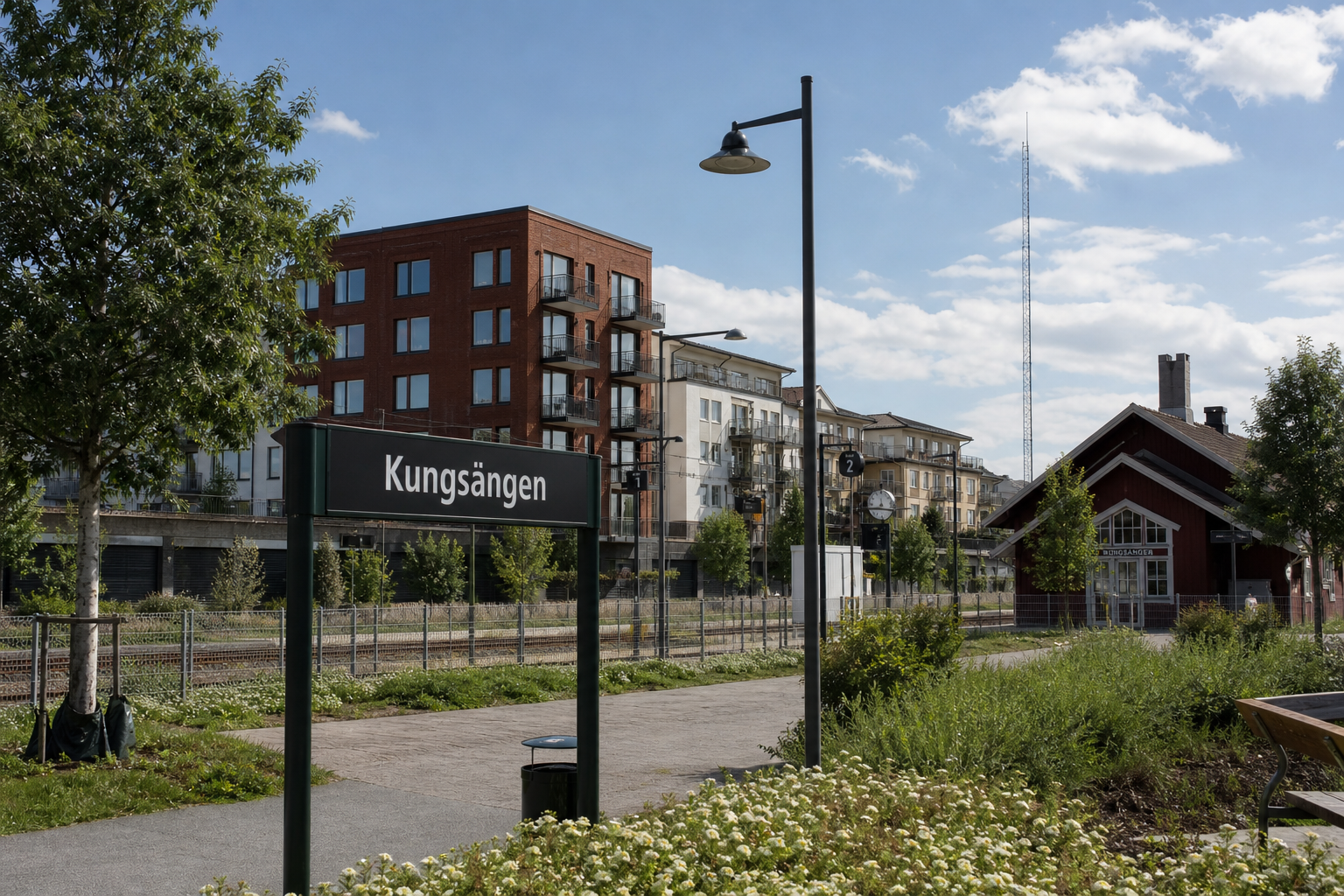
Questions about Cannabis decriminalization in Kungsängen are best answered by looking at Swedish national law rather than expecting a separate municipal policy. Kungsängen is a locality in Upplands-Bro Municipality, north-west of Stockholm, and cannabis rules there are generally the same as in the rest of Sweden. Sweden does not operate a broad local decriminalization model for recreational cannabis possession or use.
That means residents and visitors should not assume that a quiet setting, a small quantity, or private consumption makes cannabis lawful. Possession, acquisition, transfer, cultivation and use can all create legal risks. This guide explains the national framework, how it applies in Kungsängen, what medical access means, and where to seek help without relying on rumours or informal advice.
Is cannabis decriminalized in Kungsängen?
No. There is no known Kungsängen-specific rule that removes or overrides Sweden’s national restrictions on cannabis. The municipality, local police area and Stockholm County do not have authority to legalize recreational cannabis or create a separate possession threshold.
In practical terms, weed in Kungsängen is subject to the same criminal-law framework as cannabis in Stockholm, Gothenburg, Malmö and other Swedish locations. A person may still face investigation for a small amount intended for personal use. The precise outcome depends on the facts, evidence, substance, quantity and circumstances of the case.
Swedish drug policy has historically taken a restrictive approach to both possession and personal consumption. Decriminalization is therefore not an accurate description of the current recreational position. Even where authorities treat conduct as a minor drug offence, “minor” describes the potential classification or seriousness of the alleged offence, not permission to possess or use cannabis.
How Swedish cannabis law applies in Kungsängen
The key distinction is between local context and national law. Kungsängen may have its own community services, public spaces and policing priorities, but the underlying criminal rules come from Sweden’s national legal system. The Swedish Penal Code at the Riksdag is an appropriate starting point for understanding the country’s criminal-law structure, although a current Swedish legal professional should be consulted for case-specific advice.
Possession and acquisition
Possessing cannabis can be treated as a drug offence even when the amount is small. Buying, receiving or otherwise acquiring cannabis can create a separate evidentiary issue, particularly if messages, packaging, payment records or witness accounts are involved. The fact that cannabis is for personal use does not make possession lawful.
The severity of a case is not determined by location alone. Courts and authorities may consider the quantity, the substance’s concentration, the person’s role, prior conduct and other circumstances. Readers should avoid treating online claims about a guaranteed “safe amount” as reliable legal guidance.
Use and testing
Swedish law also treats unlawful use as a serious matter. Cannabis may remain detectable after its effects have ended, so a later test can raise questions that are different from whether a person appeared impaired in public. Police procedures and evidentiary rules are fact-dependent, and a positive test does not turn the conduct into a lawful activity.
Driving after using cannabis creates additional risks. Impairment, suspected impairment and the presence of drugs in the body can have serious consequences under Swedish traffic rules. Anyone who has used cannabis should not drive, cycle in dangerous traffic conditions or operate machinery.
Supply, sharing and cultivation
Giving cannabis to another person, selling it, arranging a purchase or storing it for someone else may be viewed more seriously than simple personal possession. Growing cannabis can also involve several legal issues, including possession of the plants, cultivation equipment and any harvested material. A private home does not create an exemption.
These risks apply whether the activity takes place in Kungsängen, elsewhere in Upplands-Bro Municipality or during travel across Sweden. Moving cannabis across borders can add customs and import concerns, even when the destination is another country with different cannabis rules.
Cannabis laws in Kungsängen and public places
People searching for cannabis in Kungsängen sometimes focus on whether use occurs indoors, outdoors or away from central Stockholm. The location may affect how conduct is observed or reported, but it does not create a recreational-use exception.
Using cannabis in a park, near a station, outside a bar, at a school or around residential buildings can create additional practical problems. Smoke, odour, complaints, unsafe behaviour or concerns involving children may bring attention from police or other authorities. Public use can also cause separate issues involving public order, nuisance or traffic safety, depending on the circumstances.
- Do not assume that a secluded outdoor area is a legal consumption zone.
- Do not carry cannabis onto public transport or across municipal boundaries.
- Do not drive after using cannabis or accept a lift from an impaired driver.
- Do not share cannabis with friends, even without payment.
- Keep medicines and other lawful products in their original packaging when travelling.
What penalties may apply?
Penalties depend on the offence and the evidence. A minor drug offence can result in a fine, while more serious conduct may lead to a stronger criminal penalty. Cases involving distribution, repeated offending, larger quantities or organized activity can be treated considerably more severely than an allegation of personal possession.
There is no responsible way to promise a particular outcome from a description such as “a small bag” or “first-time use.” The legal assessment may depend on the measured quantity, laboratory analysis, prior record, admissions, search circumstances and whether other offences are alleged.
A criminal investigation can also create consequences beyond the formal sentence. These may include time spent in custody or at a police station, legal costs, disruption to work or study, immigration complications and problems with international travel. Foreign nationals should obtain qualified advice before making statements about an alleged offence.
For a broader comparison of Swedish rules, see our guide to cannabis laws and penalties in Gustavsberg. The local name differs, but the national legal framework is the important point.
Medical cannabis: a narrow legal pathway
Medical cannabis is not the same as recreational cannabis. Some cannabis-based medicines may be prescribed or supplied under Sweden’s medical and pharmaceutical rules, but this does not provide general permission to buy, grow or possess ordinary cannabis.
Patients should speak with a licensed healthcare professional about symptoms, diagnosis, treatment options and possible side effects. A doctor’s assessment is required; self-medicating with products obtained from an informal source is not a substitute for medical care. Products sold online as CBD or medical cannabis may have uncertain ingredients, inaccurate labelling or enough THC to create legal and health concerns.
The Swedish Medical Products Agency provides official information about medicines and pharmaceutical regulation. Travellers who use a prescribed cannabis-based medicine should check documentation, packaging, prescription requirements and cross-border rules before travelling to or from Sweden.
Can a prescription from another country help?
Not automatically. A prescription or medical authorization issued abroad may not give unrestricted permission to carry a cannabis product into Sweden. Border rules, product classification and documentation requirements can vary. Before travelling, contact the relevant Swedish authority or embassy and obtain advice based on the exact medicine and route.
What to do if police contact you
If police question you about cannabis, stay calm and avoid guessing. Do not obstruct officers, destroy evidence or make inaccurate statements. You can ask what the matter concerns and request legal advice. If you are detained, arrested or asked to provide a formal statement, contacting a qualified defence lawyer is especially important.
Do not rely on social media posts claiming that refusing every question, consenting to every search or signing a document will always produce a particular result. Rights and obligations can depend on the procedural stage and the facts. A lawyer can explain the position more accurately than a generic online article.
- Remain respectful and follow lawful instructions.
- Ask whether you are suspected of an offence and in what capacity you are being questioned.
- Request an interpreter if you do not understand Swedish well enough.
- Ask about access to legal counsel before making a detailed statement.
- Keep records of relevant documents, medicines and travel information.
Health and support in the Kungsängen area
Legal status is only one part of the issue. Cannabis can affect attention, reaction time, memory, anxiety and mental health, and risks may be greater for adolescents or people with a personal or family history of psychosis. Combining cannabis with alcohol or other drugs can increase impairment and unpredictable effects.
If cannabis use is becoming difficult to control, contact a healthcare centre, addiction service or other qualified provider in the Stockholm region. A person in immediate danger, experiencing severe confusion, chest pain, loss of consciousness or a mental-health crisis should seek emergency help. Do not delay urgent care because of fear of legal consequences.
For a related discussion of health information and safer choices, read our article on marijuana health information in Vänersborg. Health advice should come from a clinician who can consider the individual’s age, medicines, medical history and current symptoms.
Common misconceptions about cannabis in Kungsängen
“It is only illegal in big cities”
Incorrect. National law applies in Kungsängen and rural or suburban locations alike. Enforcement priorities may vary, but legality does not depend on population size.
“A small amount is legal for personal use”
Incorrect. A small amount may influence how an alleged offence is assessed, but it does not create a legal personal-use allowance.
“CBD products are always legal”
Incorrect. Legality can depend on THC content, product composition, intended use, marketing and pharmaceutical classification. A product described as CBD should not be assumed to be risk-free or unrestricted.
“Medical use makes any cannabis product acceptable”
Incorrect. Medical access is controlled and product-specific. Prescribed medicine, informal cannabis and unverified online products should not be treated as interchangeable.
What visitors should remember
Visitors to Kungsängen should apply the same caution as residents. Do not bring cannabis into Sweden, carry it on trains or buses, or assume that a legal purchase abroad can be imported. Airport, ferry and land-border controls can involve serious consequences. Travellers using a lawful prescribed product should verify the requirements before departure rather than relying on a foreign prescription alone.
It is also unwise to photograph, post or message about cannabis purchases. Digital communications can become relevant evidence in an investigation. The safest legal approach is not to possess, purchase, transport, cultivate or share recreational cannabis in Kungsängen.
Conclusion
Cannabis decriminalization in Kungsängen has not created a local exception to Sweden’s restrictive national approach. Recreational possession, use, acquisition, sharing and cultivation remain legally risky, and the seriousness of a case depends on the facts rather than a simple city-specific rule. Medical cannabis follows a separate, controlled pathway and should be discussed with a licensed healthcare professional.
For current situations involving police, travel, medicines or an alleged offence, seek advice from the relevant Swedish authority or a qualified lawyer. This article provides general information, not individualized legal advice, and rules or enforcement practices can change.