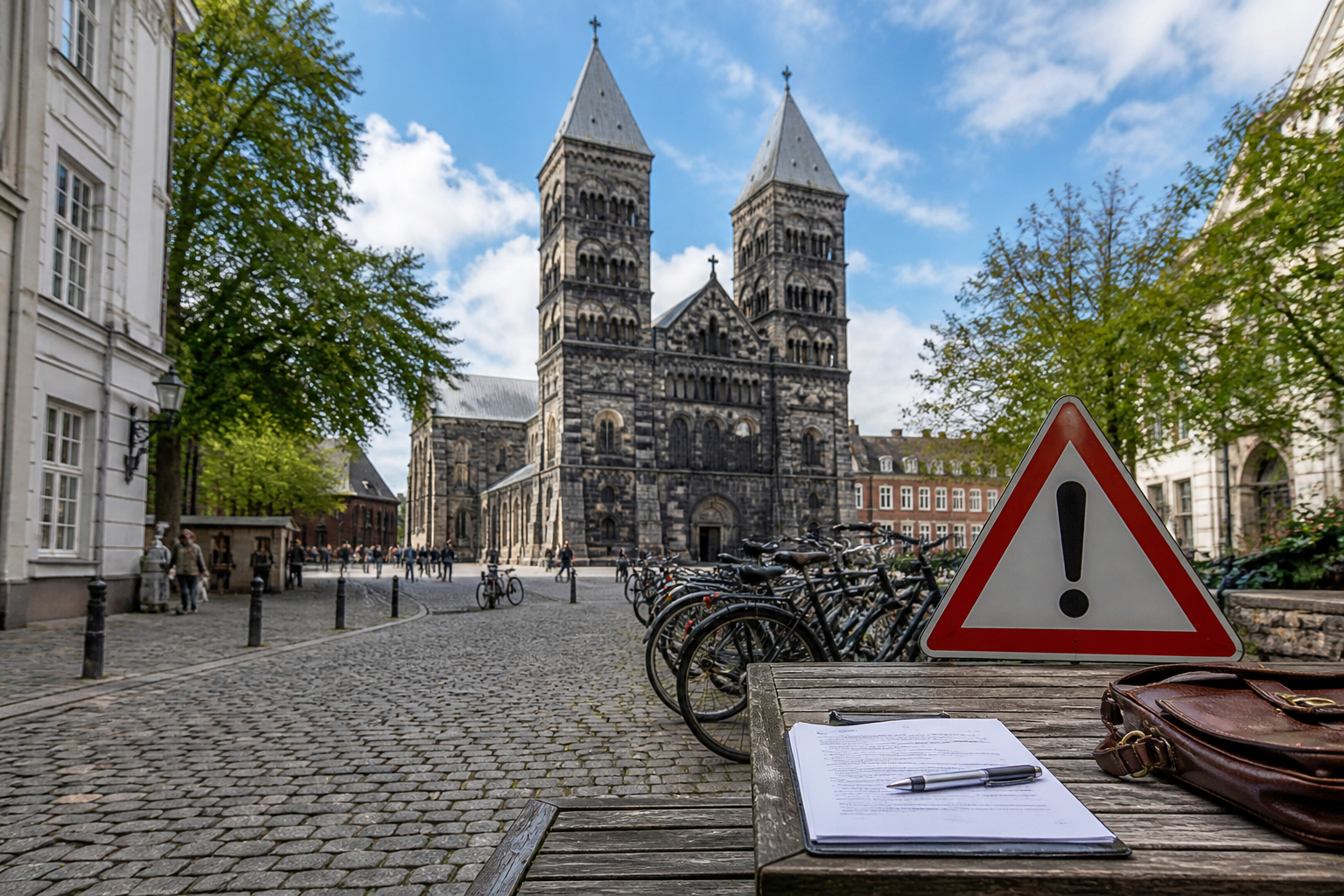
Understanding Cannabis legality in Lund, Sweden is important for residents, students, workers and visitors. Lund is a university city in Skåne, close to Malmö and the Danish border, but it does not have separate local cannabis rules. Swedish national law applies throughout the city, including central Lund, university areas, parks, private homes, hotels and transport hubs.
In practical terms, recreational cannabis is illegal in Lund. Possessing, using, buying, selling, importing or sharing cannabis can lead to criminal consequences. The fact that cannabis may be more visible in some cities or discussed openly online does not change its legal status in Sweden. This guide explains the main rules, medical exceptions, CBD issues, driving risks and travel considerations without encouraging illegal activity.
Is cannabis legal in Lund?
No. Cannabis is not legal for recreational use in Lund or elsewhere in Sweden. Swedish drug legislation treats cannabis as a narcotic drug, and the law can apply to both possession and personal consumption. A small amount intended for personal use is not automatically permitted or treated as harmless. The circumstances of a case influence the legal response, but personal-use quantities can still result in a criminal investigation, fines or other penalties.
There is also no legal recreational cannabis market in Lund. Shops, cafés and social clubs cannot lawfully sell ordinary THC cannabis for non-medical use. A person who offers cannabis to another person may face more serious consequences than someone found with a small amount for personal use. Sharing cannabis without payment is not a safe legal workaround.
For a concise overview of how Swedish authorities approach drugs, consult the Swedish Police information on drugs and the law. The key point for anyone searching for weed in Lund is that local availability, informal recommendations or online claims do not create a legal right to possess or consume it.
Cannabis laws in Lund: possession, use and supply
Possession and personal use
Possessing cannabis can be an offence even when there is no evidence of selling or supplying it. Swedish law also criminalizes unlawful use, meaning that consuming cannabis can create legal exposure independently of where the substance was obtained. Police may investigate suspected possession or use, and a person may be asked to provide information or undergo testing in circumstances permitted by law.
The potential outcome depends on factors such as the substance, quantity, conduct, prior history and evidence available. Minor drug offences may be handled differently from aggravated cases, but “minor” does not mean consequence-free. A record, fine or contact with the justice system can affect employment, studies, immigration matters and future travel.
Buying, selling and sharing
Buying cannabis is unlawful, and selling or supplying it is treated more seriously. This includes arranging a handover through messaging apps, social media or informal contacts. Visitors should be especially cautious of offers near nightlife venues, stations and student areas. Some offers may involve scams, threats, contaminated substances or police attention, while accepting the offer can itself create legal risk.
There is no legal cannabis delivery service or licensed recreational dispensary in Lund. A website claiming to provide local THC delivery should not be assumed to be legitimate merely because it uses professional branding or accepts online payments.
Medical cannabis in Lund
Sweden allows limited medical access to certain cannabis-based medicines, but this is not the same as general legalization. A patient may be prescribed an approved cannabis-based medicine or, in specific circumstances, receive authorization for a product under Sweden’s medical regulatory framework. Decisions depend on the patient’s condition, clinical assessment, available treatments and the prescriber’s judgment.
Patients should speak with a licensed Swedish healthcare professional rather than attempting to source cannabis independently. A doctor is not required to prescribe cannabis simply because a patient has used it elsewhere or believes it may help. Cannabis flower, oils and other products sold informally do not become legal medicines because they are described as therapeutic.
People researching medical cannabis in Lund should also distinguish between a prescription medicine and a non-prescription wellness product. A product labelled “medical,” “therapeutic” or “natural” may still be unlawful if it contains controlled levels of THC or is marketed without the required authorization. Sweden’s official alcohol and drugs policy information provides broader national context, but individual medical decisions should come from healthcare professionals.
CBD and low-THC products in Lund
CBD is often discussed as though it is automatically legal, but the legal position depends on the product, its ingredients, THC content, intended use and how it is marketed. A CBD label alone does not guarantee compliance with Swedish rules. Even small amounts of THC can matter, and products sold in another European country may not be lawful to import, sell or possess in Sweden.
Food, supplements, cosmetics, e-liquids and medicinal products can be subject to different requirements. Some ingestible CBD products may raise food-law or authorization issues, while products making medical claims may fall under medicines regulation. Travellers should not rely solely on a certificate of analysis supplied by an online seller, because documentation may be incomplete, inaccurate or irrelevant to Swedish requirements.
If you are considering buying CBD in Lund, check the exact product category and current guidance from Swedish authorities before ordering or carrying it. Avoid assuming that “hemp,” “0% THC” or “broad spectrum” is a legal guarantee. This is particularly important when crossing the border or bringing a product into Sweden by post.
Driving and public safety
Do not drive, cycle in traffic or operate machinery after using cannabis. Swedish road rules are strict regarding driving under the influence of narcotic substances, and impairment can create serious safety and legal consequences. A person can also put passengers and other road users at risk even when they feel capable of travelling.
Prescription status does not mean a person is automatically safe or legally permitted to drive after taking a cannabis-based medicine. Patients should follow medical advice, read the product information and obtain specific guidance about driving. If there is any doubt about impairment, do not drive.
Public consumption can also attract attention and create practical problems even apart from criminal liability. Smoking or vaping near other people may expose children, bystanders and people with respiratory sensitivities. Consuming in a hotel, student residence or rented property may breach house rules or a tenancy agreement as well.
Travelling to and from Lund with cannabis
Do not bring cannabis into Sweden when arriving through Copenhagen Airport, Malmö, Helsingborg or another entry point. Lund’s proximity to Denmark can make cross-border travel convenient, but it does not reduce customs or criminal risks. Cannabis bought legally in another country is not automatically legal to carry into Sweden.
The same caution applies when leaving Sweden. Taking cannabis across an international border can create offences in the departure country, destination country or both. This includes flower, resin, oils, edibles, vape cartridges and products containing THC. Do not mail cannabis, ask another traveller to carry it or conceal it in luggage.
Visitors who use an internationally prescribed cannabis-based medicine should obtain reliable, product-specific advice before travelling. Keep medicines in original packaging and carry relevant prescription documentation, but do not assume those documents guarantee entry. Requirements can differ according to the medicine, quantity, country of issue and route.
For broader regional context, readers can compare this guidance with our guide to CBD in Malmö and our overview of cannabis rules in Stockholm. The same national Swedish framework applies, although practical enforcement situations can vary.
What to do if you are approached or searched
If someone offers you cannabis in Lund, the safest response is to decline and leave the situation. Do not agree to hold a package, store cannabis for another person or carry it through a station. If you feel pressured or threatened, move toward a staffed public place and contact the police or emergency services when necessary.
If you are contacted by police, remain calm and do not obstruct officers. You may need legal advice about your specific circumstances, especially if you are arrested, questioned as a suspect or asked to sign documents you do not understand. Visitors may also need advice about immigration or travel consequences.
- Do not buy, possess, share or transport cannabis.
- Do not assume a small quantity is legally ignored.
- Do not carry cannabis across the Denmark-Sweden border.
- Do not drive after using cannabis or a cannabis-based medicine without appropriate professional guidance.
- Seek advice from a qualified Swedish lawyer for an individual legal matter.
Common misconceptions about cannabis in Lund
“It is legal because Sweden is in the European Union”
EU membership does not create one uniform recreational cannabis law. Individual countries retain important authority over drug control, and Sweden has its own restrictive framework.
“Students can use it privately without consequences”
Private consumption is not a general exemption. University status, age and location do not make possession or use lawful. A drug-related incident may also affect studies, housing or employment.
“CBD products are always safe to carry”
CBD products differ substantially. THC content, formulation, labelling, claims and import route can all matter. Treat unfamiliar products as a legal question rather than assuming that a retail label settles it.
“A prescription from another country solves everything”
Foreign prescriptions may not automatically authorize possession or importation in Sweden. Confirm the rules for the exact medicine before travelling, preferably with the relevant Swedish authority, prescriber or qualified legal professional.
Conclusion
Cannabis remains illegal for recreational use in Lund. Possession, personal use, buying, selling, sharing and cross-border transport can all create legal risks under Swedish national law. Medical cannabis access is limited and product-specific, while CBD legality depends on the formulation, THC content, marketing and regulatory category.
The safest approach for residents and visitors is straightforward: do not purchase or carry cannabis, do not drive after use, and do not bring cannabis products across the Swedish border. When a medical need or travel question is involved, obtain current advice from a licensed healthcare professional or an appropriate Swedish authority rather than relying on sellers, social media or assumptions based on laws in another country.