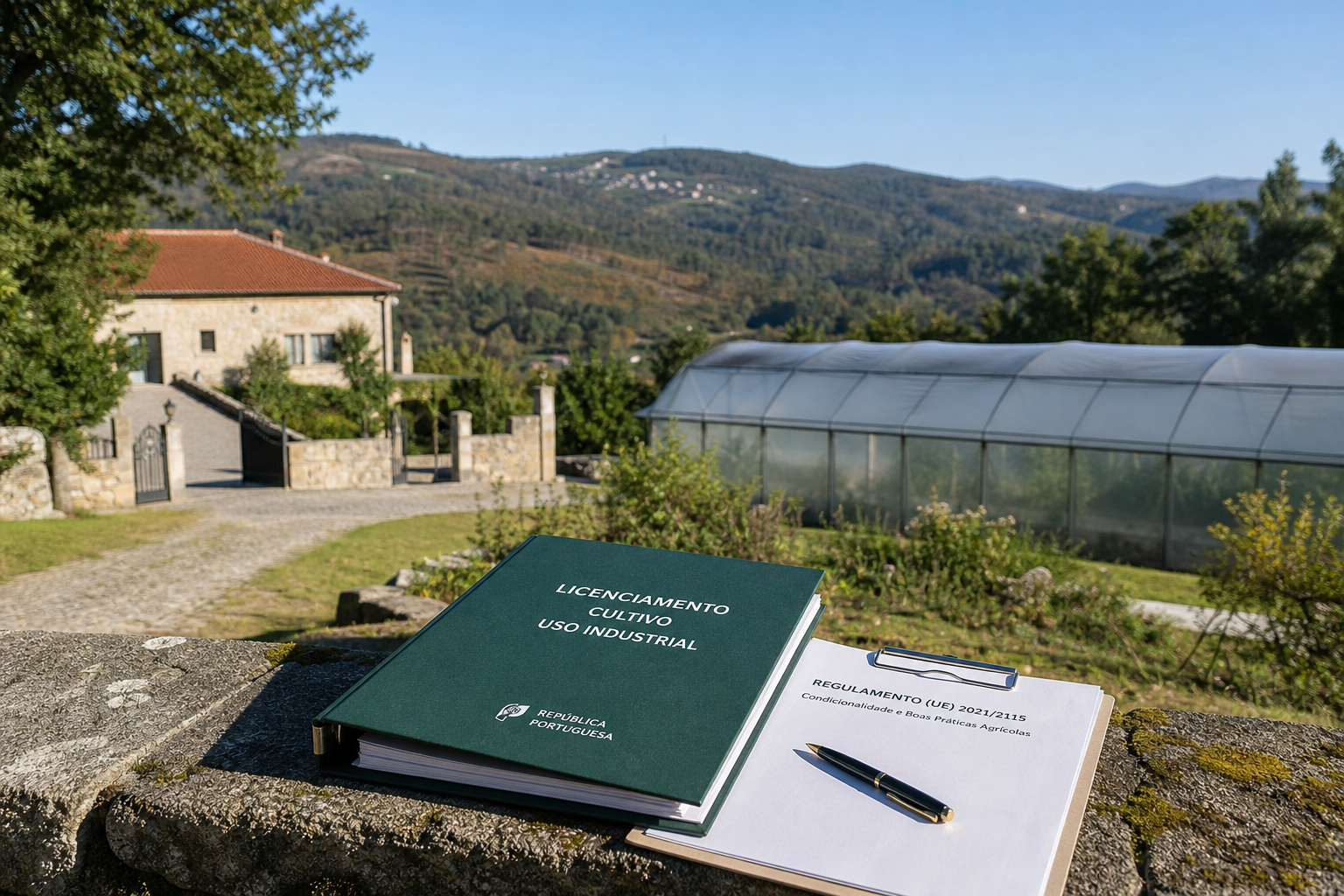
Understanding marijuana cultivation laws in Fafe requires looking beyond local assumptions and examining Portugal’s national drug and agricultural rules. Fafe is a municipality in the Braga District, but it does not have a separate municipal framework that legalises or regulates home-growing cannabis differently from the rest of Portugal. The central issue is that Portugal decriminalised certain acts involving personal drug use, while cultivation remains treated differently under national law.
This guide explains the position for residents, property owners and visitors considering growing cannabis in Fafe. It covers personal cultivation, licensed medical production, industrial hemp, possible legal consequences and practical steps for staying on the right side of the law. It is general information, not individual legal advice.
Does decriminalisation make home cultivation legal in Fafe?
No. Portugal’s well-known decriminalisation model does not create a general right to grow marijuana at home. Under the national framework, the personal use and possession of limited quantities are generally handled through an administrative process rather than the ordinary criminal route. Cultivation, however, is not automatically covered by that distinction.
In practical terms, a person may not rely on Portugal’s decriminalisation policy as permission to plant, maintain or harvest cannabis plants for personal use. The fact that a crop is located inside a private home, garden, balcony or rural property in Fafe does not by itself make the activity lawful. Police and prosecutors assess the facts under national legislation, including the scale and circumstances of the activity.
This is the central point in cannabis laws in Fafe: local location does not change the national treatment of cultivation. A private grow can still create legal exposure even when the person does not intend to sell the harvest.
What the law means for personal cultivation in Fafe
Personal cultivation generally refers to growing cannabis for one’s own consumption rather than for commercial distribution. That intention may be relevant to how authorities assess a case, but it does not turn an unauthorised crop into a permitted activity.
Home growing is not a general personal-use exemption
Portugal’s rules should not be read as a simple “small amount is legal” system for cultivation. The number of plants, their maturity, the amount harvested, equipment, communications, packaging and other evidence may all affect how authorities interpret the situation. A small domestic crop can therefore still be investigated.
People should also avoid assuming that indoor cultivation is safer legally than outdoor growing. A spare room, garage, greenhouse, terrace or secluded land may involve different practical risks, but none automatically creates an exemption from national drug law. Landlords and condominium rules may add separate issues involving property damage, odours, electricity use or nuisance.
Possession and cultivation are separate questions
It is important to distinguish between possession for personal use and the act of producing cannabis. A person who possesses cannabis may face a different procedure from someone found cultivating it. Those issues can arise together, but they are not interchangeable. A claim that the crop was intended only for personal use does not guarantee that authorities will treat the cultivation as a mere administrative matter.
For a broader comparison of how Portuguese authorities may approach drug-law consequences, see this practical overview of cannabis laws and penalties in Chaves. The municipality differs, but the national legal framework is the relevant starting point.
When can cannabis cultivation be lawful?
Lawful cultivation is generally connected to a regulated activity, not an informal personal garden. Portugal has licensing and oversight systems for approved medical-cannabis production, research, and certain agricultural activities. Businesses must meet the applicable requirements before planting or operating.
Licensed medical-cannabis production
Medical cannabis production is not the same as growing a few plants for personal treatment. A licensed operator may need authorisation, suitable premises, security measures, quality controls, traceability and compliance with inspection requirements. The exact obligations depend on the proposed activity, such as cultivation, processing, distribution or research.
The national medicines regulator, Infarmed, provides official information about the regulated framework through its page on cannabis for medical purposes in Portugal. Anyone considering a commercial or medical project in Fafe should verify current requirements directly with the regulator and obtain professional advice before acquiring equipment or planting.
A patient’s prescription or authorisation to access medical cannabis does not normally amount to a licence to cultivate it. Access to an approved medicine and permission to produce a controlled crop are separate legal questions.
Research and institutional activities
Research organisations and other authorised entities may be able to cultivate cannabis under a specific approval or licence. Such projects typically require a defined purpose, controlled facilities, responsible personnel and regulatory supervision. A private individual cannot assume that describing a crop as experimental or therapeutic creates the same status.
Industrial hemp is different, but not automatically unrestricted
Industrial hemp is cannabis grown for approved agricultural or industrial purposes and subject to rules that distinguish it from drug-producing crops. The existence of a hemp market does not mean that any cannabis seed can be planted freely in Fafe.
Farmers and businesses should confirm the permitted varieties, certification, THC-related requirements, planting conditions, reporting duties and any required authorisation before starting production. Seed provenance and crop purpose matter. Growing a variety marketed as hemp without checking the applicable Portuguese agricultural and controlled-substance rules can still create problems.
Because requirements may change and may depend on the crop and intended use, a prospective grower should contact the relevant Portuguese authority and obtain written confirmation where possible. Agricultural land in or around Fafe is not exempt simply because the activity is described as farming.
Possible consequences of unauthorised cultivation
The consequences depend on the facts and the legal classification applied by the authorities. Relevant factors may include the number and condition of plants, the quantity produced, the presence of cultivation equipment, prior conduct, evidence of supply to others and whether the activity appears organised or commercial.
- Investigation: police may seize plants, harvested material, equipment and electronic evidence while the facts are examined.
- Criminal exposure: unauthorised cultivation can be treated more seriously than simple personal possession, particularly where production or supply is suspected.
- Property consequences: tenants may breach a lease, while owners may face disputes involving damage, fire risk, odour or unauthorised alterations.
- Travel and immigration complications: non-Portuguese residents or visitors may face additional practical consequences if an investigation leads to proceedings.
- Professional consequences: a conviction or investigation may affect regulated employment, licences or future applications, depending on the circumstances.
These are possibilities rather than automatic outcomes. Only the competent authorities and courts can determine the applicable classification and result. Anyone contacted by police should avoid guessing about the law and should obtain advice from a qualified Portuguese lawyer.
Practical issues for Fafe residents and visitors
People sometimes focus on whether a crop is visible from the street, but visibility is not the legal test. A hidden plantation can still raise concerns if authorities discover it through a complaint, inspection, unrelated investigation or evidence of supply. Strong odours, unusual electrical installations, frequent deliveries and disputes with neighbours can also draw attention, although none of these factors alone determines guilt.
Visitors should be especially cautious. Renting a holiday property in Fafe does not grant permission to cultivate cannabis, and leaving plants behind can expose the renter, property owner or both to serious disputes. Bringing seeds, plants, harvested cannabis or cultivation equipment across borders can create additional customs and controlled-substance risks.
For context on regulated access rather than cultivation, readers may also find this guide to medical marijuana in Bragança useful. The same national framework applies in principle, but medical access still requires an authorised route.
Safer legal alternatives to growing at home
If the goal is symptom management, the appropriate route is to speak with a Portuguese healthcare professional about lawful medical options. A clinician can assess the condition, review other treatments and explain whether an authorised cannabis-based medicine is appropriate. A prescription does not remove the need to obtain products through the permitted channels.
If the goal is business or farming, the next step is regulatory due diligence rather than planting first. A prospective operator should:
- Define whether the project involves medical cannabis, research, industrial hemp, processing or another activity.
- Identify the regulator and licence category relevant to that activity.
- Check zoning, land-use, environmental, employment, security and building requirements in the proposed Fafe location.
- Confirm seed, variety, testing, storage and traceability rules before purchasing materials.
- Obtain advice from a Portuguese lawyer and, where relevant, an agricultural or compliance specialist.
Key takeaways on cannabis cultivation in Fafe
The main rule is straightforward: Fafe does not have a local home-growing exception, and Portugal’s decriminalisation model should not be confused with legalisation of personal cultivation. Cannabis cultivation in Fafe is generally lawful only when it forms part of an appropriately authorised activity, such as a regulated medical, research or qualifying industrial project.
Personal possession, medical access and cultivation are separate legal issues. A small private crop, a therapeutic intention or ownership of rural land does not by itself provide legal protection. Because licences and enforcement procedures can change, anyone facing an active investigation or planning a commercial project should consult current official guidance and qualified Portuguese counsel.
Conclusion
For residents and visitors, the safest interpretation of the marijuana cultivation laws in Fafe is that unauthorised home-growing remains legally risky and is not made lawful by personal-use intentions. Portugal’s national rules apply in Fafe just as they do elsewhere, while licensed cultivation and industrial hemp operate within separate regulatory systems.
Before planting, importing seeds or setting up equipment, confirm the current requirements with the relevant Portuguese authorities. If police have already become involved, seek individual legal advice promptly rather than relying on general online summaries.