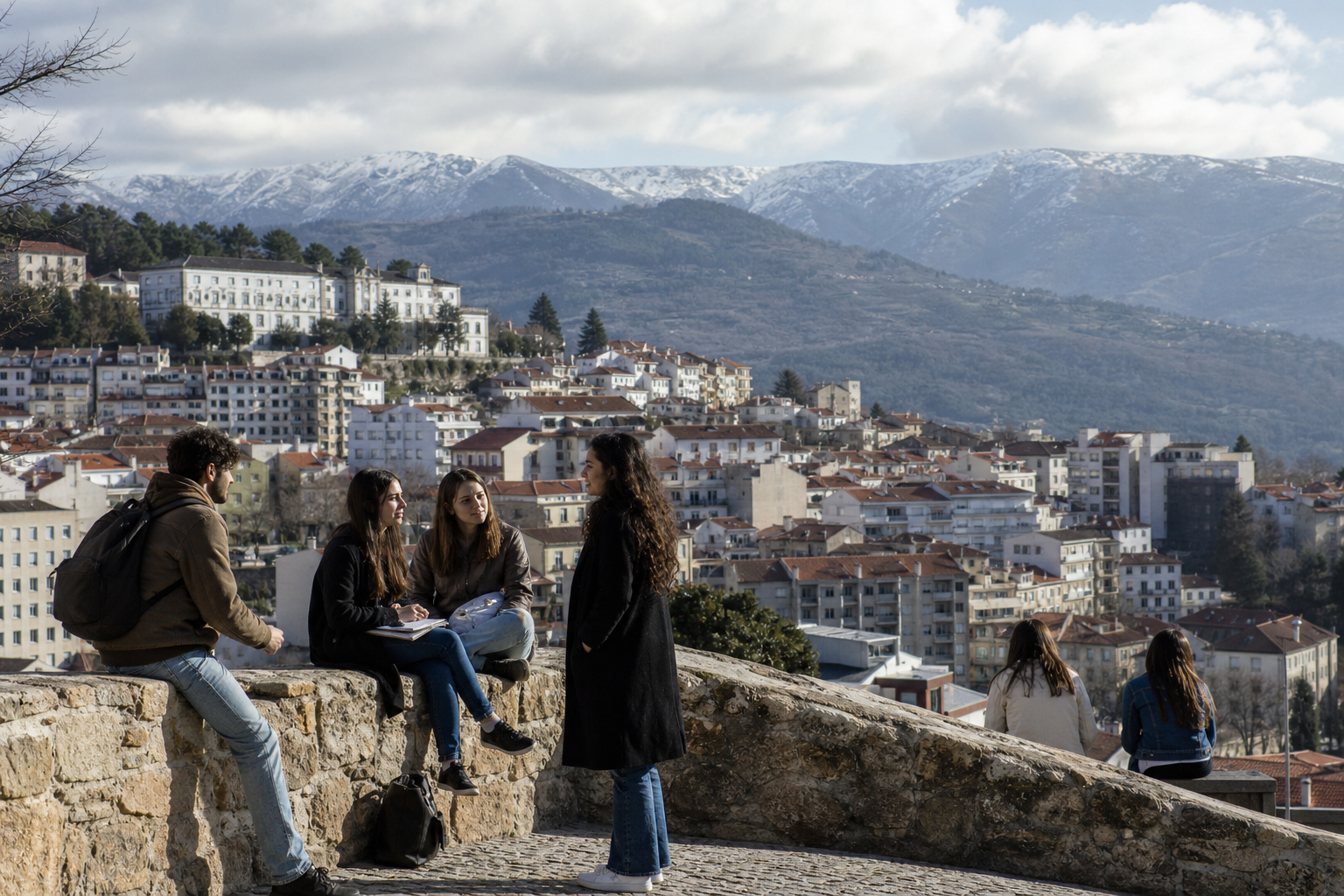
Understanding the cannabis community in Covilhã requires more than searching for a shop or assuming that Portugal’s approach is the same as legalisation. Covilhã is a university city in the Serra da Estrela region, with a population shaped by students, long-term residents, visitors, healthcare users and creative communities. These groups may discuss cannabis in different ways, but conversation does not automatically mean that a formal, legal cannabis market exists.
This guide explains how to think about cannabis in Covilhã responsibly. It covers Portugal’s legal framework, the difference between decriminalisation and legal supply, medical access, community education, harm reduction and practical ways to avoid misinformation. It does not identify informal sellers or encourage illegal purchasing, possession or cultivation.
Cannabis community in Covilhã: what the phrase really means
In a smaller city, a cannabis community is usually better understood as a network of conversations and shared interests than as a single organisation. People may connect through university life, public-health discussions, patient advocacy, harm-reduction initiatives, hemp and sustainability interests, or private social circles. Some are interested in recreational use, while others focus on medical treatment, policy reform or the history of cannabis.
Covilhã’s position near the Serra da Estrela also creates a mix of local and visiting perspectives. Students and tourists may bring assumptions from countries with regulated markets, while residents may be more familiar with Portugal’s decriminalisation model. Clear communication matters because these systems are not interchangeable.
Informal networks and public information
Online groups and personal recommendations can help people find general information, but they can also spread inaccurate claims about potency, legality, medical benefits and safe dosing. A responsible community should encourage members to check official sources, avoid identifying vulnerable people publicly and distinguish personal experience from medical evidence.
For broader context, readers can compare this subject with cannabis information in Viseu and the wider questions covered in the guide to marijuana laws in Coimbra. Nearby cities may share national rules, but local services, healthcare access and community conversations can still differ.
Cannabis laws in Covilhã and Portugal
There is no separate municipal cannabis regime for Covilhã. National Portuguese law applies, and the practical distinction between personal use, trafficking, cultivation, public conduct and medical use is important.
Portugal decriminalised the use and possession of limited quantities for personal use within an administrative framework rather than creating a legal retail market. Decriminalisation is not the same as permission to buy cannabis from unlicensed sellers, sell it, import it, grow it at home or consume it wherever desired. Police action, administrative proceedings and other consequences can still arise depending on the circumstances.
Portugal’s legal framework also treats supply and trafficking much more seriously than personal-use situations. Visitors should not assume that carrying cannabis across a border is acceptable, even if they come from a jurisdiction with legal adult-use sales. International travel, airports and public transport create additional risks.
For current information about medicines, controlled substances and regulatory responsibilities, consult the official INFARMED website. Legal interpretation can depend on the quantity, substance, conduct and evidence involved, so a general article should not replace advice from a qualified Portuguese lawyer.
What decriminalisation does not mean
- It does not create licensed recreational dispensaries in Covilhã.
- It does not make commercial sale or supply lawful.
- It does not make home cultivation automatically legal.
- It does not remove restrictions on driving after using cannabis.
- It does not guarantee that possession will have no administrative or legal consequences.
- It does not allow cannabis products to be taken across national borders without checking the applicable rules.
Medical cannabis in Covilhã
Medical cannabis is a separate subject from informal recreational use. In Portugal, authorised cannabis-based medicines and products are subject to regulatory requirements, and access depends on a medical assessment, an appropriate indication and the legal route for prescribing and dispensing. A person should speak with a doctor or pharmacist rather than rely on social media recommendations.
People researching medical cannabis in Covilhã should prepare a clear account of their symptoms, previous treatments, current medicines and relevant medical history. This helps a clinician assess whether an approved treatment is suitable and whether there are potential interactions or reasons for caution. Cannabis should not be presented as a universal solution for pain, anxiety, insomnia or other conditions.
Patients should also be wary of products advertised as medical treatments without transparent labelling, an authorised supply chain or professional oversight. CBD products, hemp foods, prescribed cannabis medicines and unregulated high-THC products are not the same thing. Packaging claims alone cannot establish quality, safety or therapeutic value.
The Portuguese public-health and addiction information service, SICAD, provides an official starting point for understanding substance-related risks and support pathways. Anyone worried about dependence, escalating use or withdrawal should seek confidential advice from a healthcare professional.
How to discuss weed in Covilhã responsibly
Searches for weed in Covilhã may lead to informal offers, product reviews or social posts. A safer community standard is to avoid turning those spaces into marketplaces. Do not publish addresses, phone numbers or personal details of alleged sellers, and do not encourage people to meet unknown contacts alone. Public recommendations can expose others to scams, contaminated products, theft or legal problems.
Responsible discussion also means using precise language. “Natural” does not automatically mean safe, and a high THC level may increase the chance of anxiety, impaired judgment or an unpleasant psychological reaction. Edibles can be especially difficult to judge because effects may take longer to appear and last longer than expected. Mixing cannabis with alcohol or other drugs can increase impairment and unpredictability.
Practical harm-reduction principles
- Do not drive, cycle in traffic or operate machinery while impaired.
- Avoid combining cannabis with alcohol, sedatives or other intoxicating substances.
- Keep all cannabis products away from children and pets.
- Do not share products or equipment when illness transmission is a concern.
- People who are pregnant, underage, experiencing serious mental-health symptoms or taking interacting medicines should seek professional advice before use.
- If someone experiences severe confusion, chest pain, difficulty breathing, loss of consciousness or a mental-health emergency, contact emergency services.
Community members can make discussions safer by acknowledging uncertainty. Personal stories may describe one person’s reaction, but they do not establish a dose, diagnosis or treatment recommendation for someone else.
Where local cannabis culture intersects with Covilhã life
Cannabis culture in Covilhã can be discussed alongside wider topics such as university wellbeing, environmental sustainability, agriculture, hemp materials, drug policy and public health. Hemp and cannabis are related plants, but hemp products may have different legal definitions and uses from high-THC cannabis. The distinction should be made carefully when discussing food, textiles, cosmetics or CBD products.
Educational events, student organisations and health initiatives can contribute positively when they focus on evidence, consent and legal boundaries. Useful projects might include discussions about substance use and mental health, information about Portugal’s healthcare system, workshops on recognising misleading product claims, or debates about drug policy. Such activities should not be disguised promotion for unlicensed sales.
For readers interested in the cultural and historical side of the subject, the article on marijuana history in Castelo Branco offers a regional point of comparison. Historical awareness can add context without romanticising illegal markets or ignoring the risks associated with modern high-potency products.
How visitors and residents can make informed choices
Visitors should treat Covilhã as a Portuguese city, not as a destination where national restrictions disappear. Avoid carrying cannabis through Portugal or across borders, do not consume in public spaces and never drive after using an intoxicating product. Hotels, rental properties, university accommodation and event venues may have their own rules in addition to national law.
Residents who want to learn more can start with a pharmacist, family doctor, university health service or recognised public-health organisation. Ask whether information refers to a regulated medicine, a CBD product, hemp or an illicit high-THC product. This simple distinction prevents many misunderstandings.
Anyone who feels pressured to use cannabis, is using more often than intended or is experiencing problems at school, work, home or in relationships should seek support early. A community is healthier when asking for help is treated as responsible behaviour rather than a reason for judgment.
Building a healthier cannabis community in Covilhã
A constructive local community does not need to promote consumption. It can support accurate information, privacy, safer decision-making and access to healthcare. Moderators of online groups can remove sales offers, scams and unsupported medical claims. Event organisers can provide age-appropriate information, avoid consumption on site and include clear routes to professional help.
Researchers, students and residents can also improve the quality of local discussion by checking publication dates, identifying the source of legal claims and using Portuguese official guidance when available. When a rule is unclear, it is better to say so than to provide confident but inaccurate advice.
The most useful long-term approach is balanced: recognise that cannabis exists in the community, explain the risks without sensationalism, respect legal boundaries and make reliable support easier to find. That approach serves both people who choose not to use cannabis and those seeking honest information about their choices.
Conclusion
The cannabis community in Covilhã is best understood as a varied set of local conversations rather than a formal legal marketplace. Portugal’s decriminalisation model does not legalise recreational sales, home cultivation or unrestricted public use, while medical cannabis follows a separate regulated route. Residents and visitors can reduce risk by checking official information, avoiding unlicensed sellers, separating medical advice from personal anecdotes and seeking help when use becomes difficult to control.
Covilhã’s community discussion can be informed, private and health-conscious without encouraging illegal activity. Clear language, respect for local law and practical harm reduction provide a stronger foundation than rumours or commercial promises.