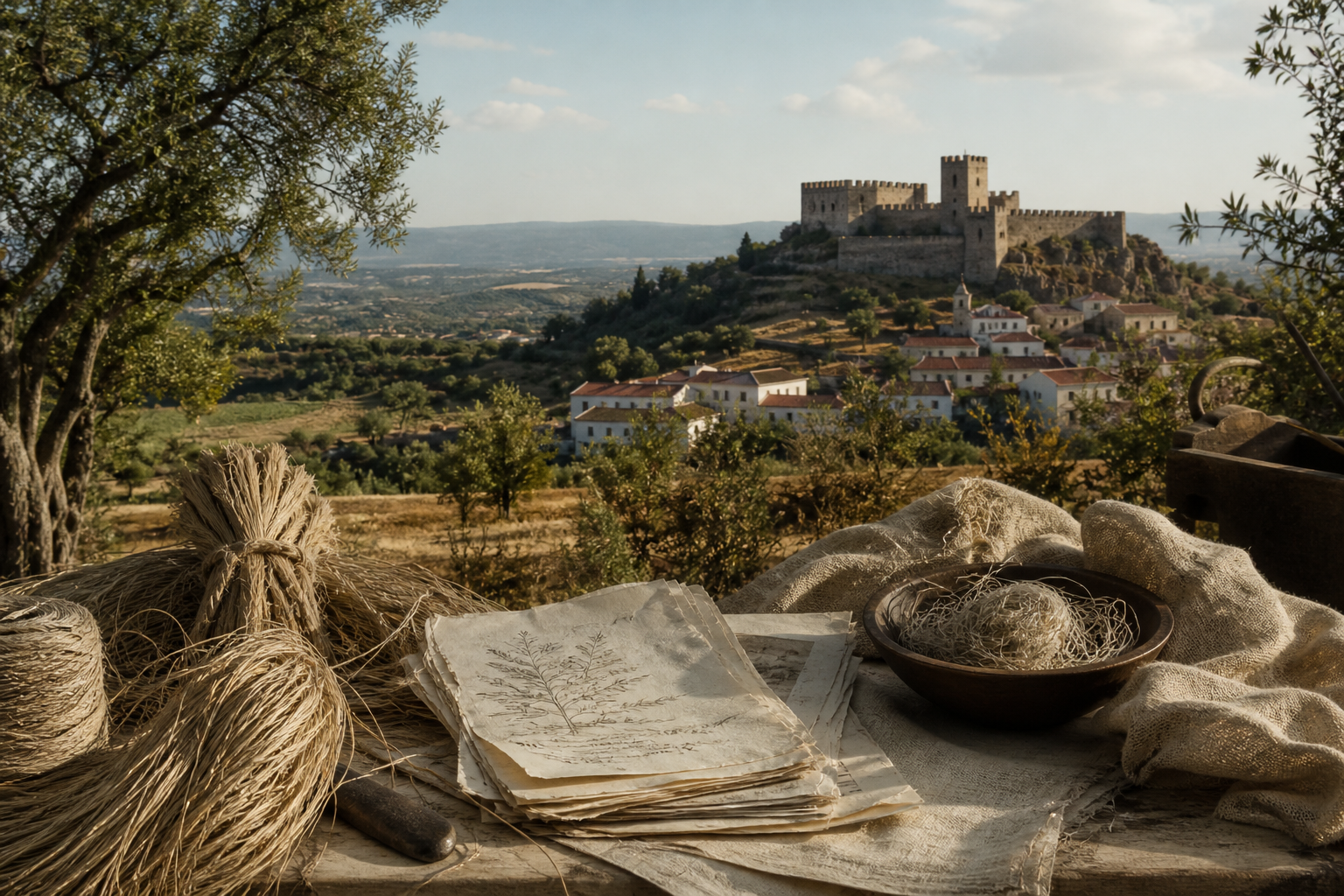
Understanding the marijuana history in Castelo Branco requires more than looking for a single local event or a long-standing cannabis district. The story is connected to Portugal’s wider relationship with hemp, agricultural change, public-health policy and the country’s distinctive approach to drug decriminalisation. Castelo Branco provides a useful regional setting for examining those developments, while also demanding caution: publicly available historical sources do not establish a separate, continuous cannabis tradition unique to the municipality.
This article separates documented national milestones from reasonable local context. It explains how hemp and cannabis became connected with Portuguese history, how policy changed at the end of the twentieth century, and what those changes mean for residents and visitors asking about cannabis in Castelo Branco today.
Hemp, cannabis and Portugal’s agricultural past
Cannabis sativa is a plant with several historical uses. Varieties cultivated for fibre and seed are generally described as hemp, while drug-producing varieties are associated with psychoactive cannabis. The distinction matters because references to hemp in historical agriculture do not automatically demonstrate recreational marijuana use.
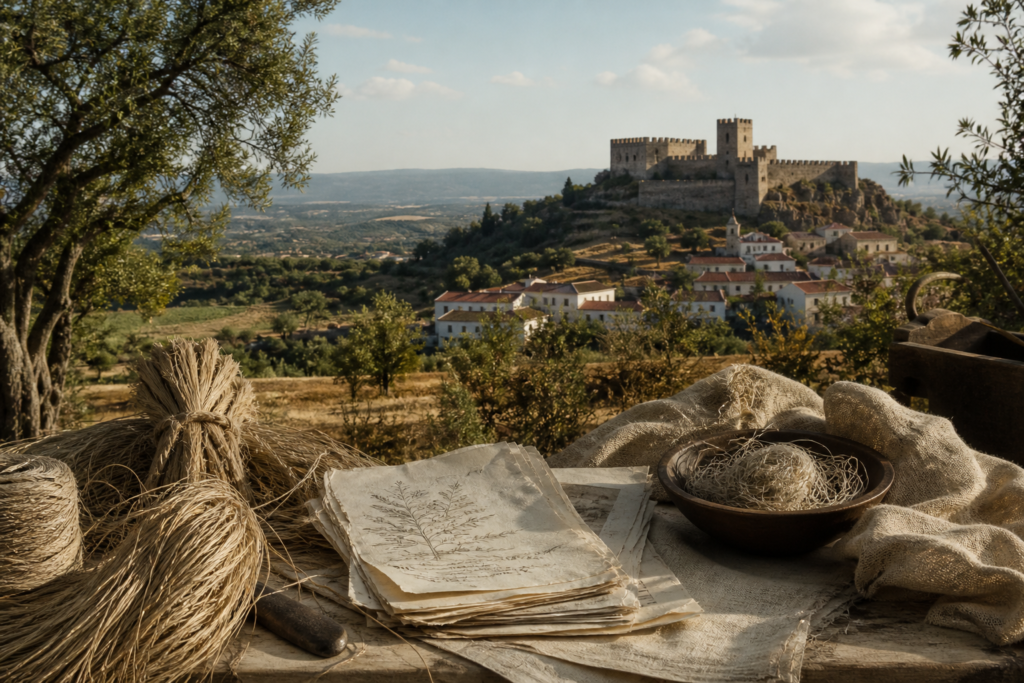
Across Europe, hemp was valued for strong fibre used in rope, cloth, fishing equipment and other practical goods. Portugal also participated in broader European traditions of fibre production and rural cultivation. However, the best-known historical accounts usually concern national or regional agriculture rather than a detailed record of cannabis farming in Castelo Branco itself.
Castelo Branco’s inland position, agricultural landscapes and connections with nearby communities make it relevant to this wider history. Rural economies in the region have long included crops, livestock and small-scale processing, but that context should not be turned into an unsupported claim that marijuana was a major local cash crop. A responsible history distinguishes between a plant’s presence in Portugal and evidence of its importance in one city or district.
Why local evidence can be difficult to interpret
Older records may use terms such as hemp, cânhamo or cannabis without explaining the plant variety, purpose or scale of cultivation. Some references may relate to imported fibre, household production or industrial use rather than intoxication. Oral histories can add valuable local colour, but they are not a substitute for archived agricultural records, municipal documents or peer-reviewed research.
For Castelo Branco, the most defensible conclusion is therefore a modest one: the municipality belongs to a Portuguese landscape shaped by agricultural and commercial traditions involving useful plant fibres, but available general histories do not justify presenting it as a nationally prominent centre of marijuana production.
From prohibition to Portugal’s public-health approach
The modern history of cannabis in Castelo Branco is strongly shaped by national law. During the twentieth century, international drug-control ideas and domestic legislation increasingly treated cannabis as a controlled substance. Possession, supply and cultivation became matters of criminal enforcement, even though patterns of use and the seriousness of different drug-related harms varied.
A major change came with Portugal’s Law 30/2000, which created an administrative framework for the consumption, acquisition and possession of drugs for personal use. This reform is commonly described as decriminalisation, not legalisation. It did not create a legal recreational cannabis market, and it did not make commercial supply or unlicensed cultivation lawful.
The practical significance was a shift in emphasis. Personal-use cases could be referred to administrative commissions rather than handled solely through criminal courts. The policy placed greater weight on assessment, health information and prevention while retaining criminal penalties for trafficking and other supply-related conduct. The national framework applies in Castelo Branco just as it does elsewhere in Portugal.
For an accessible overview of Portugal’s drug policy and prevention work, readers can consult the official Portuguese Intervention Service for Addictive Behaviours and Dependencies. Its role helps explain why discussions about cannabis laws in Castelo Branco should include public health as well as criminal law.
Cannabis history in Castelo Branco after decriminalisation
After 2000, the local story became less about a dramatic legal transformation in one municipality and more about how national policy was experienced through local services. Residents of Castelo Branco encountered the same broad framework as other Portuguese residents: possession for personal use could trigger an administrative process, while trafficking, illicit production and distribution remained serious offences.
That distinction is essential when interpreting searches for weed in Castelo Branco. Decriminalisation does not mean that cannabis can be openly sold in shops, that a visitor can legally buy recreational marijuana, or that home cultivation is automatically permitted. Local police, courts, health services and administrative bodies operate within national rules rather than a separate Castelo Branco cannabis code.
Public discussion also changed over time. Cannabis became more visible in conversations about prevention, dependence, youth health, impaired driving and harm reduction. At the same time, evidence-based discussion became more important than assumptions based on stereotypes. A historical account should recognise both the reduction in criminal penalties for some personal-use situations and the continuing legal and health risks connected with cannabis.
Local institutions and everyday experience
Municipalities do not generally publish a complete historical record of every cannabis-related incident or informal pattern of use. As a result, it is difficult to produce a reliable timeline for cannabis consumption specifically in Castelo Branco. Local experience is better understood through national legislation, regional health provision, police activity and public-health education than through unverified anecdotes.
Schools, families and health professionals may encounter questions about use even when no formal cannabis culture is visible. These questions can concern product strength, anxiety, dependence, mixing substances, driving or interactions with prescribed medicines. The historical movement toward a health-oriented policy made room for those concerns without removing the need for legal boundaries.
Medical cannabis and the modern Portuguese framework
Portugal later established a legal framework for cannabis-based medicines. This development should not be confused with recreational legalisation. Medical cannabis is subject to medical justification, authorised products and regulated channels. Patients should speak with a qualified healthcare professional rather than treating an unregulated product as an equivalent substitute.
The modern medical framework is relevant to medical cannabis in Castelo Branco because access is governed nationally. A patient’s location may affect which healthcare providers or pharmacies are convenient, but it does not create a separate municipal right to obtain cannabis. Product quality, prescription requirements, dispensing rules and clinical supervision remain central.
The national medicines regulator, INFARMED, is the appropriate official starting point for current information about medicines, regulatory responsibilities and authorised products. Rules can change, so historical summaries should not be used as a substitute for checking current official guidance.
What the history does and does not show
A careful reading of the evidence leads to several conclusions:
- Portugal’s cannabis story includes older agricultural and industrial associations with hemp, but hemp references do not prove widespread recreational marijuana use.
- Castelo Branco should be understood within Portugal’s national legal and public-health history rather than as a separately regulated cannabis territory.
- The 2000 reform changed the handling of personal-use cases but did not legalise recreational sales or establish a commercial marijuana market.
- Medical cannabis is a regulated healthcare subject, not evidence that non-medical cannabis is freely legal.
- Local claims about historic cultivation or consumption require specific archival or academic sources before they can be presented as fact.
This approach is particularly important online, where a modern search for cannabis in Castelo Branco can mix historical information, legal commentary, tourism content and commercial claims. Those categories should be kept separate. A historical article can explain context without recommending illegal activity or implying that a local market exists.
Castelo Branco in Portugal’s evolving cannabis conversation
Today, Castelo Branco’s place in cannabis history is best described as regional and contextual. The municipality reflects the broader Portuguese transition from heavily punitive drug policy toward a model that combines administrative responses, prevention and treatment with continued enforcement against supply. It also reflects the country’s gradual recognition of regulated medical uses.
Future research could make the local picture more precise by examining agricultural archives, newspapers, municipal records, oral histories and health-policy documents. Such work might clarify whether hemp was cultivated or traded in particular nearby areas, how terminology changed over time, and how residents experienced national reforms. Until that evidence is assembled, restraint is more informative than a sensational local narrative.
Readers seeking related national context can also compare this subject with guides covering cannabis information in Viseu and other Portuguese locations. Comparisons are useful when they focus on the shared national framework rather than assuming every city has the same history or present-day conditions.
Conclusion
The marijuana history in Castelo Branco is not a story of a clearly documented local cannabis industry. It is a story of connections: older Portuguese relationships with hemp and rural production, twentieth-century prohibition, the public-health orientation introduced by decriminalisation, and the later regulation of medical cannabis.
For anyone researching weed in Castelo Branco or the city’s current legal position, the key lesson is simple: national Portuguese law remains decisive. Personal-use decriminalisation is not recreational legalisation, and medical access is not a licence for general possession or sale. The most reliable understanding combines historical caution, official legal information and a clear distinction between hemp, medical cannabis and illicit recreational supply.