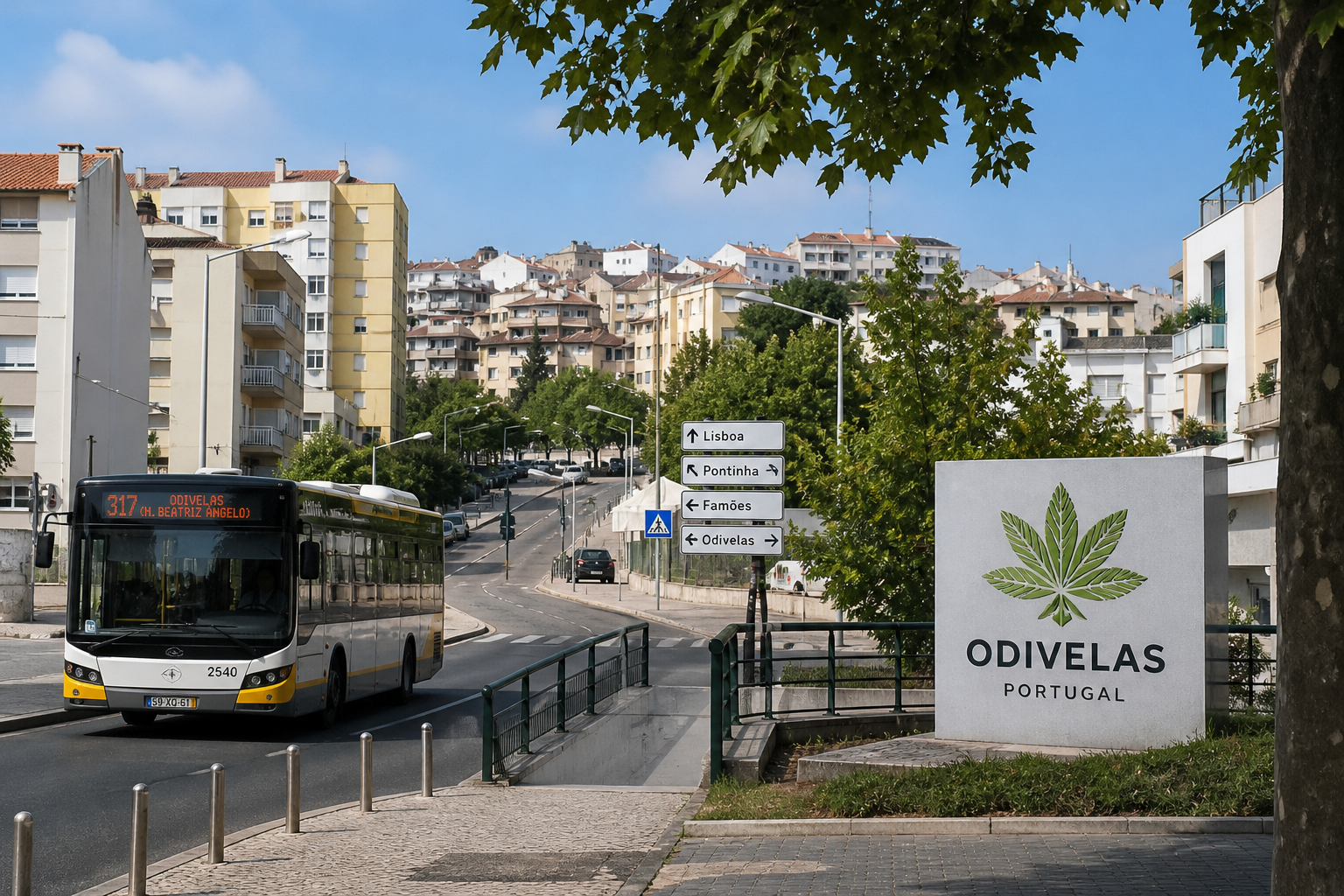
Understanding marijuana information in Odivelas, Portugal requires separating decriminalisation from legalisation. Odivelas is part of the Lisbon metropolitan area, but Portuguese national law applies in the municipality just as it does elsewhere in the country. Personal possession for use is generally handled as an administrative matter within applicable limits, while buying, selling, supplying, importing and producing cannabis can still result in serious criminal consequences.
This guide explains the practical position for residents and visitors looking for information about weed in Odivelas. It covers possession, public use, medical cannabis, CBD, driving, travel and harm reduction without suggesting that cannabis is freely legal or that informal suppliers are safe.
What Portuguese law means for cannabis in Odivelas
Portugal decriminalised the personal use and possession of drugs through its national legal framework. Decriminalisation does not create a regulated recreational market. It means that eligible personal-use cases may be referred to an administrative process rather than treated automatically as criminal offences.
Police may still identify a person, confiscate the substance and refer the matter to the appropriate authority. The outcome can depend on the quantity, circumstances, prior history and indications of supply. Possession beyond the relevant personal-use guidance, evidence of distribution or other aggravating facts may lead to criminal proceedings.
For a broader comparison, see this guide to cannabis in Lisbon and the surrounding metropolitan area. Odivelas should not be treated as a separate legal zone: municipal location does not remove national restrictions.
Personal possession is not a retail permission
Portugal uses quantity guidance associated with an average ten-day personal supply when authorities assess whether possession appears intended for personal use. That guidance is not a guaranteed allowance, a licence to carry cannabis or a promise that a specific amount will be ignored. The facts of each case matter, and possession can still result in confiscation and an administrative response.
There are no ordinary recreational cannabis shops in Odivelas operating under a Portuguese adult-use retail system. A person should be especially cautious of anyone claiming to sell legally on the street, through social media or from an unverified delivery service. Such activity may involve criminal supply offences, counterfeit products or unsafe substances.
Cannabis laws in Odivelas: what residents and visitors should know
When people search for cannabis laws in Odivelas, they often want a simple answer about whether they can consume in public. The safer answer is that public consumption can create legal, social and practical problems even where personal possession is treated as an administrative matter.
- Do not assume decriminalisation means public use is accepted. Police can intervene, and complaints or nuisance concerns may increase scrutiny.
- Keep away from schools, playgrounds, public transport areas and crowded spaces. These locations are particularly unsuitable for consumption and can create risks for children and other members of the public.
- Never share or sell cannabis. Supplying another person can be treated much more seriously than personal possession.
- Do not carry cannabis across borders. Portuguese treatment of personal possession does not override customs or the laws of another country.
- Follow local property rules. Landlords, hotels, workplaces, venues and transport operators may prohibit smoking or possession on their premises.
For another practical explanation of the distinction between decriminalisation and legality, read the guide to cannabis legality in nearby Queluz. The same national principles are relevant when considering conduct in Odivelas.
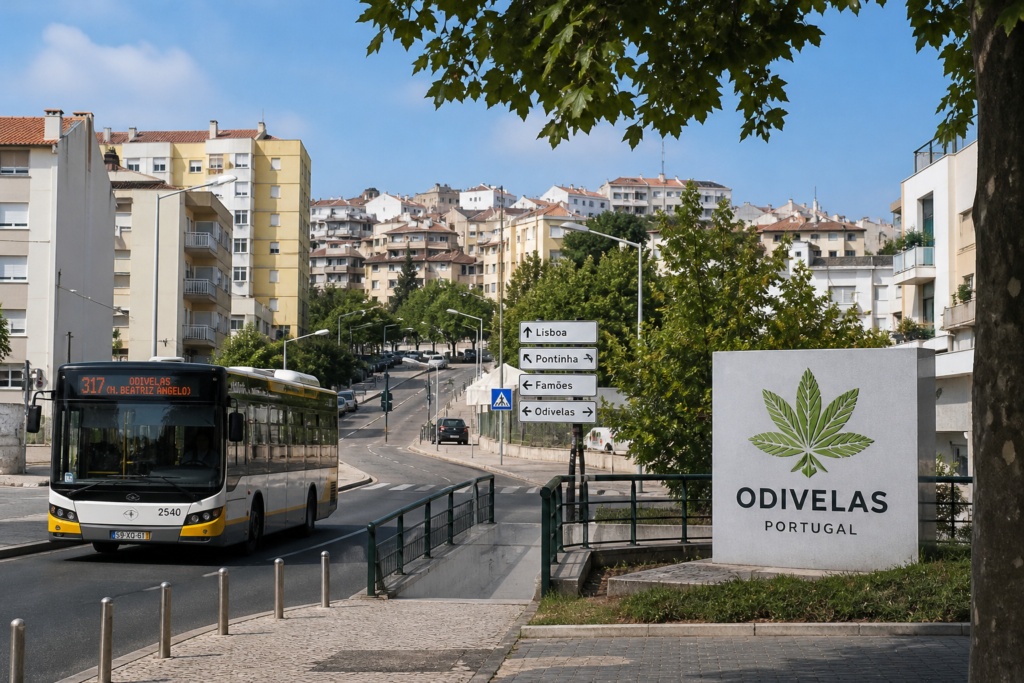
Medical cannabis in Odivelas
Medical cannabis in Odivelas is available through Portugal’s regulated healthcare system rather than through informal sellers. Portuguese law permits certain cannabis-based medicines and preparations for approved therapeutic purposes. These products require medical assessment, a prescription and dispensing through the authorised pharmacy system.
A doctor decides whether a cannabis-based treatment is appropriate after considering the patient’s condition, existing treatments, possible benefits and risks. A patient should not assume that a recreational product can substitute for a prescribed medicine. Products bought from an unverified source may contain an inaccurate concentration, contaminants or other substances.
Patients should keep medication in its original packaging and follow the prescribed dose. Anyone travelling with prescribed cannabis should carry supporting medical documentation and check the rules of every destination and transit country before departure. Portugal’s medical framework does not automatically authorise taking cannabis medicine abroad.
The Portuguese medicines regulator, INFARMED’s official information on medicinal cannabis, is the appropriate place to confirm current regulatory details and authorised medical pathways.
CBD in Odivelas: products, labels and limitations
CBD is not the same as intoxicating cannabis. Many CBD products are marketed for general wellness, but their legal status depends on the product category, ingredients, intended use and compliance with Portuguese and European rules. Food, cosmetics, supplements, flowers and extracts may not all be treated in the same way.
Consumers should examine the label, batch information, producer details and laboratory documentation where available. Be cautious of products making medical claims, promising to treat a disease or failing to state their cannabinoid content. A product labelled “CBD” may still contain trace amounts of THC, and some rapid tests or drug tests can produce an unwanted result after using cannabinoid products.
Buying from a legitimate pharmacy or established retailer is safer than purchasing anonymous products through messages or informal street markets. However, availability on a shelf is not by itself proof that every advertised health claim is lawful or medically supported.
Health and safety advice for cannabis use
There is no risk-free way to use intoxicating cannabis. Effects can vary according to THC concentration, personal tolerance, body chemistry, other medicines and whether the product is inhaled or eaten. New or infrequent users may be more vulnerable to anxiety, impaired coordination, dizziness, confusion or rapid heart rate.
Lower-risk decisions
- Avoid combining cannabis with alcohol, sedatives or other intoxicating substances.
- Do not drive, cycle in traffic, use machinery or make safety-critical decisions while impaired.
- Use only a clearly identified product and avoid unknown concentrates or products with uncertain strength.
- Edibles can take longer to produce effects and may last much longer than expected; avoid taking more simply because effects are delayed.
- Choose a private, calm setting with trusted company rather than a public place.
- Keep all cannabis products away from children and pets, preferably in a secure, clearly labelled container.
People with a history of psychosis, severe anxiety, cardiovascular problems or problematic substance use should seek medical advice before using cannabis. Pregnant or breastfeeding people should avoid cannabis unless a qualified clinician gives specific advice. Anyone who experiences severe confusion, chest pain, difficulty breathing, loss of consciousness or extreme agitation should seek emergency medical help.
Driving and public transport around Odivelas
Impairment and drug-driving rules are separate from the question of whether possession is decriminalised. Cannabis can affect reaction time, attention, judgement and coordination. Do not drive from Odivelas to Lisbon, Loures or any other destination after using cannabis, even if you feel capable of driving.
Using public transport while impaired can also create practical risks, including falls, missed stops, unsafe interactions and difficulty responding to an emergency. Keep products stored securely and respect the conditions of Metro, bus and other transport operators. Never consume in stations, vehicles or other enclosed public areas.
Buying, sharing and travelling: common mistakes
Visitors sometimes expect a legal cannabis market because Portugal is known internationally for its drug-policy approach. That expectation can lead to risky decisions. There is no general tourist entitlement to purchase recreational cannabis, and a person offering cannabis for sale may be exposing both parties to legal danger.
Do not mail cannabis, place it in checked luggage or carry it through an airport. Do not take cannabis from Odivelas to Spain or another country by car, bus, train or plane. Border controls apply regardless of whether the quantity seems small. The same caution applies to cannabis seeds, extracts, vapes and infused products, because rules can vary by item and destination.
For travel planning, official public-health and drug-policy information from Portugal’s national authorities is more reliable than social media advice. The Portuguese SICAD information portal provides a useful institutional starting point for understanding drug policy and support resources.
Where to seek help or reliable advice
Questions about a prescription should go to a doctor or pharmacist. Questions about a legal incident should be directed to a qualified Portuguese lawyer. People concerned about their own use can speak confidentially with a healthcare professional or an appropriate addiction-support service rather than relying on online sellers or anonymous forums.
If someone is in immediate danger, call Portugal’s emergency number, 112. For a non-urgent health concern, contact a local healthcare service. A clear account of what was taken, how much was used and when it was used can help clinicians respond safely.
Conclusion
Marijuana information in Odivelas, Portugal, is best understood through the difference between decriminalisation, medical access and full legalisation. Personal-use cases may be handled administratively in appropriate circumstances, but cannabis is not generally sold through a legal recreational market. Supply, trafficking, importation and unlicensed production remain serious concerns.
Residents and visitors can reduce risk by avoiding informal sellers, public consumption, driving after use and cross-border transport. For medical treatment, use the regulated prescription route. For CBD, check the product category, label and claims carefully. When the law or a health decision is unclear, rely on Portuguese authorities and qualified professionals rather than assumptions based on Portugal’s international reputation.