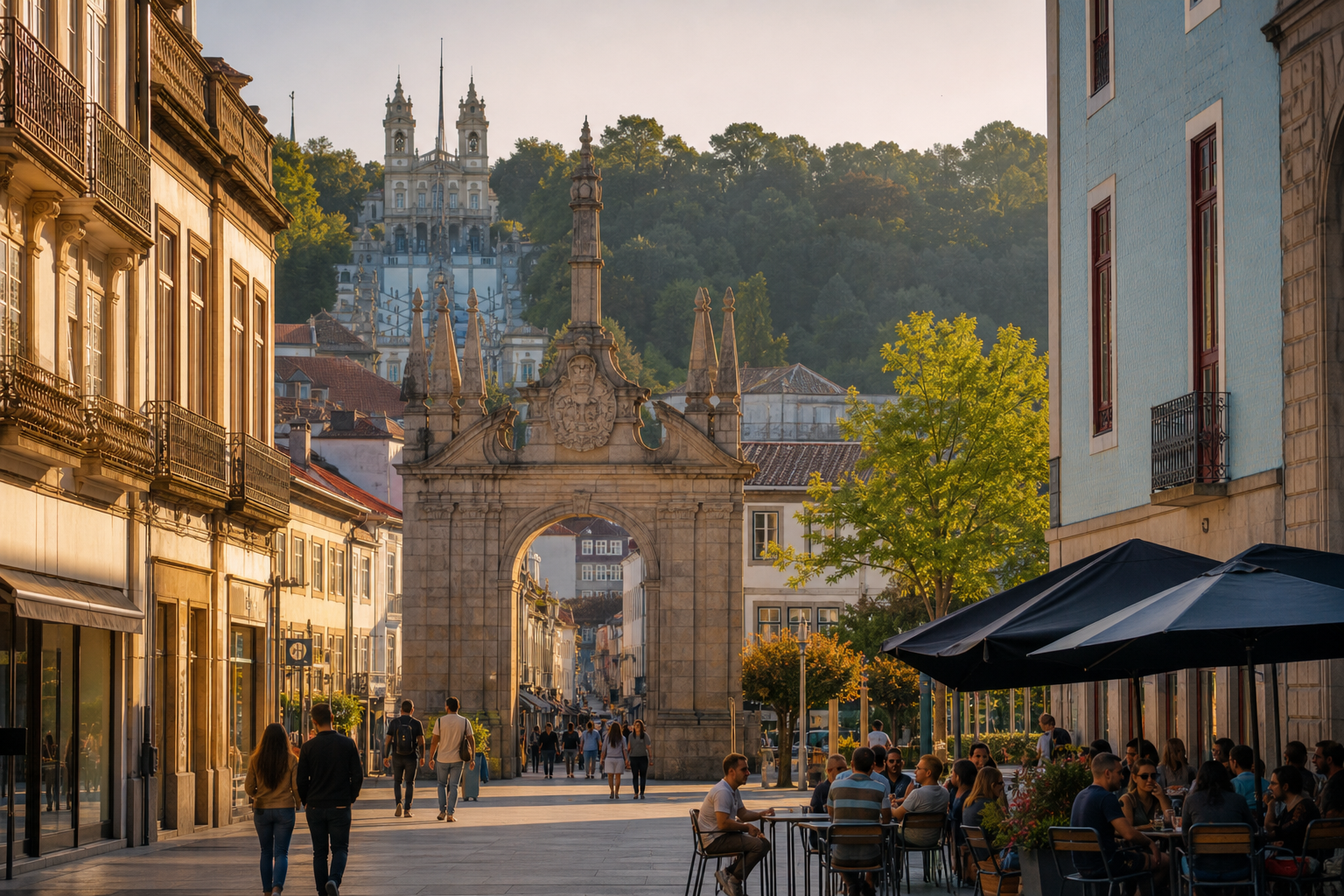
Understanding Cannabis culture in Braga requires more than asking whether cannabis is legal. Braga is a historic northern Portuguese city with a large student population, an active café and nightlife scene, religious heritage, and close links to the wider Minho region. Cannabis may appear in conversations about health, social life, policy and personal freedom, but local attitudes are not uniform and public visibility should not be confused with legal permission.
Portugal is widely known for its approach to drug decriminalization, yet decriminalization is not the same as legalization. Possession for personal use, public consumption, supply, cultivation and medical access can involve different rules and consequences. This guide explains the cultural context around cannabis in Braga, outlines the national framework that applies in the city, and offers practical advice for residents and visitors who want to stay informed and safe.
What cannabis culture in Braga looks like
Braga does not have a single, clearly defined cannabis culture. Instead, several overlapping perspectives shape how cannabis is discussed. Some people view it primarily through a harm-reduction and public-health lens. Others associate it with private social use, music and nightlife. Medical patients may approach it as a regulated treatment option rather than a recreational product. Many residents remain cautious, particularly when consumption affects shared spaces, families or public order.
The city’s universities and young-adult population can make conversations about cannabis more visible, especially in informal social settings. That does not mean that students or younger residents share the same views, nor does it establish that consumption is widespread. Braga’s traditional identity also matters: a strong religious and family-oriented character coexists with modern cultural life, producing a more nuanced atmosphere than a simple “liberal” or “conservative” label suggests.
For visitors researching weed in Braga, the most important distinction is between cultural visibility and lawful access. People may encounter references to cannabis in music, online discussions or private social circles, but those signals do not provide permission to buy, sell, carry or consume it in a particular place.
Cannabis laws in Braga: the national framework
Braga follows Portuguese national law rather than having its own separate cannabis regime. Portugal decriminalized the personal use and possession of drugs within defined limits in 2001. In practice, this shifted certain personal-use cases away from the criminal courts and toward administrative and health-oriented processes. It did not create a commercial recreational market, authorize open sales or make cannabis possession risk-free.
Authorities may assess the substance, quantity, circumstances and whether there are indications of supply or other offences. Possession connected to distribution, trafficking, coercion or organized activity is treated much more seriously than a personal-use situation. Decriminalization also does not remove rules concerning public nuisance, driving, workplaces, schools, protected areas or behavior that puts other people at risk.
For current official information, readers should consult Portugal’s SICAD information portal, which covers national drug policy and public-health responses, and INFARMED, Portugal’s medicines regulator, for regulated medical-cannabis information. Laws and administrative practice can change, so a recent official source is more reliable than social-media claims or outdated travel posts.
Decriminalization is not legalization
This distinction is central to any discussion of cannabis laws in Braga. Decriminalization generally concerns how certain personal-use conduct is handled. Legalization would mean that production, commercial supply and possession are expressly permitted within a regulated market. Portugal does not operate a nationwide recreational cannabis retail system comparable to a legal dispensary market.
Buying from an unlicensed seller, selling cannabis to someone else, importing products, or carrying cannabis across international borders can create serious legal problems. A product sold as cannabis may also have unknown potency, contaminants or a different composition from what the buyer expects. No informal claim that a product is “legal,” “medical” or “CBD” should be accepted without checking its labeling and lawful distribution status.
Medical cannabis in Braga
Medical cannabis in Braga is part of Portugal’s regulated healthcare system. Authorized cannabis-based medicines may be prescribed for specific clinical situations when a healthcare professional considers them appropriate. This is different from buying general cannabis products for self-treatment or asking a doctor to approve a recreational product.
Patients should discuss symptoms, existing medicines, mental-health history, pregnancy, driving responsibilities and previous reactions to cannabis with a qualified clinician. Cannabis-based treatment can cause drowsiness, dizziness, impaired concentration or interactions with other medicines. It may also be unsuitable for some people, particularly those with certain psychiatric or cardiovascular risks.
Access normally involves a medical assessment, a prescription where indicated, and obtaining the product through lawful pharmaceutical channels. A prescription from another country may not automatically authorize possession or travel in Portugal. Patients visiting Braga should confirm requirements with the relevant Portuguese authorities, their prescriber and a licensed pharmacy before travelling with any cannabis-based medicine.
Where cannabis fits into Braga’s social scene
Discussion of cannabis in Braga often overlaps with nightlife, student life, music and private gatherings. Still, the safest cultural rule is to treat cannabis as a private and sensitive matter rather than an automatic part of going out. Bars, clubs, festivals, university premises, hotels and rented accommodation may impose their own restrictions, and landlords or event organizers can ask people to leave for smoking or disruptive behavior.
Public consumption can create problems even when someone believes the amount involved is small. Smoke affects other people, including children and people with respiratory conditions, while odors can travel through apartment buildings and shared courtyards. Consuming near schools, playgrounds, religious sites, transport hubs or crowded streets is particularly inconsiderate and may attract intervention.
A respectful approach to the Braga cannabis community means recognizing that not everyone who supports reform uses cannabis, and not everyone who uses it wants to discuss it publicly. Avoid pressuring friends, treating strangers as potential suppliers, or assuming that a relaxed conversation about drug policy is an invitation to share or sell substances.
Safety guidance for residents and visitors
Responsible awareness is more useful than trying to identify a supposed “cannabis district” in Braga. There is no need to seek out informal markets, and doing so can expose people to legal, financial and health risks. Visitors should be especially cautious because unfamiliarity with Portuguese rules, language and local procedures can make a minor mistake harder to resolve.
- Do not drive, cycle in traffic or operate machinery after using cannabis. Impairment can last longer than expected, particularly with high-potency products or edibles.
- Do not mix cannabis with alcohol, sedatives or other drugs. Combined effects can increase confusion, poor coordination and risky decision-making.
- Keep cannabis and any medicines away from children and pets.
- Avoid using alone, and make sure a trusted person knows how to respond if someone becomes unwell.
- Do not assume that edibles are mild. Delayed effects can lead to taking more before the first dose has fully acted.
- Never share cannabis with someone who is pregnant, underage, taking interacting medicines or unsure about the risks.
- Seek urgent medical help for chest pain, severe panic, loss of consciousness, seizures, extreme confusion or breathing difficulties.
Health and safety concerns should take priority over embarrassment or worries about judgment. In an emergency, call Portugal’s emergency number, 112, and provide clear information about what was taken if possible. Medical professionals need accurate information to offer appropriate care.
Travel questions about cannabis in Braga
Can visitors bring cannabis to Braga?
International travel with cannabis is risky and may be unlawful, even when the substance was obtained legally in the traveler’s home country. Border controls, airline rules and Portuguese regulations can apply independently. A medical prescription does not automatically solve the issue; travelers should obtain written, current guidance from official authorities before departure.
Can tourists buy recreational cannabis legally in Braga?
Portugal does not have a standard recreational retail market where tourists can legally purchase cannabis from licensed shops. Informal sellers may describe products as safe or legal, but those claims are not a substitute for regulatory authorization. Buying or carrying an unknown product can expose a visitor to both health hazards and legal consequences.
Is CBD the same as cannabis?
CBD products and cannabis containing intoxicating levels of THC are not interchangeable. Product rules can depend on composition, intended use, labeling and route of sale. Some items marketed online may not comply with Portuguese or European requirements. Consumers should check the product’s documentation and use regulated channels rather than relying on packaging language alone.
Readers looking at related Portuguese topics can compare this overview with guidance on cannabis in Lisbon and national legal context, or review the practical discussion of marijuana laws and safety in Porto. These comparisons are useful because the legal framework is national, while the social atmosphere and visitor experience can differ between cities.
How Braga’s culture may evolve
Cannabis culture in Braga will likely continue to be shaped by national policy, medical research, public-health education and changing attitudes among younger adults. The most constructive developments are not necessarily more visible consumption. They may include better information about risks, improved access to evidence-based treatment, clearer product standards and more realistic conversations about dependence and mental health.
Public debate also benefits from separating several questions that are often combined: whether personal possession should be treated as a health issue, how regulated medicines should be supplied, how to prevent impaired driving, and whether commercial recreational sales should be allowed. Treating these as separate policy questions produces a more useful discussion than assuming that support for one automatically means support for all.
Conclusion
Cannabis culture in Braga is best understood as a mixture of national decriminalization policy, regulated medical access, private social attitudes and local expectations about public behavior. The city may have visible conversations around cannabis, particularly in student and cultural settings, but visibility does not equal legalization or guaranteed availability.
Residents and visitors can make informed choices by checking current official sources, avoiding informal markets, respecting shared spaces and taking impairment seriously. Whether the interest is weed in Braga, medical treatment or Portugal’s wider drug policy, the most reliable approach is to distinguish law from social perception and curiosity from safe, lawful conduct.