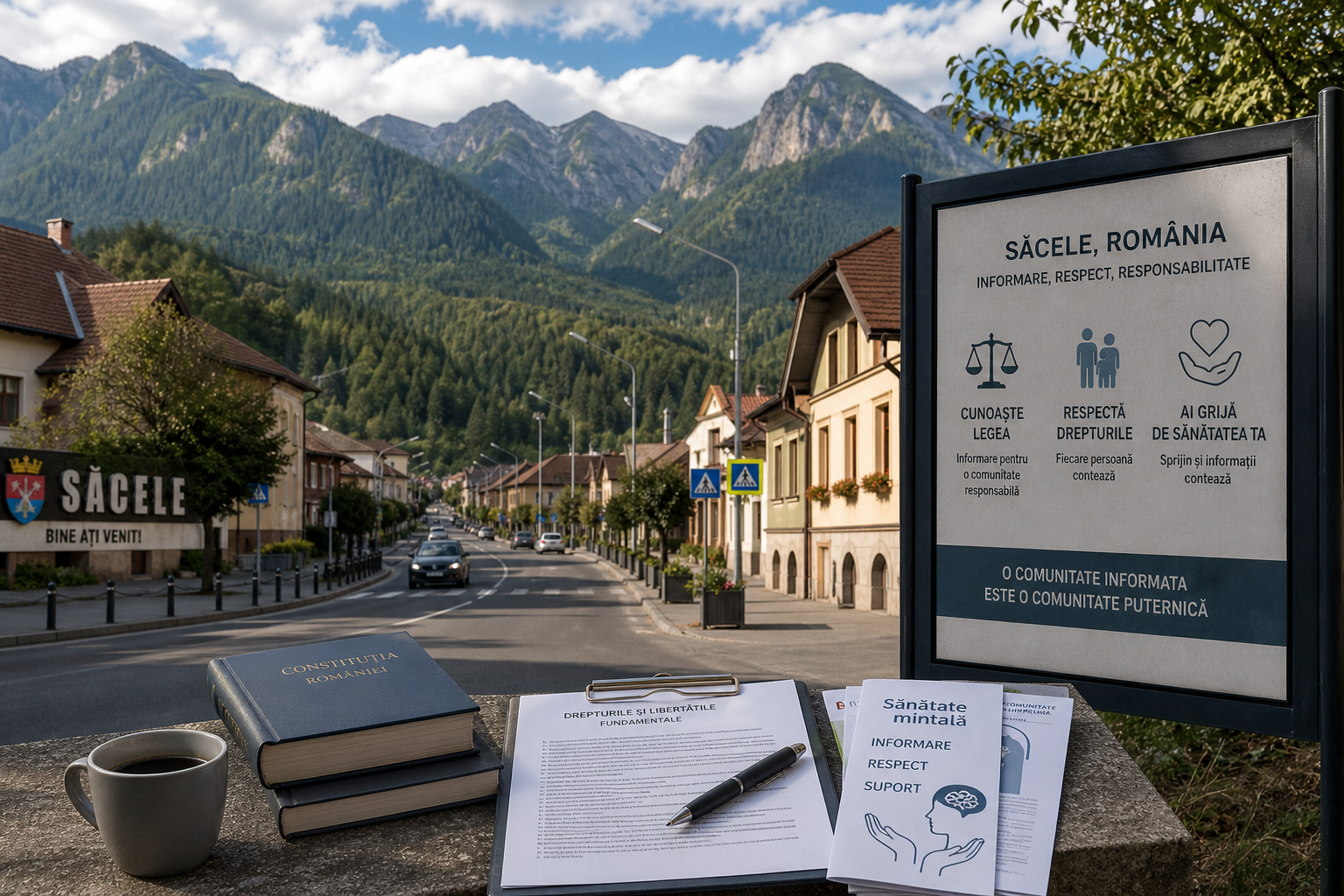
Săcele is a city in Brașov County, close to Brașov and the southeastern edge of the Piatra Mare area. For residents, visitors and people researching cannabis facts about Săcele, Romania, the most important point is that cannabis is governed mainly by Romanian national law, not by a separate city-level cannabis system. Local police, prosecutors, courts and health services apply national rules.
This guide explains the legal position, the difference between cannabis and industrial hemp, medical access, travel concerns and practical health risks. It does not identify local consumption statistics or suggest that Săcele has a special cannabis market. Laws and enforcement can change, so anyone facing a specific legal or medical issue should consult a Romanian lawyer or qualified clinician.
Cannabis in Săcele: why national law matters
Municipal authorities may regulate public order, noise and the use of public spaces, but the core rules concerning controlled drugs come from Romanian legislation. That means the same basic framework applies in Săcele as in Brașov and other Romanian cities.
Romanian law distinguishes between controlled narcotic or psychotropic substances, medicines containing regulated ingredients, and legally cultivated industrial hemp. The legal label, the substance involved, the amount, the person’s conduct and the evidence available can all affect the outcome of a case. A casual online claim that a particular quantity is “safe” or automatically legal should not be treated as legal advice.
The official Romanian legislation portal is a useful starting point for checking the current wording of laws and government decisions. Because legal texts can be amended, readers should verify the version in force rather than relying on an old social-media post or forum comment.
Cannabis laws in Săcele, Romania
Possession, purchase and sharing
Unauthorized possession of cannabis can create criminal-law exposure in Romania. Buying, selling, supplying or sharing it can lead to more serious consequences than simple personal possession, particularly where investigators allege distribution, repeated conduct or involvement of multiple people.
Sharing a small amount with a friend is not a reliable legal loophole. Payment is not the only factor that can matter, and giving cannabis to another person can still be treated as an unlawful supply-related act. Visitors should also avoid assuming that private accommodation provides immunity from Romanian drug law.
Use and public spaces
Romanian law does not create a general recreational cannabis market. Smoking or consuming cannabis in a park, on a street, near a transport facility or at a public event can create additional problems involving possession, public order or complaints. Even where a person believes the quantity is small, public use increases visibility and the chance of police intervention.
For comparison, readers interested in how public-use questions are discussed in another Romanian municipality can review this guide to public cannabis consumption laws in Bragadiru. The local setting differs, but the broader lesson is similar: public-space rules do not legalize possession or consumption.
Cultivation and supply
Growing cannabis plants without the necessary legal basis or authorization can be treated seriously. A home garden, balcony or indoor grow is not automatically permitted because the plants are intended for personal use. Cultivation, preparation, storage and transfer may be assessed together with the alleged purpose and scale of the activity.
Do not rely on seeds, plant appearance or informal advice to decide whether cultivation is lawful. Some hemp varieties are subject to agricultural and regulatory requirements, and those requirements are different from the rules for growing cannabis for intoxicating use.
Industrial hemp, CBD and cannabis: important distinctions
Industrial hemp is a regulated agricultural crop, not a blanket exception for all cannabis plants. Producers may need to use eligible varieties, meet cultivation conditions and keep the required documentation. A product labelled “hemp” is therefore not automatically lawful in every form or situation.
CBD products require careful checking as well. The ingredients, THC content, product category, labelling, intended use and route of sale can affect how a product is treated. A CBD oil purchased in another country may not meet Romanian requirements, and a product sold online is not necessarily compliant with Romanian or European rules.
Consumers should be particularly cautious with flowers, resins, vaping liquids and foods marketed as “CBD cannabis.” These products may contain measurable THC, may be inaccurately labelled or may fall into a different regulatory category from a conventional cosmetic or food supplement. If a product produces intoxication, treat it as a safety and legal concern rather than assuming that its packaging proves legality.
Medical cannabis in Săcele: what patients should know
Medical cannabis in Săcele is not a separate local program. Medical access depends on Romanian medicines regulation, the authorization status of a product and the decision of a licensed healthcare professional. A doctor’s advice about symptoms does not automatically authorize possession of an unapproved cannabis product.
Some cannabis-derived medicines or medicines containing controlled substances may be available under strict conditions, but this should not be confused with broad recreational legalization or unrestricted access to cannabis flower. Patients should ask a doctor or pharmacist about the exact medicine, prescription requirements, supply route, contraindications and documentation.
The National Agency for Medicines and Medical Devices of Romania provides official medicines information and regulatory resources. It is safer to verify a product through official channels than to rely on a seller’s claim that an item is “medical,” “prescription-free” or legal throughout the European Union.
Health considerations
Cannabis can affect attention, reaction time, memory, coordination and judgment. Effects vary with THC concentration, dose, route of administration, previous experience, other medicines and individual health. Edibles and oral products can take longer to produce effects, which may lead some people to consume more before the initial dose has taken effect.
People with a history of psychosis, severe anxiety, substance-use problems, cardiovascular concerns or medication interactions should discuss risks with a clinician. Cannabis should not be combined casually with alcohol, sedatives or other intoxicating substances. It is also unsuitable for driving, cycling in traffic or operating machinery when impairment is possible.
Travel and accommodation advice for Săcele
Visitors travelling to Săcele from Brașov, another Romanian city or another country should not bring cannabis across a border. Importing or exporting controlled substances can create serious legal consequences, even when the product was obtained lawfully somewhere else. This applies to flower, resin, oils, edibles, vape cartridges and products with uncertain THC content.
Travellers should also avoid carrying another person’s bag, package or medicine without knowing exactly what it contains. A prescription or medical document from another country may not by itself authorize possession in Romania. Anyone travelling with a genuinely prescribed controlled medicine should check Romanian entry requirements with the relevant embassy, consulate or competent authority before departure.
For broader regional context, the guide to cannabis regulations for tourists in Odorheiu Secuiesc illustrates why visitors should assess Romanian rules rather than assume that tourism destinations have more permissive policies.
What to do during a police encounter
If police question you about cannabis, remain calm and avoid arguing about legal interpretations in the street. Do not make false statements, destroy or hide items, or sign a document you do not understand. Ask for an interpreter if language is a problem and request legal assistance when appropriate.
A person’s rights and obligations can depend on whether the interaction is an identity check, a search, a witness interview, a suspect interview or an arrest. Because the consequences can be significant, a Romanian criminal-law lawyer is the appropriate source of advice for an individual case. Online articles cannot replace representation or a review of the actual evidence.
Safer decisions for residents and visitors
- Do not buy, sell, share, transport or cultivate cannabis outside the applicable legal framework.
- Do not assume that a low price, small amount or “natural” label means a product is legal.
- Never drive or operate equipment after using cannabis or another intoxicating substance.
- Keep unknown vape liquids, edibles and oils away from children and pets.
- Check medicines and CBD products through official or licensed channels.
- Seek urgent medical help for severe confusion, chest pain, breathing problems, loss of consciousness or dangerous behaviour.
- For a legal allegation, contact a qualified Romanian lawyer promptly and preserve relevant documents.
Conclusion
The key cannabis facts about Săcele, Romania are straightforward: the city follows Romania’s national controlled-substances framework, recreational cannabis is not generally legal, and public use, possession, supply, cultivation and cross-border transport can carry serious risks. Industrial hemp and regulated medicines are separate categories with their own requirements, while CBD packaging does not guarantee compliance.
Residents and visitors can reduce avoidable problems by checking official information, avoiding unverified products, not driving while impaired and seeking professional advice for medical or legal questions. Săcele’s proximity to Brașov makes it a convenient place to visit, but it does not create a more permissive cannabis regime.