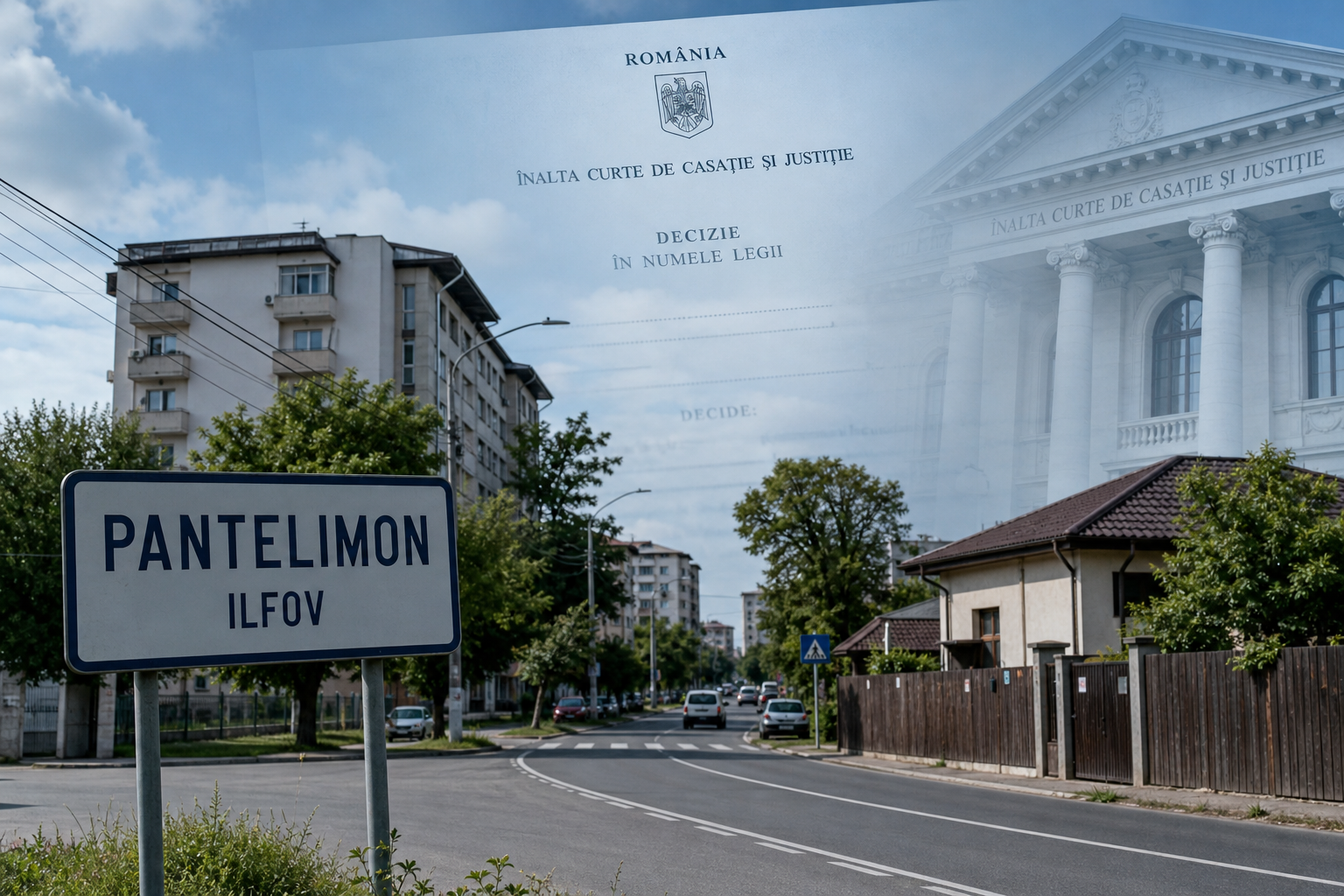
Anyone searching for cannabis laws and penalties in Pantelimon should start with one important point: Pantelimon does not have a separate cannabis code. As a city in Ilfov County, it is governed primarily by Romanian national criminal and road-traffic law. Local police, prosecutors and courts apply those rules to incidents occurring in Pantelimon, while the facts of each case determine the legal consequences.
Romania generally treats cannabis as an illicit controlled substance. Possession, cultivation, purchase, sale, transport and other activities can create criminal exposure, even when a person describes the amount as small or intended only for personal use. This guide explains the main issues in plain language, but it is not a substitute for advice from a Romanian criminal defence lawyer.
How cannabis is regulated in Pantelimon
The central statute is Romania’s Law No. 143/2000 on preventing and combating illicit drug trafficking and consumption. The law distinguishes between risk drugs and high-risk drugs, with different penalties depending on the classification of the substance and the alleged conduct. Cannabis is commonly treated within the risk-drug framework, but the exact legal classification of a seized product should be established from the applicable law and forensic examination rather than assumed.
National legislation applies in Pantelimon in the same way it applies elsewhere in Romania. A municipal location, private residence, vehicle or public street does not create a general exception. Local circumstances can affect evidence, enforcement and the practical handling of a case, but they do not legalise recreational cannabis.
For the official Romanian legislation portal, consult the Romanian legislation database. The text of a law can be amended, so readers should check the current version and obtain professional advice when a real investigation or charge is involved.
Cannabis possession laws in Pantelimon
Personal possession
Romanian law criminalises the unauthorised acquisition, purchase, cultivation, production, preparation, processing or possession of drugs for personal consumption. The fact that cannabis is allegedly for private use does not make it lawful. Personal-use cases are treated differently from supply offences, but they can still lead to a criminal investigation, seizure of the substance, questioning and prosecution.
In a Pantelimon case, authorities may consider the substance identified, its quantity, packaging, messages, money, scales, witness evidence and the surrounding circumstances. Quantity alone is not a universal legal test for personal use. Multiple packages or communications suggesting distribution may increase the risk that prosecutors view the conduct as more serious than simple possession.
People looking for weed in Pantelimon should therefore avoid relying on informal claims that a particular amount is “safe.” Romanian law does not create a broad recreational possession allowance comparable to a regulated adult-use market.
Possible consequences of possession
The personal-use provision in Law No. 143/2000 carries criminal penalties for unauthorised possession of risk drugs. Depending on the facts and the classification applied, a case can involve imprisonment or a fine within the statutory framework. A court may also assess aggravating or mitigating circumstances, the person’s previous record, cooperation, evidence of dependency and other legally relevant factors.
A police encounter does not automatically mean that a person will receive the maximum sentence. It also does not mean that the matter is merely administrative. Anyone searched, detained or summoned should avoid guessing about legal rights and should seek a lawyer promptly, particularly before making detailed statements.
For comparison, our guide to cannabis possession regulations in Onești explains why possession rules should be understood as national Romanian rules rather than city-specific permissions.
Supply, dealing and cultivation carry greater risks
Sale, distribution, delivery, transport, brokering and other forms of trafficking are treated much more seriously than personal possession. Prosecutors may rely on evidence such as repeated transactions, customer messages, cash, digital payment records, packaging materials, scales, witness accounts or the movement of cannabis between locations.
Cultivation can also create criminal liability. Growing plants at home is not automatically protected by the fact that the plants are intended for personal use. Seeds, seedlings, mature plants and harvested material can all become relevant evidence, and the legal assessment may depend on what was grown, how much was produced and what the person intended to do with it.
Trafficking allegations can result in substantially longer prison exposure than a personal-use allegation. The precise penalty depends on the drug category, conduct, quantity, location, participants and any aggravating circumstances. A person should not assume that selling to a friend, sharing without payment or transporting cannabis for someone else is legally harmless.
Our related overview of marijuana penalties in nearby Voluntari provides additional context on the difference between possession and alleged supply. The underlying national law remains the key reference.
Public use, private use and local enforcement
Romanian law does not establish a general right to smoke cannabis in a park, on a street, at a festival or in another public place. Public consumption can attract police attention and may be accompanied by possession, public-order or other allegations. Smoking near schools, children, transport hubs or crowded public areas can create additional practical and evidential problems, even when the central allegation concerns possession.
Private consumption is not the same as legal consumption. A person using cannabis inside a home may avoid some public-order issues, but possession and acquisition can still be criminal offences. Landlords, neighbours or visitors may also contact police because of odour, noise or concerns about safety. Pantelimon residents should not interpret the absence of a local cannabis shop or a lack of immediate enforcement as evidence that use is permitted.
For a focused comparison on public settings, see the guide to cannabis public-consumption laws in Bragadiru. The same caution applies in Pantelimon: public visibility can increase the likelihood of intervention, but the legality question is governed by national law.
Driving after cannabis use
Driving after consuming cannabis creates a separate and serious risk. Romanian road law prohibits driving under the influence of psychoactive substances, and a positive test can lead to roadside procedures, biological sampling and a criminal investigation. The legal and scientific assessment of impairment, detection and intent has been subject to public debate and court developments, so a person should obtain current legal advice rather than rely on internet summaries.
Police may use preliminary testing followed by medical or laboratory procedures. Drivers should follow lawful instructions, keep records of documents received and contact a lawyer as soon as possible. Do not drive after using cannabis, and do not assume that a prescribed or previously consumed product automatically protects you from road-traffic consequences.
Possible consequences may include loss or suspension of driving privileges, criminal proceedings and other restrictions. A transport or employment impact can be significant even before a case reaches a final judgment.
CBD, hemp and medical cannabis in Pantelimon
CBD products are not automatically risk-free
CBD is not the same substance as intoxicating THC, but a product labelled “CBD” is not automatically lawful in Romania. Oils, flowers, vapes, food supplements and cosmetics may be regulated differently. Some products can contain measurable THC, have inaccurate labels or fall under food, medicines or consumer-product rules.
Consumers should check the product’s ingredients, laboratory documentation, seller identity and intended legal classification. Buying online does not remove Romanian law from the transaction. Importing or carrying a product across a border can create additional problems if it contains controlled substances.
Medical cannabis access
There is no simple recreational dispensary system in Pantelimon. Medical products, medicines containing cannabinoids and authorised treatments must be assessed under Romanian medicines and controlled-substance rules. A person should not assume that a foreign prescription, a doctor’s recommendation from another country or a product purchased abroad automatically authorises possession in Romania.
The phrase medical cannabis in Pantelimon can describe several different situations, including an authorised medicine, a CBD product or unregulated cannabis obtained from an informal source. Those categories should not be treated as interchangeable. Patients should discuss lawful options with a Romanian doctor and pharmacist, keep prescriptions and packaging, and verify travel rules before bringing any controlled medicine into the country.
The National Agency Against Drugs and the Romanian Police publish public information through official channels. The Romanian Police official website is a useful starting point for general safety and law-enforcement information, although it cannot provide individual legal representation.
What to do after a cannabis-related police contact
- Remain calm and respectful. Do not obstruct a lawful search or attempt to destroy, hide or transfer evidence.
- Ask for a lawyer. A lawyer can explain the procedural stage, review documents and advise on questioning.
- Do not speculate. Guessing about ownership, quantity, source or intended use can create contradictions.
- Keep documents. Preserve summonses, search records, laboratory papers, prescriptions and product packaging.
- Do not contact suspected suppliers or witnesses about the case. Such communication may be misunderstood or become evidence.
- Seek medical support when needed. If cannabis use is connected with dependency, anxiety or other health concerns, a qualified clinician can provide confidential support.
Key points for residents and visitors
- Cannabis remains illegal for recreational possession and use in Pantelimon.
- Personal-use allegations are still criminal matters, even when the quantity is described as small.
- Sale, distribution, transport and cultivation can lead to much more severe penalties.
- CBD labels do not guarantee that a product is lawful or THC-free.
- Medical treatment and foreign prescriptions require separate verification under Romanian rules.
- Driving after cannabis use can create serious road-traffic and criminal consequences.
- Law No. 143/2000 and related rules may change, so current legal advice is essential for an active case.
Conclusion
The main message about cannabis in Pantelimon is straightforward: city boundaries do not create a recreational exception. Romanian national law can criminalise possession, acquisition, cultivation and supply, while driving after cannabis use and importing cannabinoid products create additional risks. CBD and medical products require careful verification rather than assumptions based on labels or foreign rules.
For reliable decisions, check current official legislation, avoid driving after cannabis use, keep controlled medicines properly documented and speak with a Romanian lawyer if police or prosecutors become involved. Understanding the difference between personal possession, supply, public conduct, medical access and road-traffic offences is the safest way to assess the legal position.