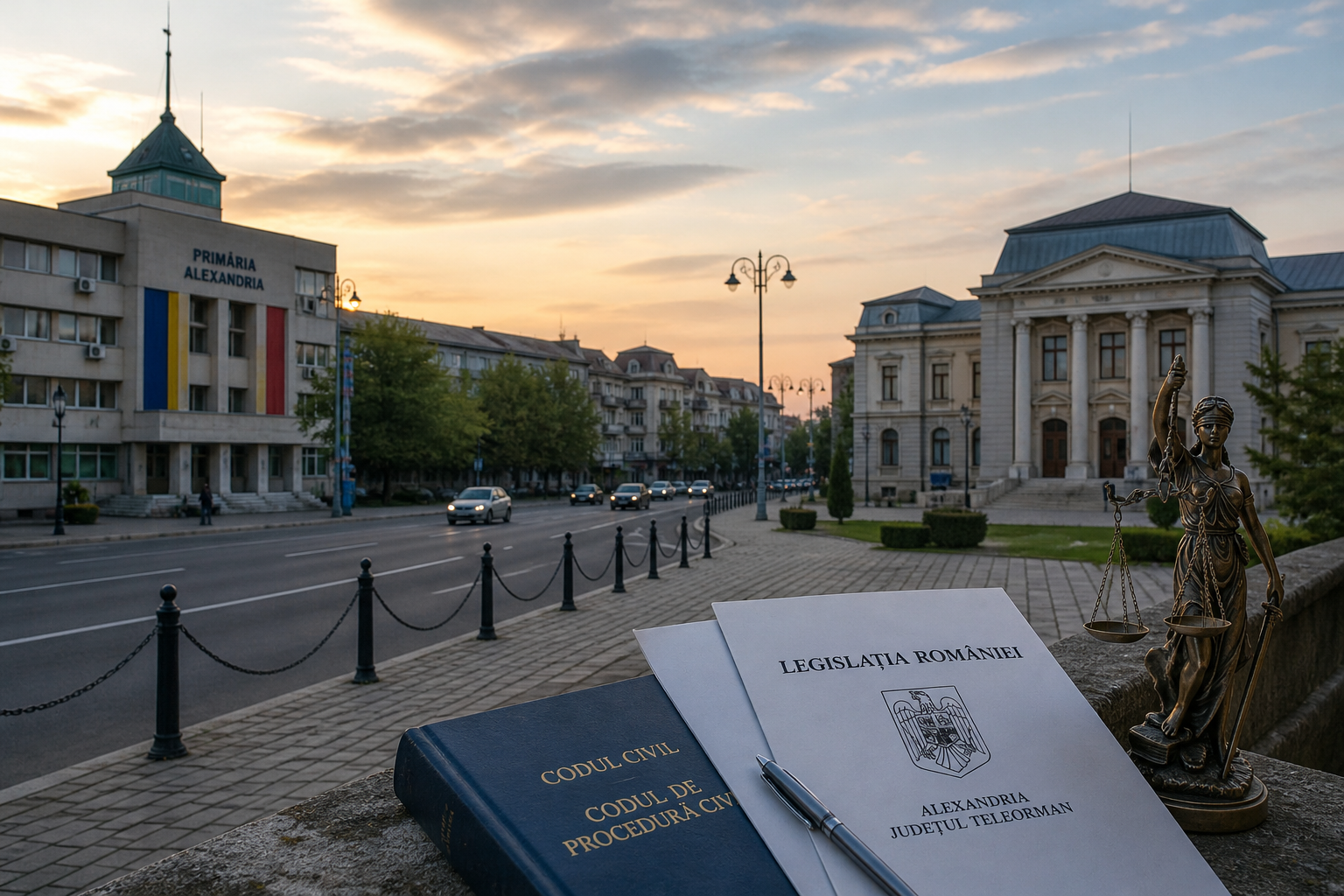
Understanding the Cannabis smoking laws in Alexandria, Romania requires looking beyond local practice. Alexandria is the capital of Teleorman County, but drug offences are governed mainly by Romanian national law rather than by a separate city cannabis code. For residents, visitors and anyone passing through the city, the central message is straightforward: recreational cannabis is not legally available for smoking, possession, sale or cultivation.
This guide explains how the rules generally apply to cannabis use in Alexandria, what can make a situation more serious, why public smoking creates additional problems, and where medical or hemp-related distinctions matter. It is general information, not a substitute for advice from a Romanian lawyer. Laws and enforcement practices can change, so a person facing questioning, a search or a criminal investigation should obtain individual legal assistance promptly.
How cannabis laws in Alexandria work
Alexandria does not have a municipal system that legalises recreational cannabis. Romanian national legislation applies in the city, including the country’s controlled-substances framework. Cannabis and cannabis resin are treated as controlled drugs, and the legal consequences can depend on the substance, quantity, conduct and surrounding facts.
For the current wording of Romanian legislation, consult the official Romanian legislation portal. The relevant rules are commonly discussed in connection with Law No. 143/2000 on preventing and combating illicit drug trafficking and consumption, together with other controlled-substance and criminal-law provisions. The classification of a substance and the purpose attributed to an act can affect the legal analysis.
That means a person should not assume that a small amount, private consumption or an absence of commercial intent makes cannabis lawful. Those facts may be relevant to how authorities assess a case, but they do not create a recreational-use exception.
Is smoking cannabis legal in Alexandria?
Smoking cannabis for recreation is not a lawful activity in Alexandria. The immediate act of smoking may be viewed alongside possession or acquisition of the drug, and the surrounding circumstances can determine which offences authorities investigate. Cannabis in Alexandria Romania should therefore be understood as a legal-risk issue, not as a regulated consumer market.
There is no general permission to smoke cannabis in a flat, hotel room, car, park or other location. Private property does not automatically remove criminal-law concerns because the underlying possession, acquisition or supply may still be unlawful. A private setting can also create practical issues involving landlords, hotel policies, neighbours, visitors or child-safety concerns.
Public smoking creates extra risks
Smoking in a public place can draw attention from police, generate complaints and expose other people to smoke. It may also create separate public-order or nuisance issues depending on the conduct and location. Schools, playgrounds, transport areas, workplaces and crowded public spaces are particularly poor settings for any drug-related conduct because they increase the chance of intervention and third-party harm.
Public visibility does not determine whether an offence occurred, but it can make evidence, witnesses and police involvement more likely. A person should also avoid discarding cannabis, sharing it or asking someone else to carry it. Those actions can introduce additional legal questions rather than solving the original problem.
Possession, acquisition and sharing
Romanian drug law distinguishes between different forms of conduct, and the facts matter. Possession may be investigated even when a person says the cannabis was intended only for personal use. Acquiring, transporting, storing or holding cannabis for another person can also create exposure. Sharing a joint or giving cannabis to a friend should not be treated as harmless simply because no money changes hands.
Supply-related allegations are especially serious. Quantity, packaging, communications, cash, scales, repeated transactions and statements from other people may all influence how authorities interpret the circumstances. A person who is accused of distribution should seek a lawyer rather than trying to explain the situation informally or deleting messages and other potential evidence.
For broader background on how Romanian possession rules can operate outside the capital region, readers can also review this guide to cannabis possession laws in Turda. The city differs, but the national legal framework is the important common factor.
What penalties may follow a cannabis offence?
Potential consequences depend on the alleged offence and the evidence. They may include criminal investigation, seizure of substances, questioning, court proceedings, fines in some contexts, probation-related measures or imprisonment. The precise penalty cannot be predicted from the city alone, and online summaries should not be used to estimate an individual sentence.
Factors that may matter include whether the allegation concerns personal consumption or trafficking, the type and quantity of drug, prior convictions, the person’s role, cooperation with authorities, the location and the presence of vulnerable people. Importantly, a person should not assume that a first allegation automatically ends without a criminal record or court consequences.
If police stop or search you
- Remain calm and avoid physical resistance or confrontation.
- Ask why you are being stopped or questioned and whether you are free to leave.
- Request a lawyer before making detailed statements about ownership, acquisition or use.
- Do not sign a document you do not understand; request an interpreter if necessary.
- Do not destroy, hide or transfer suspected drugs or related evidence.
- Note the officers’ instructions and preserve relevant documents for your lawyer.
These are general safety steps, not a substitute for Romanian criminal-procedure advice. If police formally identify you as a suspect or conduct a search, prompt contact with a qualified defence lawyer is particularly important.
Driving after cannabis use in Alexandria
Driving after using cannabis creates a separate and serious risk. Romanian road-traffic rules address driving while affected by psychoactive substances, and a driver may face investigation if authorities believe drug use affected lawful driving or if testing and later evidence raise concerns. The fact that a person feels normal is not a reliable legal or safety test.
Drug screening can lead to further medical or laboratory procedures, and the significance of a result depends on the legal and factual circumstances. Do not drive after consuming cannabis or accept a lift from someone who may be impaired. Use a sober driver, public transport or another safe alternative.
The Romanian Police provides official public information through its national police website. For a current case involving a roadside test, licence action or criminal allegation, obtain advice based on the actual documents and procedure rather than relying on general internet claims.
Medical cannabis and prescription distinctions
Medical cannabis in Romania should not be confused with recreational access. Romania has a controlled and limited framework for certain cannabis-derived substances and medicines, but that does not mean a person may legally buy ordinary cannabis flower, grow plants or smoke a recreational product because it is described as therapeutic.
A medicine must be lawfully authorised, prescribed or supplied under the applicable rules. A product purchased abroad, obtained online or carried across a border may create additional customs, prescription and controlled-drug issues. A foreign medical document may not automatically authorise possession or use in Romania.
Anyone who uses a prescribed medicine should keep its original packaging and supporting medical documents, check the active ingredients and ask a doctor or pharmacist about travel and driving restrictions. Do not assume that a product labelled CBD is automatically risk-free: some products may contain THC, may be inaccurately labelled or may fall under separate regulatory requirements.
Hemp, CBD and cannabis are not identical categories
Romanian law can treat industrial hemp, hemp seed products, CBD products and high-THC cannabis differently. The label alone is not enough to establish legality. The plant variety, THC content, preparation, intended use, product authorisation and documentation may all matter.
Buying a product from a shop in Alexandria does not guarantee that it is lawful to smoke, possess or transport in every situation. Consumers should check the packaging, ingredients, batch information and seller documentation. Avoid products with vague labelling, unsupported medical claims or no clear information about THC content.
Hemp food, cosmetics and other lawful products should not be treated as permission to possess cannabis flower or extracts intended for intoxication. If a product may affect a drug test, driving and employment consequences should also be considered.
Travel and accommodation considerations
Visitors looking for weed in Alexandria Romania should be aware that there is no licensed recreational dispensary system comparable to legal markets in some other countries. Buying from an informal seller can expose a person to unknown potency, contamination, fraud, theft and criminal allegations. Carrying cannabis on a train, bus or across a county line does not make possession safer.
Crossing the Romanian border with cannabis or cannabis products can create particularly serious consequences. Rules in the departure or destination country may also apply, and a prescription or product label may not be accepted by border authorities. Do not transport cannabis for another person, even if the person claims it is legal where it came from.
Hotels, rental properties and workplaces can impose their own no-smoking and conduct rules. A host may ask a guest to leave or may contact authorities after discovering suspected drugs. Respecting property rules and avoiding drug use around other people are important practical safeguards, but they do not turn an illegal substance into a legal one.
Health and safer choices
Beyond legal exposure, smoking cannabis can affect attention, reaction time, memory and judgement. Risks may be greater when cannabis is combined with alcohol, sedatives or other drugs. People with a history of anxiety, psychosis, heart problems or medication interactions should speak with a healthcare professional before using any cannabis-related product.
- Never drive, cycle in traffic or operate machinery after using cannabis.
- Do not mix cannabis with alcohol or unknown substances.
- Avoid smoking around children, pregnant people and anyone who has not consented to exposure.
- Do not use an unknown product with uncertain strength or ingredients.
- Seek urgent medical help for chest pain, severe confusion, loss of consciousness, seizures or extreme agitation.
If cannabis use is becoming difficult to control, a doctor or addiction service can provide confidential support. Asking for health help is safer than relying on an unverified seller or attempting to manage an emergency alone.
Practical takeaways for Alexandria residents and visitors
- Recreational cannabis smoking is not legal in Alexandria under the Romanian national framework.
- Private use does not erase risks connected with possession, acquisition or supply.
- Sharing, transporting or storing cannabis for another person can create additional exposure.
- Driving after cannabis use is unsafe and may trigger separate legal consequences.
- Medical and CBD-related products must be assessed by their legal status, ingredients and documentation, not by marketing language.
- Anyone contacted by police should remain calm, request legal assistance and avoid signing documents they do not understand.
Conclusion
The cannabis laws in Alexandria are primarily Romanian national laws, not special local rules. Recreational smoking, possession and informal supply remain legally risky, whether they occur in a home, on the street or in a vehicle. Public use can bring added attention and possible public-order concerns, while driving after use creates a separate safety and legal problem.
The safest approach is to avoid illicit cannabis, verify the status of any medical or hemp-derived product, and obtain professional advice when police, border authorities or a court become involved. This information is intended to explain the general framework, not to predict the result of a particular case.