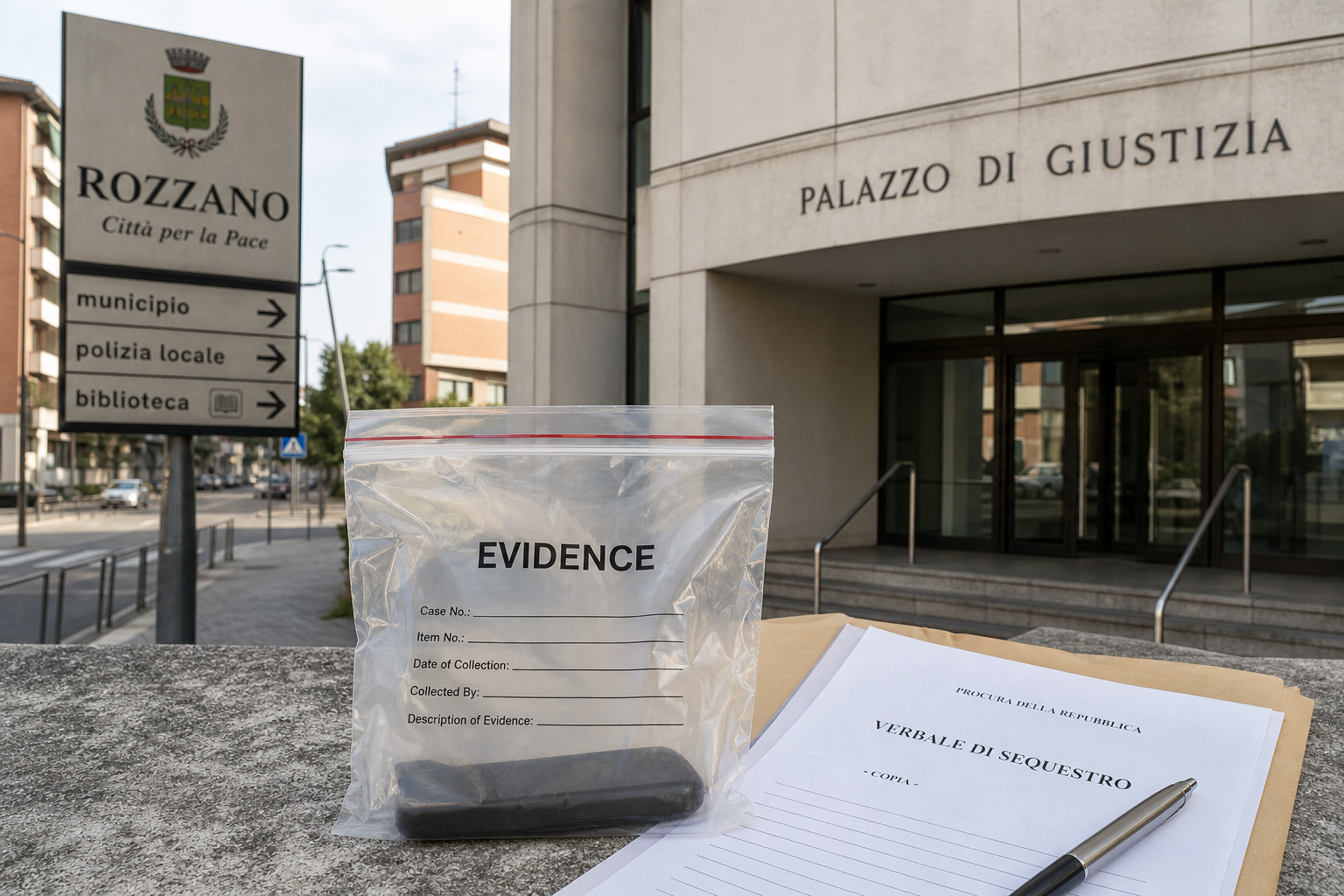
Understanding Cannabis laws and penalties in Rozzano requires looking beyond local rules. Rozzano is a municipality in the Metropolitan City of Milan, but the principal rules on possession, supply, cultivation, medical use and driving come from Italian national law. Local police, the Prefecture of Milan and the courts apply those rules according to the facts of each case.
This guide explains the difference between personal use and alleged dealing, what can happen after a police stop, how medical cannabis is regulated, and why carrying cannabis across a border or driving after using it can create separate legal problems. It is general information, not a substitute for advice from an Italian lawyer.
How cannabis law works in Rozzano
Italian law generally separates conduct connected with personal consumption from conduct considered drug dealing or distribution. The distinction is important: personal-use cases are normally handled through administrative measures, while supply-related conduct can lead to criminal proceedings.
The main national framework is found in Presidential Decree No. 309/1990, Italy’s consolidated law on narcotic drugs. The official text is available through Italy’s official consolidated drugs legislation. The wording of the law, later amendments and court interpretation all matter, so a short online summary cannot predict the outcome of an individual case.
Local enforcement and national rules
Rozzano does not have a separate cannabis code that legalizes recreational sales or replaces national penalties. Municipal police may encounter cannabis-related conduct during traffic checks, public-order interventions or other investigations, while the State Police and Carabinieri may also be involved. The Prefect in the relevant province can handle administrative measures connected with personal use.
This means that searches, seizure procedures, notices and referrals may vary with the circumstances, but the underlying legal classification is principally national. Searches involving a home, vehicle or electronic evidence also raise procedural issues that should be reviewed promptly by counsel.
Possession for personal use
Possessing a small amount intended exclusively for personal consumption is not treated in the same way as possessing cannabis for sale. Under Article 75 of the consolidated drugs law, personal-use conduct can result in administrative sanctions rather than a criminal conviction. The substance may be seized, and the person may be reported to the Prefecture.
Possible consequences can include a summons for an interview with the Prefect or an appointed official, a formal warning in some circumstances, and temporary suspension of documents or authorizations. Depending on the case and the type of document affected, this may include a driving licence, passport, firearms licence or other administrative entitlement. The duration and selection of a measure depend on the legal classification, the person’s history, the quantity and other circumstances.
A police report does not automatically prove that the cannabis was for personal use. Authorities may examine packaging, scales, messages, cash, several portions, statements and the quantity in context. Conversely, the presence of cannabis alone does not automatically establish trafficking. The facts and available evidence determine the next step.
What happens after a personal-use report?
- Identification and seizure: Officers may identify the person and take the suspected substance for testing or formal seizure.
- Reporting: The matter may be sent to the Prefecture for an administrative assessment under Article 75.
- Notice or interview: The person may receive instructions to attend an interview or provide information.
- Administrative decision: The Prefecture may issue a warning or impose a temporary suspension affecting an eligible document.
- Review and advice: Deadlines, notification defects and the factual basis of the report can be important, so legal advice should be obtained quickly.
People who want a local comparison may also find it useful to read this overview of cannabis possession regulations in nearby Corsico. The legal framework remains national, but the article provides related regional context.
When possession can become a criminal case
Article 73 addresses unlawful production, distribution, sale, transport, import, export and other conduct connected with drug dealing. If investigators believe cannabis was intended for others, the matter can become a criminal prosecution rather than an administrative personal-use case.
Italian law contains different penalty ranges, including provisions for less serious cases. The applicable range depends on the alleged conduct, the substance, the evidence, the role of the accused and whether a court recognizes a lower-level offense. It is therefore misleading to quote one fixed penalty for every cannabis case.
In serious cases, the statutory framework can involve lengthy imprisonment and substantial fines. In a lower-level case, the available range may be considerably different, but “small-scale” does not mean risk-free. A conviction can affect employment, immigration status, travel, professional licences and future proceedings.
Evidence that may influence classification
- Quantity and concentration of the cannabis or cannabis product.
- Whether the substance is divided into sale-sized portions.
- Scales, packaging materials, customer lists or unexplained cash.
- Messages, online advertisements or conversations suggesting supply.
- The person’s statements and any evidence of a regular pattern.
- Growing equipment, multiple plants or evidence of distribution.
These indicators are not automatic proof of dealing. Their significance must be assessed together, and the prosecution must establish the alleged offense through the criminal process.
Is cannabis use in public legal in Rozzano?
Italian law does not create a simple permission to smoke cannabis in streets, parks, stations, shopping areas or other public places. Even where possession is treated as personal use, consuming in public can lead to complaints, police intervention or other consequences. Conduct that disturbs people, creates a nuisance or occurs near sensitive locations may attract additional attention under public-order or local rules.
Private property is not a blanket exemption. A landlord, hotel, workplace, school, care facility or event organizer may prohibit smoking or possession under its own rules. Smoke, odor and conduct affecting neighbors can also lead to civil or administrative disputes.
For practical purposes, people asking about cannabis in Rozzano should separate the question of possession from the question of where consumption occurs. A personal-use classification does not turn public consumption into a regulated recreational activity.
Cannabis, driving and transport
Driving after using cannabis creates a separate and serious risk. Italian road law can penalize driving while affected by drugs, and roadside or later testing may form part of an investigation. The consequences can include criminal proceedings, licence suspension or revocation, vehicle-related measures and increased penalties where an accident or injury is involved.
Do not drive simply because the cannabis was legally prescribed or because the person feels capable of driving. Medical authorization does not remove the need to follow road-safety rules. A person stopped while carrying cannabis in a vehicle may also face questions about possession, transport and intended use.
Taking cannabis on a train, bus or taxi does not make it legal. Transport within Italy can be scrutinized differently from international travel, but neither is a safe way to assume that personal-use rules apply. Crossing the Italian border with cannabis can trigger customs and import or export issues, even where the product was obtained lawfully elsewhere.
Medical cannabis in Rozzano
Medical cannabis is available in Italy within a regulated healthcare and pharmacy system. It is not the same as recreational cannabis, and a doctor’s prescription does not authorize resale, sharing, casual possession of someone else’s medicine or unrestricted cultivation.
Patients should obtain medicine through lawful medical channels, keep it in its original packaging and carry the prescription or supporting documentation when travelling. Rules concerning prescribing, preparation, dispensing and reimbursement can be specific to the treatment and region. The Italian Ministry of Health provides official health information through its official Ministry of Health website.
Someone searching for medical cannabis in Rozzano should speak with a qualified doctor and pharmacist about eligibility, formulation, dosage, side effects and driving restrictions. Patients should not assume that a foreign prescription, CBD product or informal recommendation has the same legal status as an Italian prescription.
CBD, hemp and home cultivation
CBD products are not automatically interchangeable with recreational cannabis or prescription medicine. The product’s composition, THC content, intended use, labelling and method of sale can affect its treatment under Italian and European rules. A shop label is not, by itself, a guarantee that possession or use will be legally problem-free.
Home cultivation is another area where oversimplification is risky. Italian courts have recognized a narrow possibility that very limited domestic cultivation for an individual’s exclusive personal use may fall outside criminal punishment when strict conditions are satisfied. This is not a general right to grow cannabis. The number of plants, scale, equipment, yield, security, evidence of distribution and other facts can change the analysis.
Growing cannabis in a rented property may also breach a lease, cause property damage or create disputes with neighbors. Anyone facing a seizure or investigation should avoid relying on internet summaries and obtain case-specific advice.
Practical steps after a cannabis-related stop
- Stay calm and do not obstruct officers or sign documents that you do not understand.
- Ask for an interpreter if you are not comfortable communicating in Italian.
- Request a copy of any seizure record, notice or summons when legally available.
- Do not discuss the facts publicly or message others about the incident.
- Contact an Italian criminal or administrative lawyer promptly, especially if a vehicle, home or electronic device was searched.
- Keep prescriptions, pharmacy packaging and relevant medical documentation together if the cannabis is prescribed.
- Do not drive after using cannabis or transport another person’s cannabis across a border.
The timing of a notice matters. Missing a Prefecture appointment or a legal deadline can make it harder to present relevant information. A lawyer can explain whether a response, records request, objection or other procedural step is available.
How Rozzano compares with nearby municipalities
The same national principles apply in neighboring areas around Milan, but enforcement experiences and local circumstances may differ. For a related discussion, see this guide to cannabis access laws in Trezzano sul Naviglio. It is useful to treat local articles as practical context rather than as a substitute for the current text of Italian law.
In particular, do not assume that a product sold or tolerated in one municipality is lawful everywhere. Retail availability, informal sharing and online claims do not override national restrictions on supply, possession, driving or importation.
Key points on cannabis laws in Rozzano
For most residents and visitors, the central message is straightforward: recreational cannabis sales are not generally legal in Rozzano, personal-use possession may lead to administrative sanctions, and alleged supply can lead to criminal prosecution. Public consumption, driving after use, border crossings and unregulated medical claims create additional risks.
The safest approach is to distinguish personal use from supply, keep prescribed products documented, avoid driving after consumption, and obtain prompt legal advice if police or the Prefecture become involved. Because penalties depend on current legislation and the facts of the case, anyone facing a report should rely on a qualified Italian professional rather than a generic online estimate.