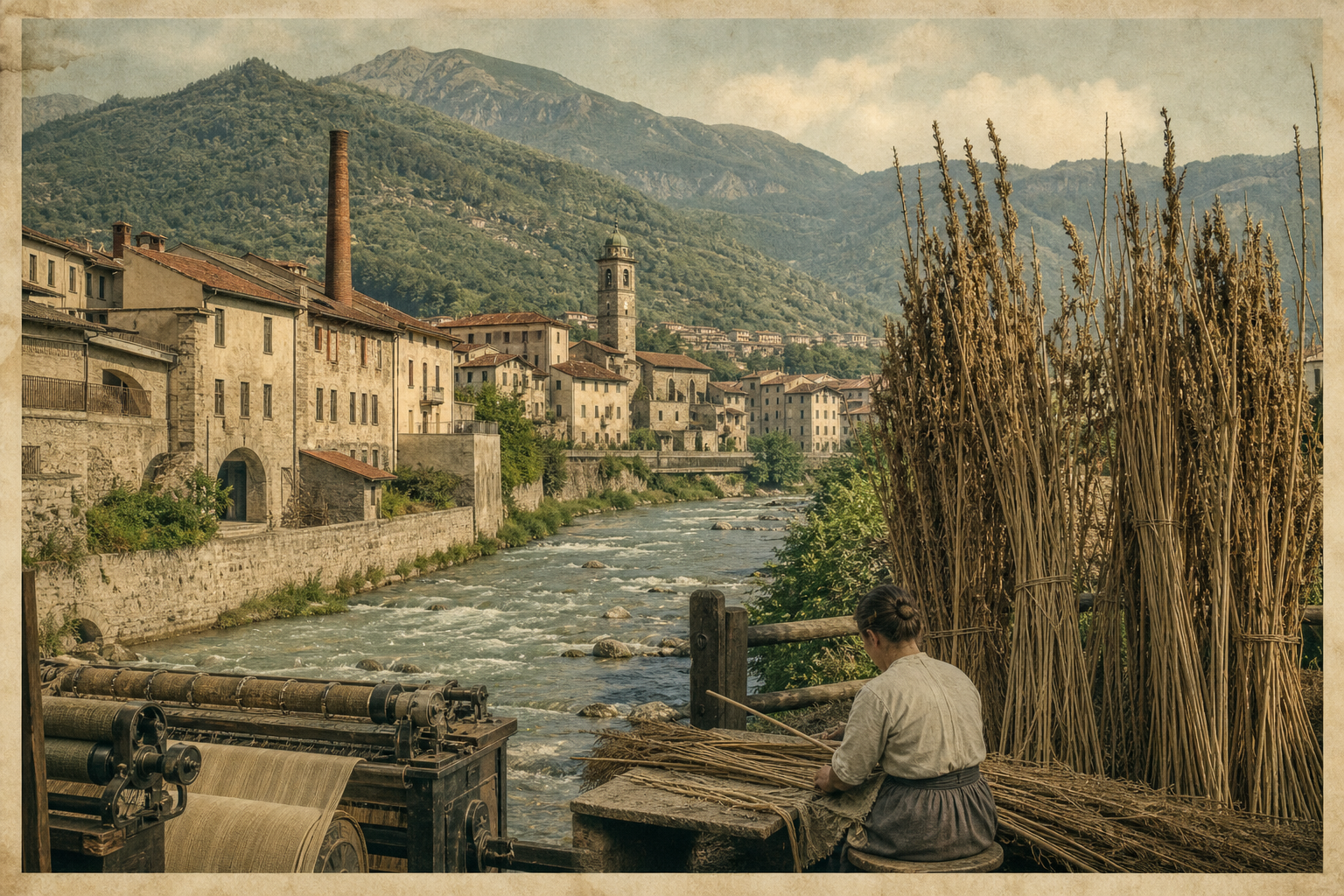
Marijuana history in Albino, Italy is best understood through the wider story of hemp, agriculture, industry and Italian drug policy. Albino, in the Seriana Valley of Bergamo province, does not have a separately documented cannabis history comparable to a major farming district or an international port. Its local story is instead connected to northern Italy’s rural traditions, textile economy and changing national laws.
That distinction matters. Hemp has long been used for fibre, rope and other practical materials, while marijuana generally refers to cannabis flower used for its intoxicating effects. These are related forms of the same plant, but they have not played the same social or economic role. In Albino, historical evidence is more likely to concern agriculture, manufacturing and commerce than a distinct local marijuana culture.
Marijuana history in Albino, Italy: why the local context matters
Albino sits in a valley shaped by the Serio River and by the industrial development of the Bergamo area. For centuries, communities in northern Italy combined farming with craft production and trade. Later, the valleys around Bergamo became strongly associated with textile manufacturing and other forms of industry.
Hemp fits into this history as a useful fibre crop. Across Italy, hemp was cultivated for household and commercial purposes, including cordage, canvas and fabric. The crop was valued primarily for its durable stalk fibre and seeds, not for recreational consumption. It would therefore be misleading to describe every reference to historical hemp as evidence of marijuana use in Albino.
For readers searching for weed in Albino, the historical record offers a more cautious answer: there is no reliable basis for claiming that Albino was a notable centre of marijuana production or consumption. The better-supported story is one of national policy filtering into a community with older agricultural and industrial traditions.
Hemp, textiles and northern Italian rural life
Hemp as a practical crop
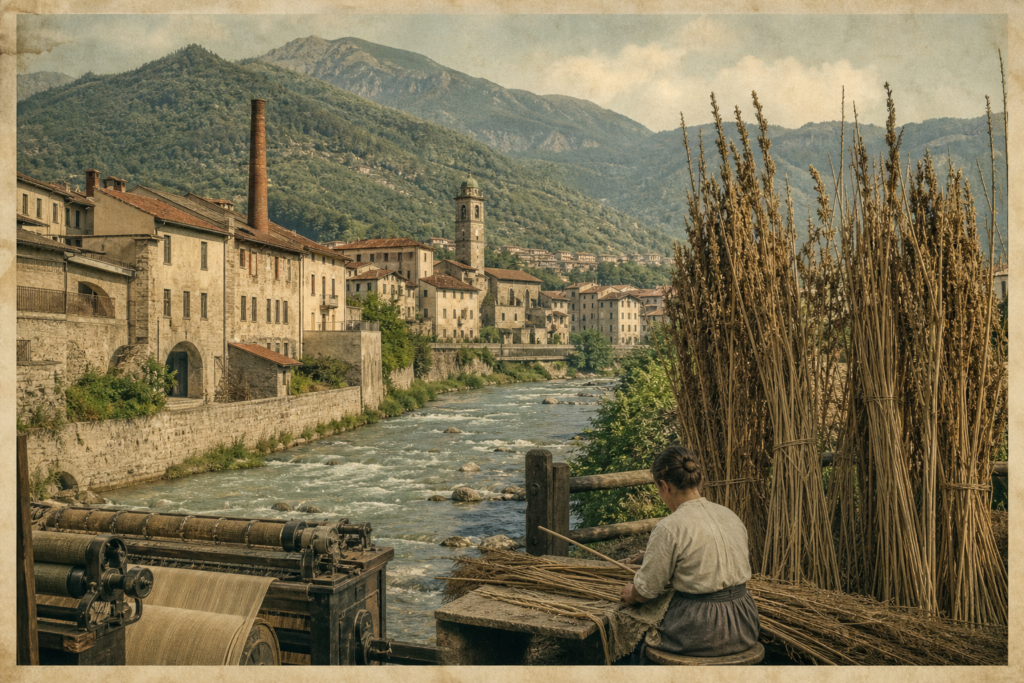
Traditional hemp cultivation was labour-intensive. Farmers had to grow, harvest, dry and process the stalks before the fibres could be used. Depending on the region and period, hemp supported household production as well as local trade. It could provide material for ropes, sacks, work clothing and other durable goods.
In a place such as Albino, where the surrounding valley supported agriculture and later manufacturing, hemp would have belonged to a broader material economy. It was one of several plants and fibres that connected rural land with workshops, markets and domestic production. Local archival research may reveal references in land records, tax documents, parish materials or commercial inventories, but broad regional history should not be presented as a specific Albino fact without documentary evidence.
Hemp is not the same as marijuana
Modern discussions often compress hemp and marijuana into one story. Historically, however, farmers selected and used plants for different purposes. Industrial hemp was associated with low-intoxicating fibre or seed production, while marijuana usually refers to cannabis cultivated for resin-rich flowers.
This difference is important when interpreting old Italian sources. A document mentioning canapa, the Italian word for hemp, may describe a legal agricultural commodity rather than recreational cannabis. The terminology, intended use and legal setting all need to be considered before drawing conclusions about cannabis in Albino.
From agricultural material to controlled substance
During the twentieth century, international drug-control systems and national legislation increasingly focused on cannabis as a psychoactive substance. Italy’s rules developed through several legal stages, with restrictions applying to cultivation, possession, sale and supply. The exact consequences have depended on the conduct involved, the substance, the quantity and later amendments to the law.
These changes affected Albino in the same way they affected other Italian municipalities. Local government did not create a separate cannabis code. Instead, policing, courts, health services and public education operated within national and regional frameworks. This is why the history of cannabis laws in Albino is primarily a history of Italian law as applied locally.
The distinction between administrative and criminal consequences has also been significant. Italian law has treated personal possession and trafficking as different matters, while public authorities have continued to address impaired driving, illegal supply and risks to minors. Because the legal framework can change, anyone seeking current guidance should consult official sources rather than rely only on historical summaries.
For a comparison with another Bergamo-area community, the article on cannabis history in Seriate offers a useful regional perspective. The same principle applies there: national developments provide the framework, while local evidence determines what can responsibly be said about a particular town.
Medical cannabis and public health in Albino
Medical cannabis introduced a new element into Italy’s cannabis history. It created a regulated pathway for certain preparations to be prescribed and supplied for approved clinical circumstances. This is not the same as general legalisation for recreational use, and it does not mean that residents can grow, sell or purchase marijuana freely.
People searching for medical cannabis in Albino should begin with a qualified physician and the local health system. Treatment decisions depend on the patient’s condition, clinical evidence, previous therapies and the doctor’s assessment. Availability can also involve pharmacies, authorised preparations and regional procedures.
Public-health discussions should remain balanced. Cannabis-based medicines may be relevant in particular clinical contexts, but cannabis can also cause impairment and unwanted effects. Products may affect attention, memory, reaction time and coordination. Risks can be greater for adolescents, people with a personal or family vulnerability to psychosis, and anyone combining cannabis with alcohol or other sedating substances.
The Italian Ministry of Health is an appropriate starting point for official information about medicines, public health and national healthcare policy. Medical decisions should not be based on product advertising, informal social-media advice or assumptions drawn from recreational use.
What “cannabis in Albino” means today
In contemporary conversation, cannabis in Albino can refer to several different subjects:
- Historical hemp cultivation and fibre production.
- Illegal recreational cannabis possession or supply.
- Prescribed cannabis-based medicines.
- Low-THC hemp products subject to specific Italian and European rules.
- Prevention, treatment and harm-reduction services.
These categories should not be treated as interchangeable. A hemp product is not automatically a medical product, and a medical preparation is not the same as an unregulated cannabis flower. Product labels, cannabinoid content, intended use and current law all matter.
People also sometimes use “cannabis shop” or “CBD” language as if it settled legality. It does not. A product’s legal status may depend on its composition, presentation, testing, supply chain and the rules in force at the time. Travellers should be especially careful about carrying cannabis or cannabis-derived products across borders, since Italian rules do not override the laws of another country.
How to research Albino’s local cannabis past
A serious local history would require primary sources rather than assumptions based on the town’s location. Researchers could examine municipal archives, historical land registers, agricultural records, textile-company papers, newspaper collections and regional museums. Oral histories may add useful context, but personal memories should be distinguished from verifiable evidence.
Useful questions for local research
- Was hemp recorded in agricultural inventories or land-use documents?
- Did local textile or rope-making businesses use hemp fibre?
- How did regional newspapers describe cannabis after national restrictions expanded?
- When did local health services begin discussing prevention or treatment?
- Are there court or police records that can be used ethically and legally?
Researchers should also consider language. Older records may use terms such as canapa, fibra, filato or cordame without mentioning marijuana. Later documents may use legal or medical terminology that differs from everyday speech. A careful chronology should explain these changes rather than place modern meanings into older sources.
For a broader look at cannabis-related commerce and regulation in the province, the guide to the marijuana industry in Dalmine provides useful comparison. It should be read as a separate local case, not as proof of a particular industry in Albino.
Italy’s current direction and Albino’s place in it
Italy’s cannabis debate continues to involve several competing concerns: public health, criminal justice, medical access, agricultural policy and consumer safety. Regulations may be affected by court decisions, parliamentary action, administrative guidance and European developments. As a result, an article about history should avoid presenting a fixed legal answer as permanent.
The European Union Drugs Agency provides background on cannabis, drug markets and health issues through its official cannabis information. This broader context helps explain why local conversations in Albino are connected to European patterns of prevention, regulation and treatment.
For residents and visitors, the practical principles are straightforward: do not buy from unlicensed sellers, do not drive while impaired, do not assume that CBD or hemp branding guarantees legality, and seek medical advice for therapeutic questions. Parents, schools and community groups can support informed discussion by separating historical hemp, medical treatment and recreational use instead of treating them as one subject.
Conclusion
The history of marijuana in Albino is not a story of a uniquely documented local cannabis industry. It is a layered regional story: traditional hemp belonged to Italy’s agricultural and textile economy, while modern marijuana policy emerged through national and international drug-control systems. Medical cannabis later created a regulated healthcare pathway without establishing general recreational legality.
Understanding Marijuana history in Albino, Italy therefore requires precision. Hemp traditions should be acknowledged without exaggeration, current law should be checked through authoritative sources, and local claims should be supported by archives or clearly identified as regional context. That approach produces a more useful history—and a safer guide to cannabis-related questions in Albino today.