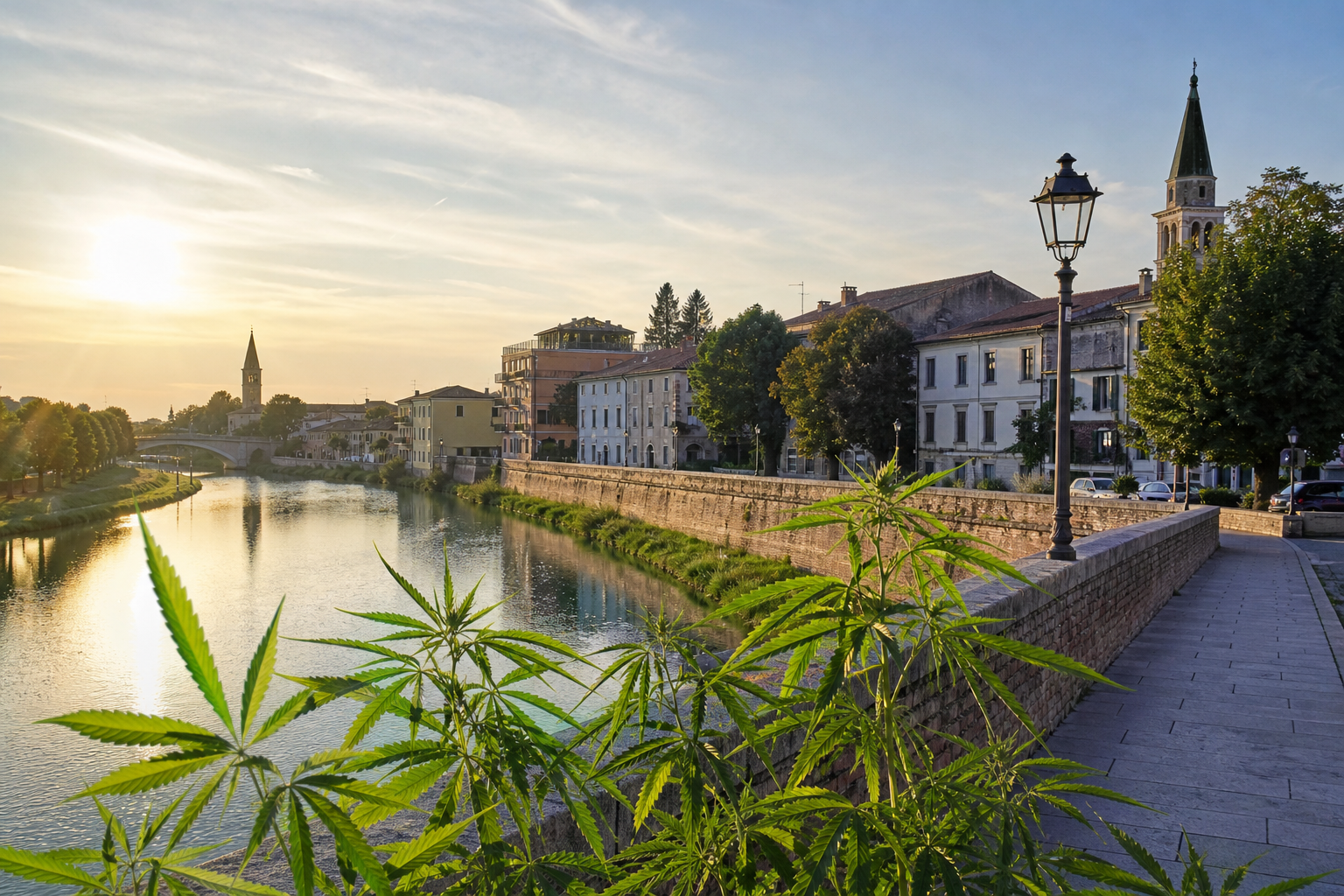
Cannabis culture in San Donà di Piave is best understood through the wider social, legal and agricultural context of Veneto rather than through assumptions about a formal local cannabis scene. San Donà di Piave is a busy town in the Metropolitan City of Venice, positioned between the Piave River, the coast and the transport routes connecting eastern Veneto with Venice and nearby cities. That setting brings together residents, commuters, students, visitors and agricultural communities, but it does not create a separate legal framework for cannabis.
For anyone researching weed in San Donà di Piave, the most important distinction is between recreational cannabis, medical cannabis, industrial hemp and low-THC CBD products. These categories can look similar to consumers while being treated very differently under Italian law. A responsible view of the local culture therefore combines everyday social attitudes with careful attention to national rules, health risks and respectful travel behavior.
What cannabis culture means in San Donà di Piave
In a town such as San Donà di Piave, cannabis culture is more likely to appear through private conversations, online communities, harm-reduction discussions, interest in CBD and broader European debates about drug policy than through openly advertised recreational venues. Italy does not have a nationwide system of licensed recreational cannabis shops or a general legal market for high-THC marijuana.
The local conversation can also overlap with Veneto’s agricultural identity. Hemp has historical and contemporary uses in textiles, food, construction materials and other industrial applications. Those uses should not be confused with the possession or sale of high-THC cannabis. A hemp product, a CBD preparation and a recreational cannabis product may have different composition, labeling requirements and legal consequences.
There is also a difference between social tolerance and legal permission. Some adults may regard cannabis as a personal or cultural issue, while public authorities continue to enforce national restrictions. Treating informal acceptance as a guarantee of safety can lead to problems, particularly in public spaces, around transport hubs or during nightlife.
Cannabis laws in San Donà di Piave
Cannabis laws in San Donà di Piave are primarily Italian national laws, not rules created by the municipality. The legal framework distinguishes between personal use, possession, supply, cultivation, trafficking and medical use. The consequences depend on the substance, quantity, circumstances and evidence available to authorities.
Personal possession for use can result in administrative measures rather than the same criminal penalties associated with trafficking. That does not mean possession is legal or consequence-free. Possible measures can affect documents, driving privileges or access to certain administrative services. Supplying cannabis to another person is a more serious matter, and sharing should not be treated as a harmless extension of personal possession.
Italian drug legislation is complex and can change through court decisions, regulations and official guidance. For the current legal framework, consult the official Italian legislation database, Normattiva, and obtain professional legal advice when a specific case is involved. Online summaries are not a substitute for advice about an arrest, seizure, prescription or border crossing.
Public use and driving
Using cannabis in streets, parks, stations, beaches or other public places can attract unwanted attention and may create additional problems where disorder, nuisance or possession is involved. San Donà di Piave is connected by road and rail with other parts of Veneto, so visitors should be especially cautious about carrying cannabis while moving between towns.
Driving after using cannabis is unsafe and can expose a driver to serious legal consequences. Impairment may affect reaction time, attention, coordination and judgment. The safest approach is simple: do not drive, cycle in traffic or operate machinery after consuming cannabis, and never combine it with alcohol or sedating medicines without medical advice.
Medical cannabis in San Donà di Piave
Medical cannabis in San Donà di Piave is available through the Italian healthcare and pharmacy system when prescribed for an appropriate medical indication. Patients should begin with a doctor who can assess symptoms, previous treatments, potential interactions and whether a cannabis-based medicine is suitable. A prescription is not a general authorization to buy recreational cannabis.
Pharmacy availability can vary. A pharmacy may need to order a preparation, and the product, dosage and instructions depend on the prescription. Patients should keep the medicine in its original packaging and carry the prescription or supporting documentation, especially when traveling. Sharing prescribed medicine with another person is unsafe and unlawful.
Medical cannabis can cause drowsiness, dizziness, impaired concentration and other adverse effects. It may also interact with alcohol, sedatives and some prescription medicines. People with a history of psychosis, cardiovascular problems, pregnancy or other significant health conditions should discuss risks carefully with a qualified clinician. The Italian Ministry of Health information on medical cannabis is a useful starting point for understanding the official context.
Readers seeking a broader comparison can also review this practical guide to therapeutic cannabis in nearby Chioggia. The rules remain national, but the article provides additional patient-focused context.
CBD, hemp and retail questions
Interest in CBD is one of the more visible parts of contemporary cannabis culture. CBD is not intoxicating in the same way as THC, but product quality and legal classification still matter. Oils, flowers, foods, cosmetics and supplements may be subject to different rules, and labels do not always provide enough information for a consumer to judge a product safely.
People comparing cannabis in San Donà di Piave should avoid assuming that a product sold as “light cannabis,” hemp or CBD is automatically suitable for driving, work or international travel. Trace amounts of THC, inaccurate labeling or contamination can create health and legal concerns. Ask a retailer for clear ingredient information, batch details and intended use, and be cautious with products making exaggerated medical claims.
Industrial hemp is a legitimate agricultural and commercial category, but its presence does not establish that recreational cannabis is legal. Anyone interested in hemp production, food or fiber should evaluate the relevant product standards rather than relying on the appearance of a plant or a marketing label.
Visitors, nightlife and responsible behavior
San Donà di Piave can be used as a base for exploring eastern Veneto, the Piave area and destinations toward the coast. Visitors should not interpret tourism, nightlife or a relaxed social atmosphere as permission to purchase cannabis from strangers. Unregulated products may be mislabeled, contaminated or much stronger than expected.
- Do not buy cannabis from street sellers, informal contacts or unknown online accounts.
- Do not carry cannabis across the Italian border, even if it was purchased legally elsewhere.
- Do not take cannabis onto trains, buses, planes or into accommodation without understanding the applicable rules.
- Keep prescribed medicines in original packaging and carry relevant documentation.
- Avoid public consumption and never drive after using cannabis.
- Seek medical help for severe anxiety, chest pain, confusion, loss of consciousness or other alarming symptoms.
Visitors planning wider travel can also read this guide to cannabis travel rules in Italy. Although Imola is in another region, the practical border, transport and documentation concerns are relevant to travelers in Veneto as well.
Health, stigma and harm reduction
A balanced discussion of cannabis culture should include people who choose not to use it. Cannabis can produce short-term effects such as impaired memory, anxiety, altered perception and reduced coordination. Frequent or high-potency use may increase the risk of problematic use and can worsen mental-health symptoms in vulnerable individuals. Adolescents and young adults deserve particular caution because brain development continues into early adulthood.
Harm reduction does not require endorsing consumption. It means providing realistic information: avoid mixing substances, start with caution where use is legal and medically appropriate, do not use alone in a risky setting, and seek help when consumption begins affecting work, relationships, finances or health. Edibles deserve special care because effects can be delayed, encouraging people to consume more before the first dose has taken effect.
For evidence-based information about cannabis, drug effects and public-health responses across Europe, the European Union Drugs Agency provides a reliable institutional resource. Local healthcare professionals and addiction services remain the most appropriate sources for personal support.
How the local conversation may develop
Future debates in San Donà di Piave are likely to reflect national and European discussions about medical access, CBD regulation, youth prevention, impaired driving and the potential regulation of adult-use cannabis. These debates may involve healthcare workers, families, educators, law-enforcement authorities, farmers and consumer groups.
Residents can contribute constructively by separating evidence from advertising and by distinguishing health policy from commercial promotion. Useful questions include whether a claim is supported by clinical evidence, whether a product is correctly labeled, how vulnerable people are protected and how rules would be enforced. This approach is more productive than treating cannabis as either entirely harmless or inherently dangerous.
Conclusion
Cannabis culture in San Donà di Piave is part of a broader Veneto and Italian conversation shaped by law, medicine, hemp production, public health and changing social attitudes. The town does not operate under a special cannabis regime, and there is no reliable basis for assuming a formal recreational market or an officially recognized local cannabis club scene.
For residents and visitors, the practical message is clear: understand the difference between THC cannabis, medical preparations, CBD and industrial hemp; rely on official information; avoid unregulated purchases; protect privacy and health; and never drive while impaired. A careful, locally aware approach allows people to discuss the subject realistically without overstating either the opportunities or the risks.