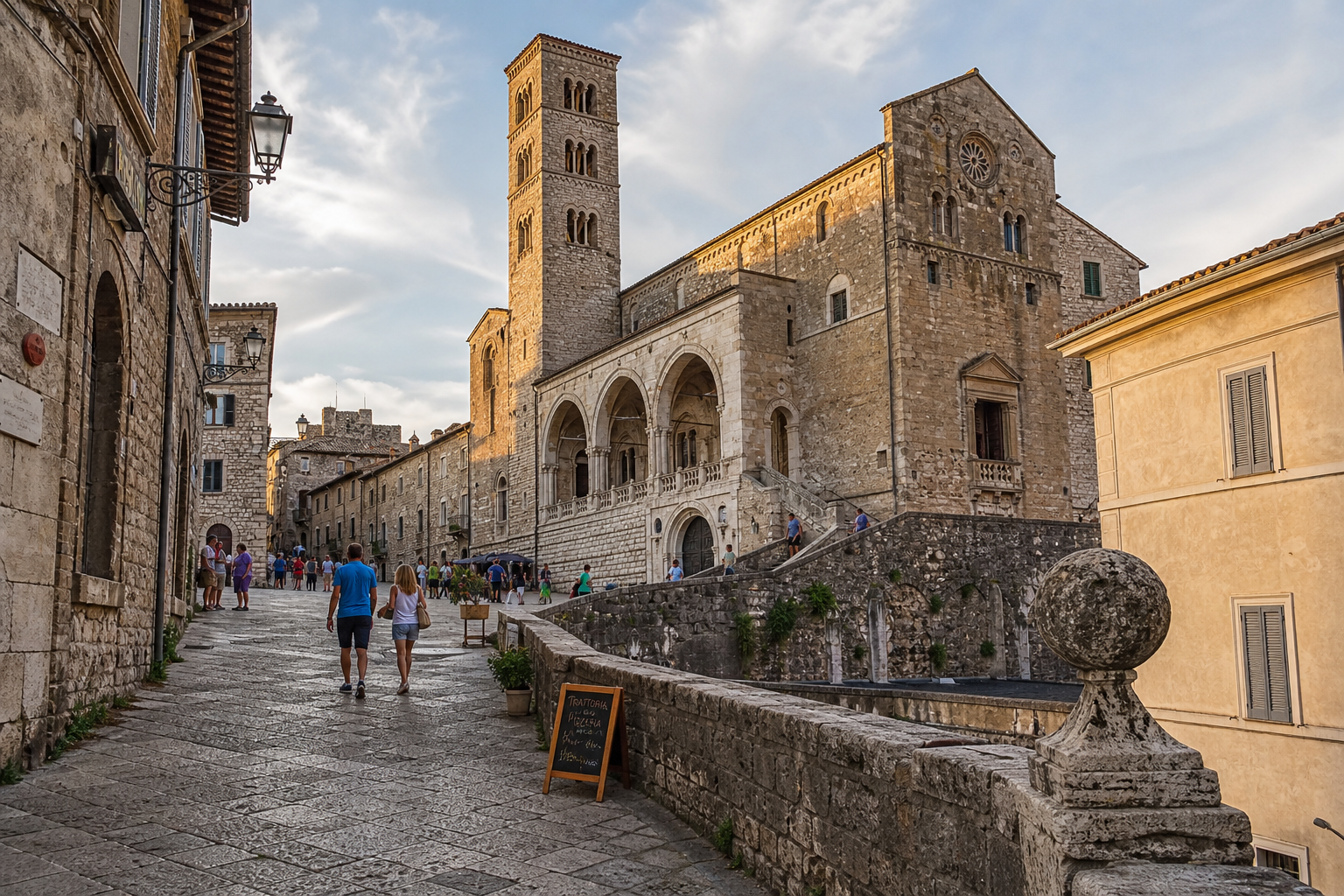
Anagni is a historic hill town in Lazio, known for its cathedral, medieval streets and connection with important chapters of Italian history. Visitors may also have questions about cannabis guide for tourists in Anagni topics, including possession, CBD products, prescribed medicines and what to do if they encounter cannabis during a trip. The most important point is simple: Italy does not treat recreational cannabis as a legal tourist product. Rules apply in Anagni just as they do elsewhere in the country, and unfamiliarity with Italian law is not a defence.
This guide offers practical, general information for travellers. It is not legal or medical advice, and regulations can change. When a situation involves a prescription, border crossing, police contact or a significant quantity of cannabis, consult an Italian professional or the relevant authorities.
Cannabis laws in Anagni: the basic position
There is no separate recreational cannabis market or tourist exemption in Anagni. Italian national law governs the possession, sale, supply, cultivation and use of cannabis. The legal outcome depends on factors such as the substance, amount, purpose, evidence of supply and the circumstances surrounding the case.
Possession intended for personal use can lead to administrative consequences rather than the same criminal process used for drug trafficking. That does not make possession risk-free. Authorities may report the matter to the relevant administrative bodies, and consequences can affect documents or permissions connected with travel and residence. Possession associated with sale, distribution or other supply-related conduct can be treated much more seriously and may result in criminal proceedings.
For the primary legal framework, read the official text of Italy’s Consolidated Law on Drugs. Because legal interpretation depends on facts, tourists should not rely on informal claims that a small amount is automatically permitted.
What this means in practice
- Do not assume that a small quantity is legal simply because it is for personal use.
- Do not buy cannabis from street sellers, strangers, social-media contacts or unverified delivery services.
- Do not carry cannabis into Italy or take it out of Italy without checking the specific medicine and border rules.
- Do not share, sell or give cannabis to another person.
- Do not assume that a product labelled CBD is automatically lawful or suitable to carry.
These precautions apply in the historic centre, around accommodation, at transport points and in nearby towns. A visitor looking for weed in Anagni should understand that tourism does not create a legal route to recreational cannabis.
Buying, possessing and carrying cannabis as a visitor
Street purchases create several risks at once. The substance may not be what it is claimed to be, its strength may be unknown, and a transaction can be interpreted as evidence of supply or participation in an illicit market. Tourists may also be especially vulnerable to scams, theft, intimidation or police intervention.
Carrying cannabis in luggage, a daypack or a vehicle can still create legal problems even if it is never used. Leaving a product in a hotel room does not remove the risk. Nor does placing it in a sealed bag or describing it as a souvenir. Do not transport cannabis between Anagni and Rome, other Lazio destinations or across national borders.
Travellers comparing information about cannabis travel rules in Vercelli should apply the same broad lesson here: local sightseeing plans do not change Italy’s national drug controls. The safest choice for a recreational visitor is not to possess or purchase cannabis.
Public use, accommodation and driving
Italy’s national rules are only part of the practical picture. Public spaces can have additional rules concerning smoking, litter, nuisance, safety and access. Using cannabis near families, queues, monuments, churches, cafés, public transport, parks or other crowded areas can attract complaints even before drug law is considered. Anagni’s historic setting includes narrow streets and heavily visited religious and cultural sites, where respectful conduct matters.
Hotels, bed-and-breakfasts, holiday rentals and campsites may prohibit smoking or the use of intoxicating substances. A host can impose house rules and may charge for damage or cleaning. Never use cannabis in a room, balcony or shared area unless the accommodation expressly permits the conduct and it is lawful. In practice, visitors should avoid bringing recreational cannabis onto the property.
Driving after using cannabis is particularly unsafe and can have serious legal consequences. Cannabis can affect attention, reaction time, coordination and judgement, even when a person feels capable of driving. Do not drive, cycle on busy roads or operate a scooter after consuming cannabis. Public transport or a licensed taxi is safer, but carrying the substance can still remain unlawful.
Safer choices for a sightseeing day
- Plan visits to the cathedral, museums and historic streets without carrying recreational cannabis.
- Keep alcohol and other intoxicants separate from any prescribed medicine unless a clinician confirms that combination is safe.
- Use official transport and avoid driving if tired, unwell or affected by any substance.
- Keep emergency contact details, travel insurance information and identification available.
- If someone becomes confused, unconscious, severely agitated or has trouble breathing, call Italy’s emergency number, 112.
CBD and low-THC products in Anagni
CBD products are often marketed as a safer or legal alternative, but the label alone is not a reliable legal guarantee. Products can differ in ingredients, THC content, intended use, testing and regulatory treatment. Cannabis flowers, oils, edibles, cosmetics and supplements may be subject to different requirements, and a product bought in another country may not meet Italian rules.
Do not bring CBD flowers, oils or foods into Italy simply because they were sold legally where you live. Packaging, laboratory claims and a receipt may not settle the issue at the border. Some products may also contain enough THC to create impairment or a positive test. A tourist who is considering cannabis in Anagni should treat commercial CBD claims cautiously and ask a pharmacist or qualified Italian professional about the specific product.
Avoid unlabelled products, informal sellers and items that promise recreational effects while presenting themselves as wellness products. If a product is medically necessary, carry its original packaging and supporting documentation, and check the rules before departure rather than after arrival.
Medical cannabis in Anagni for international visitors
Medical cannabis is not the same as recreational cannabis. In Italy, authorised medical cannabis is supplied through regulated healthcare and pharmacy channels for eligible patients under medical supervision. A foreign prescription should not be assumed to work as an automatic purchase authorisation at an Italian pharmacy.
Visitors who already use a cannabis-based medicine should speak with their prescribing clinician and the Italian embassy or consulate before travelling. Ask about the medicine’s active ingredients, quantity, prescription format, translation, import permissions and any required certificate. Requirements may depend on the country of departure, the medicine and the length of stay.
For current public-health and medicine information, consult Italy’s Ministry of Health website. A pharmacist may help explain local supply options, but should not be expected to replace advance travel authorisation or specialist legal advice.
Documents to prepare before departure
- A current prescription or letter from the prescribing clinician.
- The medicine’s generic name, strength, dosage and daily amount.
- The original pharmacy packaging with the patient’s name and dispensing details.
- Relevant import or travel certificates, if the authorities require them.
- Contact information for the prescriber and the traveller’s insurer.
Carry only the amount reasonably needed for the authorised trip, keep it in hand luggage when appropriate and follow airline, border and destination-country instructions. Never transfer prescribed medicine into an unlabelled container. Do not give it to another person, even if that person has similar symptoms.
What to do if police stop you
Stay calm, polite and truthful. Do not argue about local law, attempt to hide or discard an item, or sign a document you do not understand. Ask for an interpreter if communication is difficult and request legal assistance if the matter becomes formal. Consular staff may be able to explain how to contact local lawyers and communicate with your government, but they cannot cancel Italian proceedings or provide legal representation.
Keep copies of your passport, insurance details and prescription documents separate from the original items. If you are travelling with a prescribed cannabis medicine, explain that clearly and show the supporting paperwork. Avoid posting accusations or details online while an incident is unresolved.
Common tourist mistakes to avoid
- Relying on another country’s rules: legality at home does not establish legality in Italy.
- Confusing decriminalisation with legalisation: an administrative response to personal possession is not permission to buy or use cannabis.
- Trusting a seller’s label: informal products may be misidentified, contaminated or unlawfully supplied.
- Taking cannabis across a border: international transport creates additional risks, including customs and import offences.
- Driving after use: feeling normal is not proof that driving is safe or legally acceptable.
- Assuming a prescription travels automatically: medical documentation and import rules should be checked before departure.
A practical cannabis-free plan for Anagni
The simplest way to reduce legal and health risks is to plan the trip without recreational cannabis. Focus on Anagni’s historic attractions, choose accommodation with clear rules, use reliable transport and keep any necessary medication in its original packaging. If you are researching cannabis laws in Anagni, prioritise official Italian sources over forums, social posts or advice from sellers.
For broader safety context, you can also review guidance on cannabis risks for visitors in Cava de’ Tirreni. The local scenery and customs differ, but the core travel principle remains useful: do not let an uncertain product or casual assumption disrupt an otherwise enjoyable visit.
Conclusion
Anagni is a destination to explore slowly and respectfully, not a place where tourists receive special permission to use recreational cannabis. Personal possession can still create administrative consequences, while supply, importation and driving after use may expose visitors to more serious risks. CBD products require careful checking, and medical cannabis should be planned with clinicians, authorities and complete documentation before travel.
The safest approach is straightforward: do not buy or carry recreational cannabis, do not transport cannabis across borders, do not drive after using any intoxicating substance and seek official advice for prescribed medicines. With those precautions, visitors can enjoy Anagni’s history and Lazio’s cultural landscape without allowing cannabis-related uncertainty to overshadow the trip.