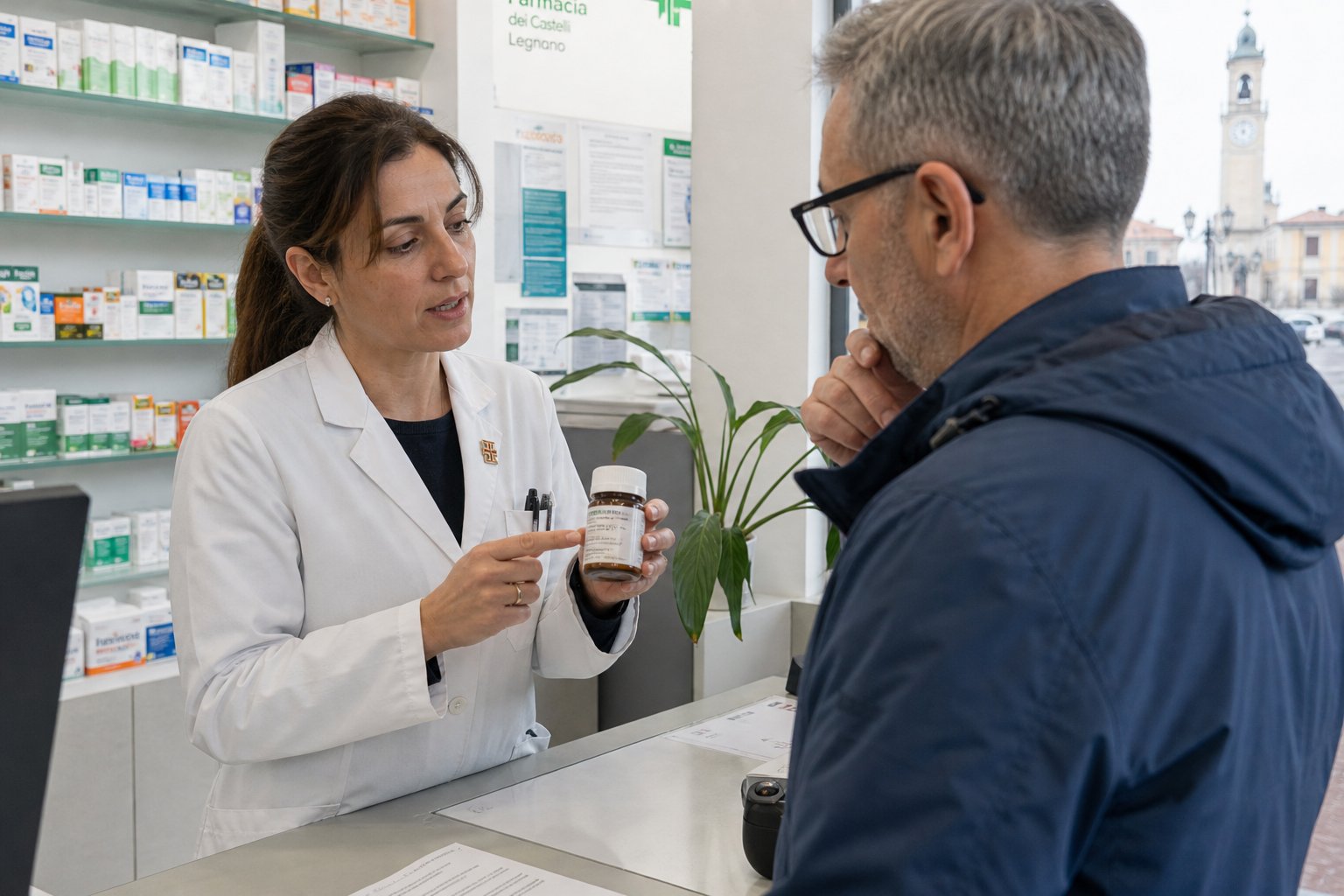
Understanding medicinal marijuana in Legnano starts with an important distinction: Italy permits cannabis-based medicines in specific medical circumstances, but it does not provide a general recreational cannabis market. Patients normally need a medical assessment, a prescription and a pharmacy able to obtain or prepare the prescribed product.
This guide explains the practical process for residents and visitors in Legnano, in the Metropolitan City of Milan. It covers eligibility, prescriptions, pharmacies, documentation, costs, treatment safety and the legal limits that apply to possession, transport and use. Rules and product availability can change, so a doctor or pharmacist should confirm the current position for an individual case.
What medical cannabis means in Legnano
In everyday conversation, people may search for medical cannabis in Legnano, cannabis in Legnano or even weed in Legnano. These expressions can refer to very different products. A prescribed cannabis preparation is a regulated medicine intended for a defined therapeutic purpose. It is not the same as buying an unlabelled product from an informal source.
Italian healthcare professionals may consider cannabis-based treatment when conventional options have not worked adequately, have caused unacceptable effects or are unsuitable for the patient. The decision depends on the clinical situation, the evidence available for that condition and the doctor’s professional judgment. A patient cannot obtain medicinal cannabis simply by requesting it at a pharmacy without a valid prescription.
Products can differ in their concentrations of cannabinoids such as THC and CBD, their formulation and their route of administration. The prescribing clinician should explain the intended dose, titration plan and expected monitoring. Patients should not assume that a product used by another person is appropriate for them.
How to seek medicinal marijuana in Legnano
1. Start with a medical consultation
Begin with the doctor managing the relevant condition, such as a general practitioner or specialist. Bring a concise treatment history, including diagnoses, current medicines, previous therapies, allergies, pregnancy status where relevant and any history of psychiatric or cardiovascular problems. This information helps the clinician assess potential benefits, interactions and risks.
A doctor may decide that another treatment is more appropriate, request additional records or refer the patient to a specialist. A prescription is not guaranteed, and a consultation should never be treated as a way to bypass normal medical evaluation.
2. Ask the pharmacy about availability
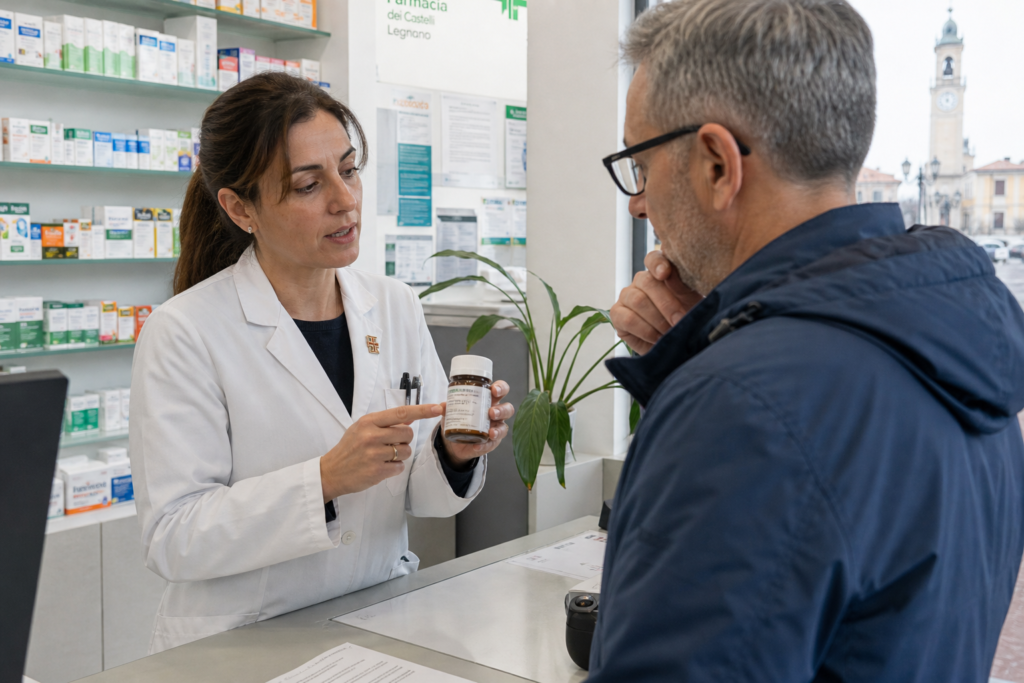
Not every pharmacy in Legnano will keep a cannabis-based medicine in stock. After receiving a prescription, contact a local pharmacy and ask whether it can dispense the specific preparation, strength and quantity prescribed. Some pharmacies may need to order an authorized product or prepare a magistral formulation according to the prescription.
It is sensible to ask about lead time, required documents, collection arrangements and whether the pharmacy can explain the label and administration instructions. Do not substitute a different strength or preparation because it is available sooner. Any change should be agreed with the prescriber.
3. Follow the prescription exactly
Medical cannabis is often introduced cautiously. The clinician may recommend a low starting dose and gradual adjustment because effects can vary considerably between patients. Keep a record of the dose, timing, symptoms, unwanted effects and other medicines. This makes follow-up consultations more useful.
Do not share prescribed cannabis with another person, sell it or alter its preparation without professional advice. Store it in its original packaging and keep it away from children and anyone who could mistake it for another medicine.
Prescriptions, paperwork and local pharmacy questions
The documentation required can depend on the product, the prescription type and the patient’s circumstances. A pharmacy may need the original prescription or specific details before it can dispense the medicine. Patients should ask the prescriber and pharmacist what is required rather than relying on informal online advice.
Before leaving the pharmacy, check the name of the preparation, quantity, cannabinoid content, directions and expiry information. Ask what to do if the medicine is unavailable or if the label differs from what was discussed. Keep invoices, dispensing records and medical documentation, particularly if the medicine may need to be transported outside the home.
For current national information, consult the Italian Ministry of Health and ask a healthcare professional to interpret general rules for the patient’s specific treatment. The Italian Medicines Agency is also a useful official reference for medicines and regulatory information.
Costs and public healthcare considerations
The price of a cannabis-based medicine can vary according to the formulation, quantity, preparation method and reimbursement arrangements. Patients should ask the prescriber or pharmacy about the likely cost before placing an order. Do not assume that every prescribed cannabis treatment is automatically free through Italy’s National Health Service.
Regional healthcare arrangements and the clinical indication may affect whether a treatment is supplied through a public pathway or paid for by the patient. Lombardy residents can ask their doctor, local health authority or pharmacy whether any specific process applies. Written information is preferable to assumptions based on a different region or an older prescription.
Safety issues patients should understand
Possible effects may include drowsiness, dizziness, impaired attention, dry mouth, changes in mood, confusion and gastrointestinal discomfort. THC-containing products can also produce anxiety, altered perception or problems with coordination. The likelihood and severity depend on the person, dose, formulation and combination with other substances.
- Do not drive, cycle in traffic or operate machinery if the medicine affects alertness, reaction time or coordination.
- Avoid alcohol and discuss sedatives, sleeping tablets, opioids and other centrally acting medicines with a doctor or pharmacist.
- Seek urgent medical help for severe confusion, chest pain, breathing difficulty, fainting, extreme agitation or an allergic reaction.
- Tell the prescriber about pregnancy, breastfeeding, a history of psychosis, significant heart disease or problematic substance use.
- Use only the route and amount prescribed; do not improvise with smoking, vaping or edible preparations.
Patients looking for broader risk information may also find this general guide to cannabis safety and legal guidance in Italy useful, although personal medical advice must come from a qualified professional.
Cannabis laws in Legnano: possession, use and travel
Cannabis laws in Legnano are primarily shaped by Italian national law rather than a separate city-level medical cannabis system. A prescribed medicine should remain in its original labelled packaging, accompanied by the relevant prescription or medical documentation. This is especially important when travelling or when the quantity could raise questions.
A prescription does not create a general right to possess cannabis for recreational use, give it to another person or cultivate plants at home. It also does not automatically protect someone carrying a product that is not the one prescribed. Unregulated cannabis may have uncertain contents and can create both health and legal problems.
When travelling within Italy, carry only the amount reasonably required for the journey and keep documentation available. For international travel, check the rules of every country on the route before departure. Some countries treat cannabis medicines as controlled drugs and may require advance authorization, a specific certificate or limits on the amount that can be carried.
What visitors to Legnano should know
Visitors should not assume that a prescription issued abroad can be filled automatically in Italy. A local pharmacist may need an Italian-recognized prescription or additional documentation, and availability can vary. Contact a pharmacy and the appropriate healthcare service before travelling rather than waiting until medication runs out.
Bring the medicine in its original packaging, a copy of the prescription and a letter from the treating clinician that identifies the patient, product, dose and medical purpose. These documents do not guarantee entry or dispensing, but they make questions easier to address. Never mail cannabis products internationally or place them in an unlabelled container.
For broader context on obtaining prescribed cannabis in another Italian city, see this practical overview of medical cannabis access in Afragola. The same national framework may apply, but local pharmacy procedures and availability can differ.
Questions to ask a doctor or pharmacist
- What symptom or condition is this treatment intended to address?
- What is the starting dose, and how should it be adjusted?
- How long should I try it before reviewing the treatment?
- Which side effects require a routine call, and which require urgent care?
- Can it interact with my current medicines, alcohol or other cannabis products?
- How should it be stored, transported and disposed of?
- What should I do if the pharmacy cannot supply the prescribed preparation?
Keeping these questions in writing can reduce errors and make it easier to compare instructions at follow-up appointments. A treatment plan should include a review, not simply a prescription with no monitoring.
Medicinal cannabis is not a substitute for medical care
Online claims often present cannabis as a universal solution or suggest that natural products are automatically safe. Neither assumption is reliable. Evidence and suitability differ by condition, and a cannabis-based medicine may offer limited benefit for one patient while causing significant problems for another.
Use the product only as part of an agreed healthcare plan. Report unwanted effects promptly, attend follow-up appointments and do not stop essential medicines without medical advice. If treatment is ineffective or difficult to tolerate, the prescriber can consider dose changes, another formulation or a different therapy.
Conclusion
Access to medicinal marijuana in Legnano generally involves a clinical assessment, an appropriate prescription and a pharmacy that can dispense the specified product. Patients should verify availability, understand the dose and keep the medicine in its original packaging with supporting documents. Italian rules do not make recreational cannabis legal simply because medical cannabis can be prescribed.
The safest approach is to use qualified medical and pharmacy advice, check current official information and plan ahead for travel or repeat supplies. Because regulations, products and regional procedures can change, confirm the details for your condition and circumstances before starting or transporting any cannabis-based medicine.