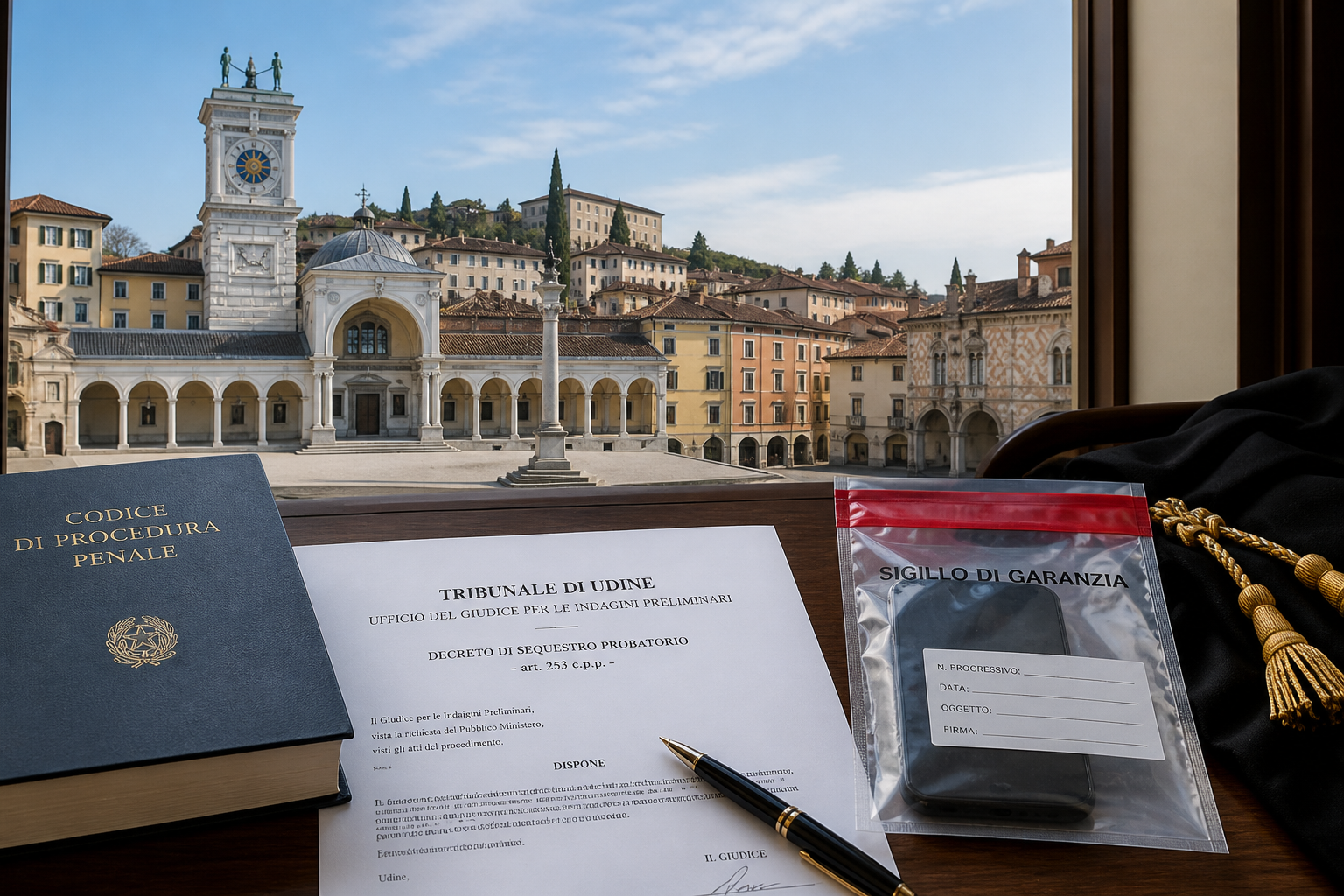
Understanding Marijuana possession laws in Udine, Italy requires separating personal use from supply, cultivation and transport across borders. Udine does not have a separate city cannabis code: the main rules come from Italian national law, including the Consolidated Law on Narcotic Drugs. Local police, the Questura and the Prefecture apply those rules in and around Udine, while health services may become involved where substance-use support is appropriate.
This guide explains what possession may mean legally, what can happen after a police check, how medical cannabis differs from recreational marijuana, and why carrying cannabis while travelling can create additional risks. It is general information, not a substitute for advice from an Italian criminal lawyer.
How cannabis possession is treated in Udine
Recreational cannabis is not generally legal in Italy. The law distinguishes between possession intended for personal use and conduct connected with unlawful distribution. That distinction is important, but personal-use possession is not the same as a legal permission to possess or consume marijuana.
Under Article 75 of Presidential Decree 309/1990, possession for personal use is generally handled as an administrative matter rather than as the supply offence. Authorities may seize the substance, identify the person involved and refer the case to the Prefect. The person may then be called for an interview or assessment, and administrative measures may follow.
The official text of the Italian Consolidated Law on Narcotic Drugs is the best starting point for checking the statutory framework. Because enforcement depends on the facts, the substance, the amount, prior history and other evidence, a short summary cannot predict the outcome of an individual case.
Personal use is not a blanket exemption
People sometimes describe Italian personal-use rules as “decriminalisation.” That phrase can be misleading. A person may avoid a criminal conviction when authorities accept that the possession was exclusively for personal use, but the conduct can still lead to an administrative procedure and restrictions affecting documents or licences.
In practice, officers may examine packaging, quantity, communications, money, scales, multiple portions and other circumstances. No single factor automatically decides the case. Where evidence suggests sale, supply or possession for purposes other than personal use, the matter can be treated as a criminal narcotics offence.
Potential consequences for personal-use possession
When a case is treated under the personal-use provisions, the Prefect can consider administrative sanctions. Depending on the circumstances, these may affect documents or permissions such as a driving licence, passport or firearms licence. The exact measure and duration are not automatic and can depend on the substance, previous reports, the person’s situation and the authority’s assessment.
A first report is not necessarily handled in exactly the same way as a later report. Authorities may also invite or refer a person to a public drug-service assessment. This does not mean every case results in treatment, but ignoring official correspondence can make it harder to respond properly.
- The cannabis may be seized and tested or recorded as evidence.
- The person may be reported to the Prefect for an administrative proceeding.
- An interview, warning, assessment or referral may form part of the process.
- Administrative restrictions may affect driving or other official documents.
- Evidence of supply can move the case into the criminal system.
These consequences matter for residents, students and visitors alike. A non-Italian national should not assume that an administrative case has no immigration, travel or practical consequences. Anyone who receives a written notice should have it translated accurately and obtain individual legal advice.
Cannabis laws in Udine and the difference between use and supply
The most serious legal distinction is between possession for personal use and possession connected with selling, giving, distributing or otherwise facilitating supply. Under Italian law, supply-related conduct can be prosecuted criminally. The potential consequences are substantially more serious than those associated with an administrative personal-use report.
Authorities may look at the total circumstances rather than relying only on a person’s explanation. Items such as separate packages, a large or unexplained quantity, customer messages, cash records, scales or statements from other people may be relevant. There is no safe strategy of carrying a particular amount while assuming it cannot attract criminal scrutiny.
Sharing cannabis can also create legal risk. Giving marijuana to another person is not necessarily treated as harmless personal use, even if no money changes hands. Anyone questioned about another person’s cannabis should avoid guessing about legal classifications and should speak to a lawyer before providing a detailed statement.
What to do after a police stop in Udine
A calm and informed response is safer than arguing about the law at the roadside. Do not resist a search or seizure. Ask what procedure is taking place, request an interpreter if needed and avoid signing a document that you do not understand. You can ask to contact a lawyer, particularly if officers suggest that the matter may involve supply or another criminal allegation.
Practical steps
- Remain polite and follow lawful instructions without making unnecessary admissions.
- Ask for the name or reference number of the report and keep every document provided.
- Request language assistance if you cannot read or understand the Italian text.
- Contact an Italian lawyer promptly if you are detained, formally questioned or served with a notice.
- Do not delete messages or alter potential evidence, and do not discuss the incident publicly while the facts are unclear.
Visitors should also tell their lawyer whether they are leaving Italy soon. A pending notice, scheduled interview or document-related restriction may require action before departure. Legal advice is especially important where cannabis was found in a vehicle, near a border, in accommodation shared with others or alongside evidence suggesting distribution.
Medical cannabis in Udine
Medical cannabis in Udine is different from recreational marijuana. Certain cannabis-based medicines may be prescribed within Italy for recognised clinical circumstances and supplied through authorised pharmacy channels. A prescription does not turn non-prescribed cannabis into lawful recreational possession, and it does not automatically authorise a product purchased elsewhere.
Patients should keep the medicine in its original packaging and carry the prescription or other supporting medical documentation. They should follow the prescribed dose and route of administration. A doctor or pharmacist can explain whether a particular preparation is authorised and how it should be obtained in Italy.
The Italian Ministry of Health provides official health information through its Ministry of Health website. Patients should confirm current requirements with a qualified Italian healthcare professional rather than relying on social media, informal sellers or advice from another country.
Prescriptions and international travel
A prescription issued in another country may not be enough to bring cannabis into Italy. Import and border rules can be strict, and products that are lawful in the country of purchase may still be controlled in Italy. Before travelling, contact the relevant Italian authorities or an experienced lawyer and obtain written confirmation where possible.
Do not place cannabis in checked luggage, a vehicle or accommodation on the assumption that medical status will prevent seizure. Keep medicines separate from recreational products, retain original labels and check airline, transit-country and destination-country rules. Travelling through another country can create a second set of legal issues.
CBD, hemp products and “legal weed” in Udine
Retailers may sell products described as CBD, hemp or “light cannabis,” but the label alone does not establish legality. Product composition, THC content, intended use, packaging and current Italian rules all matter. Rules affecting hemp flowers and ingestible or inhalable products have changed and can be subject to legal disputes or updated enforcement guidance.
A product bought openly in a shop is not automatically safe to carry across a border, use in public or combine with another controlled substance. Keep receipts and packaging, but do not treat them as a guarantee against testing or seizure. If a product contains more controlled THC than permitted, or is classified differently from what the seller suggests, possession can still create problems.
For anyone searching for weed in Udine or cannabis in Udine, the key point is that a shop, online listing or informal recommendation is not proof of legal status. Avoid unverified sellers and be particularly cautious with products offered without ingredient information or a traceable Italian business.
Public use, driving and accommodation
Possession, consumption and driving are related but separate issues. Using cannabis in a public place can lead to additional practical problems involving police attention, nuisance rules or the conduct of the person involved. Cannabis smoke can also breach accommodation policies and create complaints even where no separate possession charge is made.
Driving after using cannabis presents serious safety and legal risks. Do not drive, cycle in traffic or operate machinery while impaired. Italian road enforcement can involve testing and a cannabis-related driving investigation may be treated separately from a personal-possession matter. A prescription does not make impaired driving safe or automatically lawful.
Hotels, landlords and transport operators may apply their own rules. Keeping cannabis out of shared spaces, vehicles and public areas reduces the likelihood of a confrontation, but it does not legalise possession.
How Udine compares with other Italian cities
The core rules in Udine are national, so the basic legal framework is not replaced by a special municipal regime. Local enforcement practices and the details of an encounter can still vary. Readers comparing northern Italian destinations may also find our guides to cannabis travel rules in Trieste and cannabis restrictions in Bolzano useful for broader travel planning.
Those comparisons should not be read as evidence that cannabis is legal in one city but illegal in another. A person crossing from Udine into another municipality remains subject to Italian national narcotics law. Differences usually concern the circumstances of enforcement, available services and the practical setting, not a separate city licence to possess marijuana.
Key points for residents and visitors
- Recreational marijuana possession is not generally legal in Udine.
- Exclusive personal-use possession may be handled administratively, but it can still lead to seizure and sanctions.
- Evidence of sale, sharing or distribution can result in a criminal case.
- Medical cannabis must come through authorised medical and pharmacy channels.
- Foreign prescriptions and cannabis carried across borders require separate verification.
- CBD or hemp branding does not guarantee that a product is lawful or safe to transport.
- Anyone receiving an official notice should seek qualified legal advice and translation help.
Conclusion
Marijuana possession laws in Udine, Italy are governed mainly by national legislation. Personal-use possession may lead to an administrative procedure rather than a criminal conviction, but it is not consequence-free. Supply-related evidence, driving, public conduct, medical documentation and international travel can all change the legal picture.
The safest approach is to avoid unverified cannabis products, never drive after use, keep prescribed medicines properly documented and obtain prompt advice if police or the Prefecture becomes involved. For a current assessment of a specific incident, consult an Italian lawyer who can review the exact documents and facts.