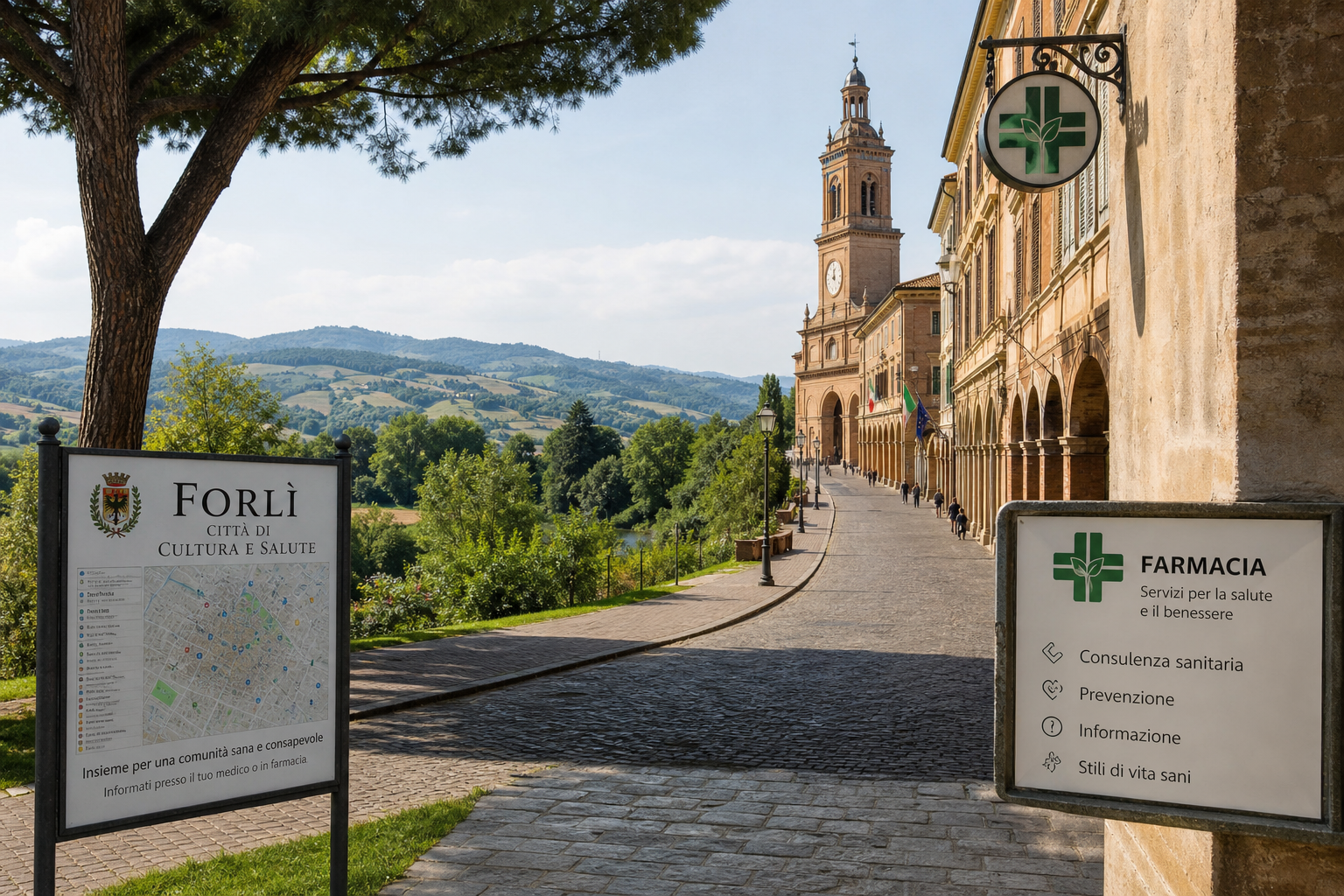
Understanding marijuana trends in Forlì, Italy requires more than looking for a local market or a single view of cannabis. Forlì is a city in Emilia-Romagna with a strong connection to surrounding agricultural communities, university life, healthcare services and regional commerce. Those factors shape how people encounter cannabis, hemp and CBD, but they do not change Italy’s national legal framework.
Today, conversations about weed in Forlì often include several different subjects: prohibited recreational cannabis, prescribed medical cannabis, low-THC hemp products and CBD-oriented retail. These categories are not interchangeable. Their legal status, quality controls and practical risks can differ considerably.
This guide presents a careful overview of cannabis in Forlì, with an emphasis on law, health, medical access, consumer awareness and local context. It is educational information, not legal or medical advice.
Why cannabis trends are changing in Forlì
Forlì sits between inland Romagna and the wider Adriatic region, making it part of a connected area where products, information and cultural influences move across city boundaries. Local attitudes can therefore reflect national debates as much as specifically Forlivese ones.
Several broad developments are influencing public discussion:
- Greater product variety: Consumers may encounter regulated medicines, industrial hemp goods, CBD products and illicit cannabis, all marketed or discussed in different ways.
- More health-focused discussion: Public conversations increasingly address dependency, impaired driving, adolescent exposure and interactions with medication.
- Online information and commerce: Websites and social platforms have made cannabis-related claims easier to find, but product descriptions are not necessarily proof of legality, purity or accurate cannabinoid content.
- Continued legal uncertainty for consumers: National rules distinguish between possession, supply, cultivation, medical use and hemp production. Informal assumptions about legality can create serious problems.
These trends help explain why searches for cannabis culture in Forlì may refer to very different experiences, from public policy and patient care to lifestyle marketing and illicit supply.
Cannabis laws in Forlì: the national rules that matter
Cannabis laws in Forlì are primarily determined by Italian national legislation rather than by a separate city-level cannabis regime. The practical starting point is Italy’s distinction between permitted medical or industrial uses and unauthorized possession, production or distribution.
Recreational cannabis is not legally sold through ordinary retail channels in Forlì. Unauthorized supply, trafficking and cultivation can carry criminal consequences. Possession for personal use may lead to administrative sanctions, depending on the circumstances, while possession connected to supply or other aggravating factors can be treated much more seriously. The legal assessment depends on the facts, including quantity, conduct and evidence.
Italy’s framework also includes rules for industrial hemp. A hemp product is not automatically lawful simply because it is labeled “hemp” or “CBD.” The product’s ingredients, intended use, cannabinoid content, presentation and applicable rules all matter. Food, cosmetics, supplements, smoking products and other categories may be subject to different requirements.
Because regulations and enforcement interpretations can change, readers should consult current official information rather than relying on old social posts or informal advice. The Italian Ministry of Health is a useful starting point for public-health and medical information. For a broader European evidence perspective, the European Union Drugs Agency publishes information on drugs, risks and policy developments.
Personal possession and public behavior
Visitors and residents should not assume that private consumption rules make public use acceptable. Smoking or consuming cannabis in streets, parks, transport areas, near schools or at events can create additional issues involving public order, nuisance or impaired behavior. Driving after using cannabis is especially risky: impairment and the law are separate concerns, and a person may face consequences even when they believe they feel capable of driving.
Do not carry cannabis across national borders. Italy’s rules do not override the laws of another country, and travel with controlled substances can create serious customs and criminal risks.
Medical cannabis in Forlì
Medical cannabis in Forlì is available within the Italian healthcare and pharmacy system under medical supervision. It is not the same as recreational retail cannabis, and a patient normally needs an appropriate prescription from an authorized physician. Availability may depend on the prescribed preparation, pharmacy supply and regional procedures.
Patients should speak openly with a doctor about symptoms, previous treatments, pregnancy, mental-health history and all other medicines or supplements. Cannabis-based medicines can cause drowsiness, dizziness, cognitive effects and other adverse reactions. They may also interact with sedatives, alcohol and some prescription drugs.
A responsible medical conversation should cover:
- The condition being treated and the evidence for the proposed therapy.
- The product or preparation, dose, timing and method of administration.
- Possible side effects and warning signs.
- Whether driving, operating machinery or safety-sensitive work must be avoided.
- How prescriptions are renewed and how the medicine should be stored.
Patients should use a licensed pharmacy and keep prescription documentation when carrying prescribed medicine. A product purchased informally or promoted online as “medical” is not a substitute for a prescription or clinical assessment.
CBD, hemp and the changing retail landscape
One of the most visible marijuana trends in Forlì, Italy is the wider presence of hemp and CBD language in shops, wellness marketing and online retail. That visibility can make CBD seem equivalent to ordinary cannabis, but the distinction is important. CBD products may contain little or no intoxicating THC, while labeling and composition can vary by product type and supply chain.
Before buying a hemp or CBD product, consumers should consider:
- Whether the seller provides a clear ingredient list and batch information.
- Whether the product is intended for a legally recognized category, such as cosmetics or another regulated use.
- Whether laboratory testing is available from a credible, independent source.
- Whether the label makes therapeutic claims that appear exaggerated or unsupported.
- Whether the product could contain THC or other substances relevant to drug testing.
“Natural” does not automatically mean harmless. CBD can produce side effects and may interact with medicines. People with liver disease, those taking multiple medications, pregnant individuals and anyone considering CBD for a serious condition should seek professional advice first.
For readers comparing local retail questions, our guide to CBD products in Reggio Emilia provides a broader regional buying and safety perspective. The nearby discussion of cannabis dispensaries in Rimini also illustrates why the word “dispensary” should not be assumed to describe a legal recreational shop in Italy.
Local culture, education and community conversation
Public attitudes in Forlì are unlikely to be uniform. Some residents view cannabis mainly through the lens of criminal justice; others focus on medical research, harm reduction, agricultural hemp or personal liberty. Families, schools, healthcare professionals and community organizations may approach the subject from different priorities.
A constructive local discussion avoids both sensationalism and casual normalization. Reliable education should explain that risks vary according to age, frequency, potency, route of administration and personal vulnerability. Adolescents and people with a personal or family history of psychosis or substance-use problems may face heightened concerns. Frequent use can affect memory, motivation and daily functioning for some people, and dependence can develop.
Forlì’s cultural conversation also benefits from separating evidence from advertising. Claims that a product “cures” anxiety, pain or insomnia should be treated cautiously, especially when they come from a seller. A health professional can help distinguish a symptom that needs medical evaluation from a situation where self-treatment may delay appropriate care.
Safer choices and practical harm reduction
Anyone who chooses to use cannabis despite the legal and health risks should prioritize safety. Harm reduction does not make unauthorized use legal, but it can reduce preventable dangers.
- Do not drive, cycle in heavy traffic or operate machinery after using cannabis.
- Do not combine cannabis with alcohol, sedatives or other intoxicating substances.
- Avoid use during pregnancy and seek clinical guidance when breastfeeding.
- Keep cannabis and edibles away from children and pets; edible products can be mistaken for ordinary food.
- Be cautious with products of unknown strength or origin, including products bought through informal channels.
- Do not share smoking or vaping equipment, and avoid inhaling products that are not designed for the intended device.
- If someone experiences severe confusion, chest pain, breathing difficulty, loss of consciousness or extreme agitation, seek emergency medical help.
People who notice cravings, unsuccessful attempts to cut down, withdrawal symptoms or disruption to work and relationships should contact a doctor or local addiction-service professional. Asking for help early is a health decision, not a moral failure.
What visitors should know about weed in Forlì
Travelers searching for weed in Forlì should be especially careful with unofficial sellers, social-media contacts and offers that promise “legal” cannabis without explaining the product category. Buying from an unknown source can expose a visitor to scams, contaminated products, theft or legal consequences.
Do not consume in hotels, rental properties or shared accommodation without checking the rules. Even where a private setting appears permissive, smoke, odor and possession can affect other guests and staff. Never take cannabis or unverified CBD products through airports or across borders.
A safer travel plan focuses on legal cultural activities, local food, museums, parks and the surrounding Romagna landscape rather than trying to locate an illicit market. If a traveler uses prescribed cannabis medicine, they should confirm documentation and transport requirements before departure with the relevant authorities, airline and medical provider.
How to follow future marijuana trends in Forlì
Future developments may involve changes to medical access, hemp-product rules, public-health programs and national policy debates. It is more useful to track official announcements than to rely on viral claims about legalization or local “cannabis zones.”
Readers can assess new information by asking four questions:
- Is the claim about a national law, a regional procedure or merely a private business policy?
- Does the source identify the product category and its cannabinoid content?
- Is there a date and an official document supporting the claim?
- Does the advice account for health risks, driving and travel restrictions?
These questions help distinguish genuine change from marketing. They also make it easier to understand how cannabis in Forlì fits into Italy’s wider legal and public-health environment.
Conclusion
The main marijuana trends in Forlì, Italy, involve growing visibility, more varied hemp and CBD products, continuing interest in medical treatment and a stronger need for accurate health information. None of these trends should be confused with a legal recreational dispensary system. National law remains central, and the consequences of unauthorized possession, supply, cultivation or cross-border transport can be serious.
For residents and visitors, the most responsible approach is to verify current rules, use medical products only through legitimate healthcare channels, question unsupported product claims and avoid driving or mixing substances. A clear distinction between cannabis, medical preparations, CBD and industrial hemp makes local conversations safer and more useful.