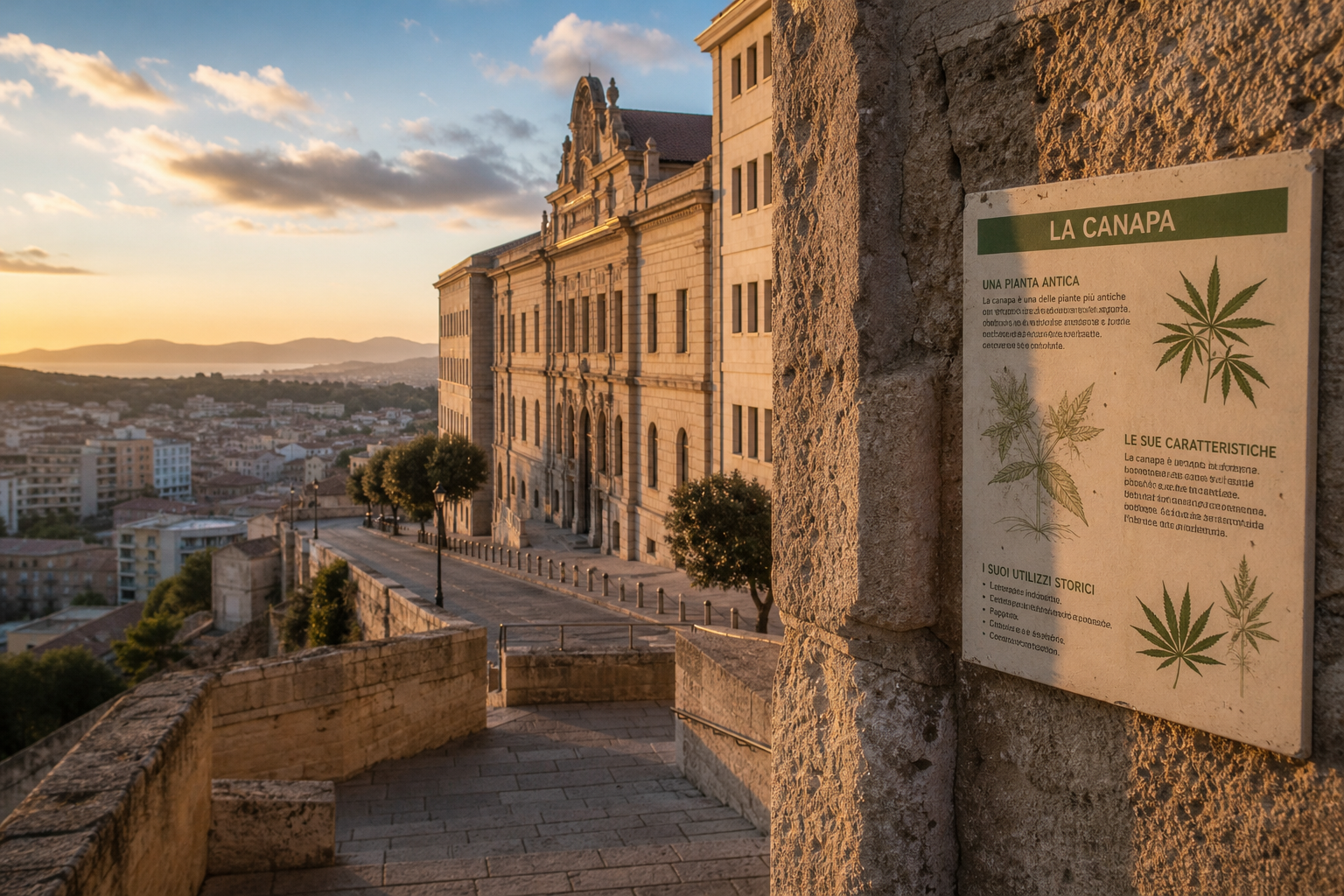
Marijuana culture in Sassari is best understood through several overlapping subjects: Sardinia’s agricultural traditions, Italy’s national drug policy, medical access, youth and adult health, and the way people discuss cannabis in a university city. Sassari does not have a separate cannabis legal system from the rest of Italy, and public claims about a distinctive local market or scene should be treated carefully. What can be explored responsibly is the wider cultural conversation around cannabis in the city and northern Sardinia.
This guide separates culture from legality. It does not encourage illegal use, and it is not medical or legal advice. Rules can change, while individual circumstances matter. Residents and visitors should check current official information before possessing, using, transporting or purchasing any cannabis-related product.
What marijuana culture in Sassari actually means
The word “culture” can suggest a formal community, but cannabis culture is often less organized. In Sassari, it may refer to conversations among students, music and creative circles, online communities, family discussions, political debate, medical patients, and people interested in hemp or cannabidiol products. These groups do not necessarily share the same views or practices.
A useful approach avoids turning Sassari into a stereotype. The city has its own identity, shaped by Sardinian language and traditions, a substantial student population, nearby rural areas and connections with the wider island. Those features may influence how people talk about cannabis, but they do not prove that Sassari is more permissive or more associated with marijuana than another Italian city.
For a broader comparison, readers can explore this overview of cannabis education in Cagliari. Cagliari and Sassari are different places, yet both show why island-level assumptions should not replace city-specific, evidence-based information.
Culture is not the same as legality
Music, art, clothing, slang or online discussion may normalize references to cannabis, but none of these make possession or supply lawful. The same distinction applies to “decriminalization,” a term sometimes used loosely in public discussion. A legal system may treat personal possession differently from supply without creating a regulated recreational market.
Hemp, Sardinian identity and modern cannabis discussion
Hemp has a long history across parts of Europe as a fiber and agricultural crop, but historical hemp cultivation should not be presented as proof of a continuous modern marijuana tradition in Sassari. Industrial hemp, medical cannabis and high-THC marijuana are different categories with different legal and practical implications.
In Sardinia, discussions about land use, rural economies and sustainable agriculture can bring hemp into view. These conversations generally concern regulated cultivation, fiber, seed, food products or other permitted uses rather than recreational cannabis. Anyone researching local history should distinguish documented agricultural practices from nostalgic stories or unsupported claims about a hidden cannabis heritage.
Modern marijuana culture in Sassari is more likely to be shaped by national media, online information, university life and international cultural exchange than by a single local tradition. That makes media literacy important: a viral post, shop advertisement or anecdote may not accurately describe Italian law or product safety.
Cannabis laws in Sassari: the national framework
Because Sassari is in Italy, the main rules come from national legislation. Recreational production, trafficking and supply are prohibited, and possession can create legal consequences. Personal possession may be handled differently from commercial supply, but that distinction should not be interpreted as permission to buy, sell or carry cannabis freely.
The relevant framework is complex and can depend on the substance, quantity, intended use, conduct, documentation and the circumstances of an incident. The official Italian consolidated drug law on Normattiva is a better starting point than social media summaries. People facing a specific legal issue should speak with a qualified Italian lawyer.
Public spaces, driving and travel
Using cannabis in public can create practical problems even apart from possession rules. Smoke may affect other people, and conduct around schools, transport hubs, nightlife areas or public events can attract attention or complaints. Visitors should not assume that a relaxed atmosphere in one setting means that use is accepted everywhere.
Driving after using cannabis is especially unsafe and may have serious legal consequences. Impairment can affect reaction time, judgment and attention. Do not drive, cycle in traffic or operate machinery after consuming cannabis. Bringing cannabis across borders, including between mainland Italy and Sardinia, also creates additional risks. A product that is tolerated or lawful in one jurisdiction may still be prohibited when transported into Italy.
Medical cannabis in Sassari
Medical cannabis in Sassari is part of Italy’s regulated healthcare system, not a general retail pathway for recreational marijuana. Access normally involves a clinician, an appropriate medical assessment and a pharmacy-based process. Eligibility, formulation, prescribing arrangements and reimbursement can depend on the indication and current regional or national rules.
Patients should discuss cannabis-based treatment with a doctor who can review symptoms, other medicines, mental-health history, pregnancy considerations and possible side effects. Cannabis may cause drowsiness, dizziness, anxiety, impaired concentration or interactions with other medicines. A prescription does not automatically authorize sharing medicine, driving while impaired or taking products across international borders.
The Italian Ministry of Health provides official information about health policy and medicines through its institutional health portal. Patients should use medical channels rather than relying on unverified sellers or advice from online groups.
Why medical and recreational products should not be confused
Medical cannabis is prescribed for a clinical reason and supplied through regulated procedures. Recreational marijuana is not legally sold through ordinary adult-use dispensaries in Italy. CBD products, industrial hemp products and cannabis medicines also belong to different regulatory categories. Similar packaging or shared terminology does not guarantee identical ingredients, quality controls or legal treatment.
CBD, “cannabis light” and local buying questions
People searching for weed in Sassari may encounter shops or websites using terms such as CBD, light cannabis, hemp or wellness products. These labels are not enough to establish what a product contains or whether it is lawful. Product rules can depend on the plant material, extract, intended use, THC content, labeling and changes to national policy.
Consumers should be cautious with products that make medical promises, lack a clear ingredient list or do not identify a responsible business operator. A product sold openly is not automatically risk-free, and a familiar leaf logo is not evidence of laboratory testing. The safest response to uncertainty is to avoid the product and seek current advice from an appropriate official or professional source.
- Check the label, ingredients, batch information and stated intended use.
- Be skeptical of claims that a product treats anxiety, pain, insomnia or other conditions without clinical support.
- Do not assume CBD products contain no THC or cannot affect driving and drug testing.
- Keep products away from children and pets.
- Never share prescribed cannabis medicine with another person.
How people can discuss cannabis more responsibly
A healthier local conversation about cannabis in Sassari should make room for different experiences. Some people view cannabis primarily through criminal justice and public order. Others focus on pain management, disability, personal autonomy, youth prevention or agricultural policy. Productive discussion does not require everyone to agree, but it does require accurate terms and respect for evidence.
Public conversation is more useful when it avoids two extremes: presenting cannabis as harmless in every circumstance or describing every user as irresponsible. Risks vary with age, frequency, potency, route of administration, mental-health vulnerability, mixing with alcohol and the setting of use. Adolescents and people with a personal or family history of psychosis may face particular concerns and should seek professional advice.
Practical harm-reduction principles
Harm reduction does not make illegal conduct legal; it means reducing foreseeable injury and helping people recognize when support is needed. Do not mix cannabis with alcohol or other intoxicants, do not drive after use, and avoid consuming an unknown product. Anyone experiencing severe confusion, chest pain, breathing difficulty, loss of consciousness or a dangerous mental-health reaction should seek emergency medical help.
People who feel unable to control their use, experience persistent anxiety or notice problems with study, work, relationships or finances should contact a healthcare professional. Confidential support is more constructive than shame. Friends can help by staying calm, removing immediate hazards and seeking assistance when symptoms are severe.
Sassari’s place in the wider Italian conversation
Sassari’s cannabis discussion is connected to national debates about drug policy, medical access, hemp regulation, policing and public health. It is also connected to neighboring Sardinian communities and to Italian cities with different experiences of cannabis education and culture. Comparing local contexts can be useful, provided the comparison does not turn isolated anecdotes into statistics.
For example, a guide to cannabis culture in Palermo can provide a separate southern Italian point of comparison. The purpose of comparison is not to rank cities, but to examine how history, institutions, tourism, universities and public-health priorities shape local discussion.
Residents researching the subject should prioritize official legal sources, healthcare professionals, academic publications and transparent organizations. They should also check publication dates. Cannabis policy changes frequently enough that an old article, even one that was once accurate, may no longer describe current rules.
A practical checklist for residents and visitors
- Learn the current Italian rules before possessing or transporting any cannabis-related substance.
- Separate recreational marijuana, medical cannabis, industrial hemp and CBD products.
- Do not buy from unverified sellers or trust unsupported health claims.
- Never drive or operate machinery while impaired.
- Keep products away from children, pets and anyone who did not consent to use.
- Ask a doctor or pharmacist about medical treatment instead of self-medicating.
- Seek legal advice for a specific possession, cultivation, supply or travel question.
Conclusion
Marijuana culture in Sassari is not one fixed scene or a license for unrestricted use. It is a changing conversation shaped by Sardinian context, Italian law, medical needs, online culture and public-health concerns. Understanding that conversation requires careful distinctions: hemp is not the same as high-THC marijuana, CBD is not automatically medicine, and medical access is not recreational legalization.
The most responsible approach is informed and local without relying on stereotypes. Check official sources, treat health claims cautiously, respect public spaces, avoid impaired driving and seek professional support when needed. That framework gives residents and visitors a clearer way to understand cannabis in Sassari while reducing legal, health and social risks.