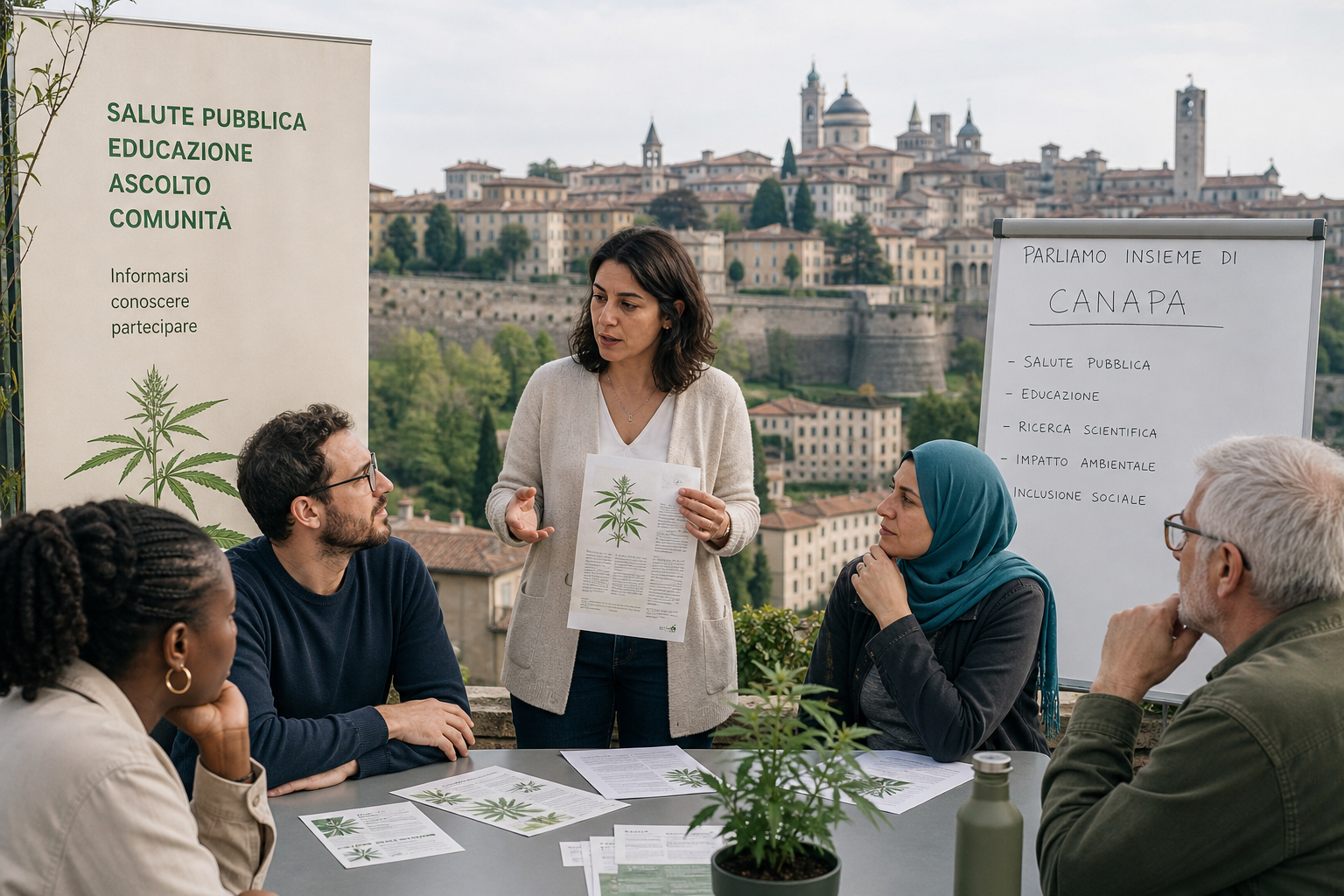
The Cannabis community in Bergamo is best understood as a broad network rather than a single organisation or visible scene. It includes patients discussing legal treatment with healthcare professionals, adults interested in CBD and hemp products, researchers and educators, harm-reduction advocates, and people trying to understand Italy’s changing public conversation around cannabis. In Bergamo, responsible participation starts with accurate information, respect for local rules and careful separation between legal products, prescribed medicines and illicit cannabis.
This guide explains how people can approach the subject safely and constructively. It does not promote illegal buying or use, and it cannot replace advice from a doctor, pharmacist or lawyer. Rules and enforcement can change, so readers should verify current information through official sources before acting.
What the cannabis community in Bergamo includes
Community does not necessarily mean public consumption or informal sales. In a city shaped by neighbourhood life, universities, healthcare services, businesses and cultural associations, cannabis-related discussion may take place in many different settings. Some conversations focus on medical treatment; others concern hemp agriculture, CBD retail, product quality, drug education or changes in national policy.
People searching for cannabis in Bergamo may therefore have very different goals. A patient may need to understand how a prescription is obtained. A visitor may be asking whether a product is legal to carry. A consumer may want to distinguish CBD merchandise from products containing significant quantities of THC. Treating all of these questions as the same can create confusion and unnecessary legal or health risks.
Common areas of interest
- Medical access: Patients may seek information about consultation, prescriptions, pharmacies and treatment monitoring.
- Hemp and CBD: Consumers may be interested in cosmetics, foods, fibres or other hemp-derived products, each of which can have different rules.
- Public health: Educators and health professionals may discuss dependency, mental health, interactions, driving and safer decision-making.
- Policy and history: Residents may follow court decisions, parliamentary debates and national or regional policy developments.
- Local business: Legitimate companies may work with hemp materials, agricultural products, testing, retail or research.
Cannabis laws in Bergamo: the national framework matters
There is no separate recreational cannabis market created by the city of Bergamo. The most important rules come from Italian national law, while local authorities may influence public-order measures, licensing, health communication and enforcement priorities. Anyone researching cannabis laws in Bergamo should avoid relying on social-media summaries or outdated articles that blur the difference between possession, supply, cultivation, medical use and hemp-derived products.
Italian law distinguishes between different substances and circumstances. Consequences can depend on the product, quantity, intended use, location and conduct involved. Possession for personal use may still lead to administrative consequences, while production, trafficking or supply can create much more serious criminal exposure. Public consumption can also cause practical problems even when a person believes the amount is small.
For primary legal research, consult the official Italian legal database Normattiva. It provides access to legislation and consolidated legal texts, although legal language can be difficult to interpret. Where a situation is personal or urgent, professional legal advice is more reliable than an online discussion.
Why informal advice can be risky
Community forums can be useful for identifying questions to ask, but they are not a substitute for current legal guidance. A post written for another Italian city may also omit important details. Advice about possession, transport, home cultivation, driving or travel across borders should be treated especially carefully. Crossing an international border with cannabis products can create risks that are unrelated to what is tolerated inside Italy.
Readers looking for broader comparisons may also find it useful to review the guide to cannabis information in Brescia, while remembering that national law—not a comparison article—should be the basis for decisions.
Medical cannabis in Bergamo: a healthcare conversation
Medical cannabis in Bergamo belongs within the healthcare system, not an informal retail network. A patient should begin with a qualified doctor who can assess symptoms, existing diagnoses, current medicines and whether an authorised cannabis-based treatment is appropriate. Treatment decisions may involve a prescription, a pharmacy and follow-up monitoring. Availability and reimbursement can depend on the clinical circumstances and applicable regional or national rules.
Patients should be cautious about claims that cannabis is a universal treatment. Evidence, approved indications and clinical practice differ by condition. Cannabis-based medicines can cause side effects, interact with other medicines and affect alertness, coordination or concentration. A person should not change a prescribed treatment or self-medicate based on advice from a chat group.
The Italian Ministry of Health website is a useful starting point for official health information and national guidance. A pharmacist or doctor can then help translate general information into advice appropriate to an individual patient.
Questions patients can ask
- Is this product or treatment authorised and appropriate for my condition?
- What are the expected benefits, side effects and alternatives?
- Could it interact with my current medicines, alcohol or other substances?
- How might it affect driving, work or other safety-sensitive activities?
- What should I do if symptoms worsen or an unwanted effect appears?
CBD, hemp and the practical side of local shopping
Interest in weed in Bergamo sometimes reflects a search for CBD or hemp products rather than intoxicating cannabis. These categories should not be treated as interchangeable. A hemp textile, a CBD cosmetic, a food product and a medicinal preparation may be governed by different requirements. Product labels, intended use and current regulation all matter.
Consumers should look for transparent packaging, a responsible seller and information about ingredients and testing. Avoid products making dramatic medical promises or presenting unclear THC content. A shop that cannot explain what a product is, where it comes from or how it should be used is not a strong source of community education.
Buying a product legally in a shop does not automatically mean that every use, combination or method of transport is permitted. Products should remain in their original packaging where possible, and people should not assume that a product sold in Italy can be taken to another country.
How to participate responsibly in the local community
A healthy local culture is built around education and accountability rather than secrecy or pressure. Whether someone joins an online discussion, attends a public event or speaks with a retailer, several principles can make participation safer.
- Check the source. Prefer government agencies, medical institutions, pharmacists and organisations that explain their evidence and update their information.
- Protect privacy. Do not post personal medical details, identity documents, addresses or photographs of other people without consent.
- Separate experience from evidence. A personal story may be meaningful, but it does not prove that a product is effective or safe for everyone.
- Reject illegal transactions. Avoid requests to arrange sales, conceal products, bypass age checks or move cannabis across borders.
- Discuss safety without judgement. Honest conversations about dependency, anxiety, medication and impaired driving are more useful than exaggerated claims.
- Support lawful education. Events, research projects and local initiatives should clearly explain their organisers, purpose and legal status.
Online groups and local events
Online communities can help residents find terminology, prepare questions for a clinician or learn about public meetings. They can also spread inaccurate dosage advice, counterfeit product claims and misleading legal interpretations. Before trusting a group, look for moderation standards, transparent administration and a willingness to correct errors.
For in-person events, check the organiser, venue rules and whether the programme is educational, commercial or political. Be wary of events that promise guaranteed health benefits, encourage immediate purchases or imply that attendance provides legal protection. A credible community space should make room for uncertainty and direct health questions to qualified professionals.
Health and harm reduction in Bergamo
Harm reduction does not mean encouraging cannabis use. It means reducing foreseeable risks when people may use a substance despite warnings. The most important precautions are straightforward: do not drive while impaired, avoid combining cannabis with alcohol or sedating medicines, keep products away from children and pets, and seek medical help when severe or unusual symptoms occur.
People with a personal or family history of psychosis, serious mental-health difficulties, cardiovascular problems, pregnancy or medication-related concerns should seek professional advice before using cannabis or cannabis-derived products. Adolescents require particular protection because developing brains and vulnerability to harmful use patterns are important public-health concerns.
If someone experiences chest pain, difficulty breathing, loss of consciousness, extreme confusion or a severe mental-health crisis, contact emergency services. A community should never shame someone for seeking help. Practical support and accurate information are more valuable than arguments about identity or lifestyle.
Building a better cannabis conversation
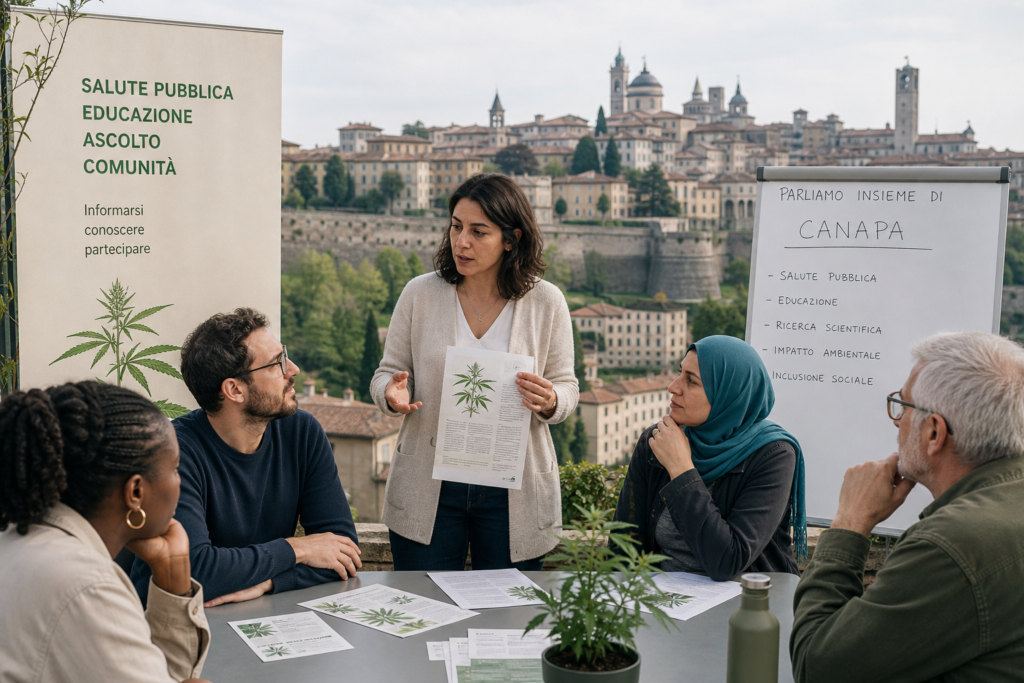
Bergamo can support a more informed cannabis conversation by bringing together healthcare professionals, educators, researchers, lawful businesses and residents. Useful initiatives might include public talks on drug education, clear information about medical pathways, discussions of hemp agriculture and workshops on recognising misleading product claims. These activities can address cannabis without treating every participant as a consumer.
Local discussion also benefits from regional perspective. For example, readers can compare the approach taken in the overview of cannabis legality in Verona or review the practical guide to cannabis laws in Bologna. Such comparisons are useful for spotting recurring national themes, but they should not be used to assume that every local policy or service is identical.
The strongest community standards are simple: accurate information, respect for privacy, no encouragement of illegal supply, realistic discussion of health risks and clear referrals to qualified services. This approach helps residents make decisions based on evidence rather than rumours.
Conclusion
The cannabis community in Bergamo is not defined by a single venue or viewpoint. It is a developing network of patients, professionals, consumers, educators and residents with different questions and responsibilities. Understanding the distinction between medical cannabis, CBD, hemp and illicit products is essential, as is checking current Italian law through authoritative sources.
For anyone exploring cannabis culture in Bergamo, the safest path is to stay curious without being careless: verify claims, protect personal information, consult qualified professionals and avoid activities that expose people to legal or health risks. A well-informed community can encourage better public discussion while keeping safety, legality and individual wellbeing at its centre.