Marijuana history in Giugliano in Campania is best understood through the wider history of hemp, cannabis regulation and agricultural change in southern Italy. Giugliano in Campania, in the metropolitan area of Naples, has developed within a region shaped by farming, trade, urban growth and close connections with the wider Campanian economy. Those local conditions matter, but they do not create a separate legal system: rules concerning cannabis in Giugliano come from Italian national law.
This distinction is important. Historical references to hemp, present-day discussions about weed in Giugliano and access to prescribed cannabis all concern related plants and products, but they are not interchangeable. Industrial hemp, recreational cannabis, cannabidiol products and medical cannabis have different legal and practical contexts. A reliable local history therefore needs to separate cultural memory from documented law and avoid treating modern commercial language as evidence of an established tradition.
Marijuana history in Giugliano in Campania and the wider region
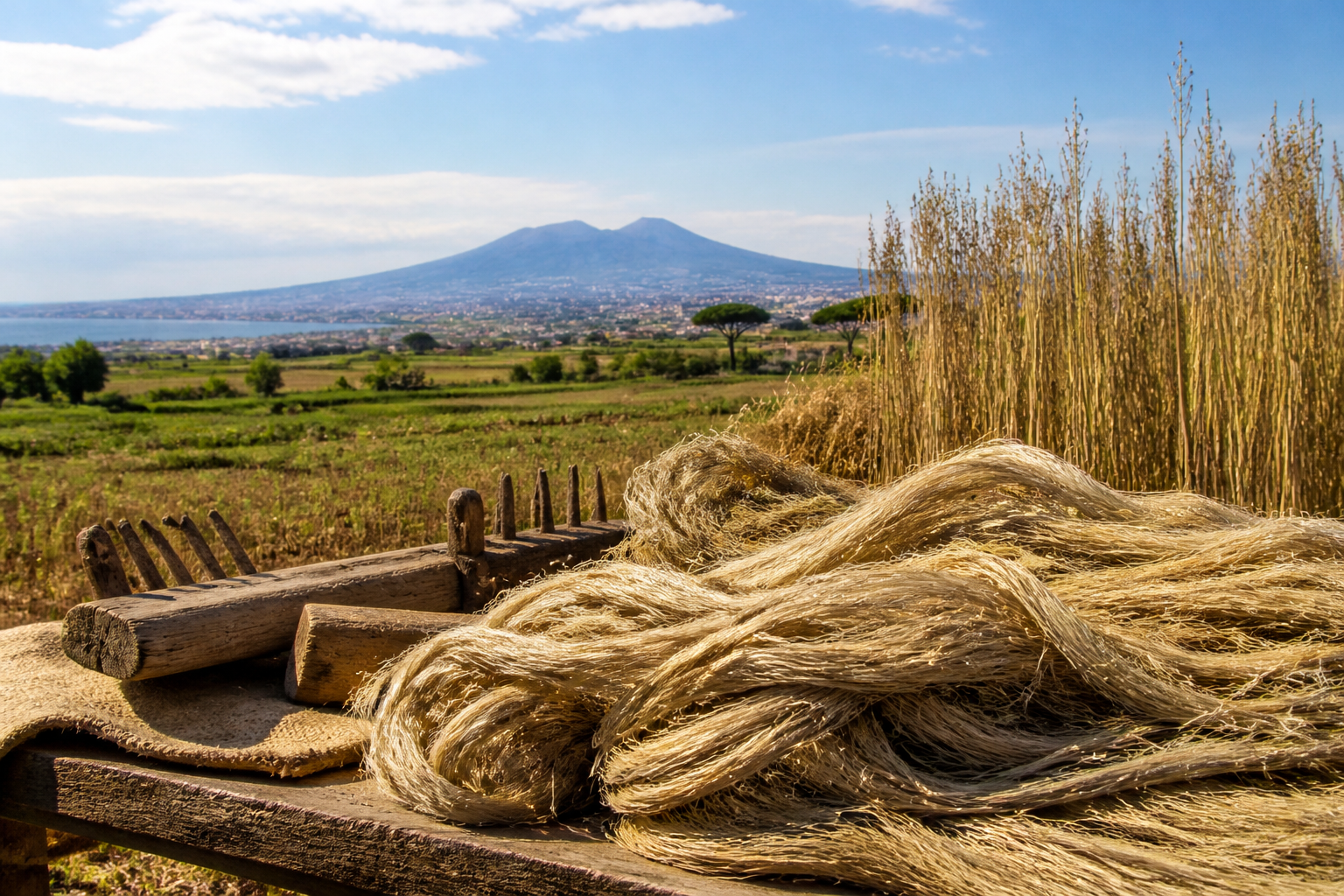
There is no well-documented record showing that Giugliano had a cannabis culture entirely distinct from the rest of Campania. The more defensible approach is to place the town within the agricultural and social history of the region. For centuries, hemp was cultivated in parts of Italy for practical purposes, especially fibre used in rope, canvas, clothing and other durable materials. Hemp was valued as a crop rather than understood primarily through the modern idea of marijuana.
Campania’s agricultural identity included many crops, and local production varied according to soil, water, markets and changing land use. It would be misleading to claim that hemp was the defining crop of Giugliano without specific archival evidence. Nevertheless, national hemp traditions provide useful context for understanding why cannabis plants were historically associated with farming and manufacturing long before twentieth-century drug laws transformed their public meaning.
Hemp was not the same as modern marijuana
Historical hemp generally referred to varieties selected for fibre and other low-intoxicating uses. Modern marijuana usually refers to cannabis cultivated or processed for higher levels of intoxicating cannabinoids, especially THC. The plant relationship is real, but the purposes, varieties and legal treatment differ. This distinction helps explain why references to hemp in Italian economic history should not automatically be presented as evidence of recreational marijuana use in Giugliano.
The older agricultural story also included household knowledge about plants, textiles and rural work. However, surviving evidence may be uneven, particularly at town level. Local histories should therefore distinguish between documented cultivation, regional patterns and assumptions based only on geography.
How Italian prohibition changed the meaning of cannabis
During the twentieth century, cannabis became increasingly associated with international drug-control systems and domestic criminal law. Italy’s approach developed through national legislation, international commitments and changing public-health priorities. As these policies expanded, cannabis moved from being discussed mainly as an agricultural plant to being treated primarily as a controlled substance.
That shift affected every Italian municipality, including Giugliano. It changed the language used by public authorities, schools, newspapers and families. The central question was no longer only what the plant could produce, but whether possession, cultivation, sale or use fell within a prohibited or regulated category. Local experience was shaped by this national framework rather than by a separate municipal cannabis policy.
For readers researching cannabis laws in Giugliano, the most important lesson is that local history cannot be separated from Italian law. Municipal authorities may address public order, health services or local commerce, but the core rules on controlled substances are established nationally. Current legal information should be checked through the Italian Ministry of Health, rather than inferred from advertising, social media or older accounts of hemp farming.
Giugliano’s modern setting: agriculture, urban growth and Naples
Giugliano in Campania has experienced the pressures common to communities located within a large metropolitan area: changing land use, expanding settlement, transport links and closer contact with Naples and other Campanian municipalities. These factors influence how residents encounter information about cannabis, even when they do not prove anything about historical consumption or cultivation.
Today, people searching for cannabis in Giugliano may be asking several different questions. Some may want historical information. Others may be looking for CBD products, asking about medical treatment, or trying to understand the risks of possessing an illegal substance. Treating all of these subjects as one market or one tradition creates confusion. A useful local article should instead explain the categories and direct readers toward reliable information.
From local history to regional comparison
Giugliano can also be compared with other Italian cities without assuming that their histories are identical. For example, a discussion of CBD in Naples and the surrounding area can help explain how proximity to a major urban centre affects modern retail and public conversation. That comparison is useful, but it should not be mistaken for proof that Giugliano has the same businesses, patterns of use or local initiatives.
Likewise, Italy’s broader hemp history provides a framework for comparison with northern and southern regions. Local researchers should look for municipal archives, agricultural records, historical newspapers and oral histories, while clearly labelling personal recollections as memories rather than definitive evidence.
Weed in Giugliano: separating history from present-day language
The phrase “weed in Giugliano” is a modern search term, not a historical category. It may refer to illicit marijuana, low-THC hemp products, medical cannabis or informal discussions about consumption. Search language can reveal what people want to know, but it cannot establish how widespread a behaviour is or how a town’s past should be interpreted.
Several distinctions are especially important:
- Industrial hemp: cultivated for fibre, seed, food or other permitted purposes under applicable rules.
- CBD products: products whose composition, claims and sale must comply with the relevant Italian and European requirements; CBD does not automatically make every cannabis product lawful.
- Medical cannabis: cannabis-based treatment used within the Italian healthcare framework and under medical supervision.
- Recreational marijuana: an informal term that commonly refers to intoxicating cannabis and may involve criminal or administrative consequences depending on the conduct and circumstances.
These categories can overlap in public discussion but should not be merged in historical writing. A shop selling a hemp-derived product, a pharmacy dispensing prescribed cannabis and an illicit supply chain represent different legal and social questions.
Medical cannabis in Giugliano and the Italian healthcare system
Medical cannabis in Giugliano is governed by the same national framework that applies elsewhere in Italy. Patients do not receive a separate municipal right to obtain cannabis-based medicines. Access depends on medical assessment, an appropriate prescription and the availability of a product through the regulated healthcare and pharmacy system.
Medical use should also not be presented as a general endorsement of self-medication. Cannabis-based treatments can have side effects, interact with other medicines and be unsuitable for some people. Anyone considering treatment should speak with a qualified doctor or pharmacist, especially when symptoms are persistent, severe or connected with another condition.
Italy’s medical-cannabis system has developed gradually, alongside debates about supply, prescribing practice, preparation and patient access. These issues can change through legislation, ministerial guidance and clinical practice. For a European perspective on drug policy, evidence and public-health responses, readers can consult the European Union Drugs Agency.
Cannabis laws in Giugliano today
Because cannabis law is national, residents and visitors should avoid relying on claims that a product is tolerated in one neighbourhood or municipality. Possession, cultivation, supply and transport can raise different legal issues. The type and amount of substance, the purpose of the conduct and the surrounding circumstances may all matter. Public consumption can also create separate concerns involving safety, nuisance and local enforcement.
Industrial hemp legislation does not create a blanket permission to grow or sell intoxicating cannabis. Similarly, a label such as “light,” “natural” or “legal” is not enough to establish that a product complies with Italian requirements. Product composition, labelling, intended use and the applicable interpretation of current rules all matter.
Visitors should be particularly cautious about transporting cannabis across borders, carrying products into airports or assuming that a prescription or purchase in another country automatically authorizes possession in Italy. Rules concerning medicines, controlled substances and travel documentation can be strict. When in doubt, official authorities, a doctor or a pharmacist are more reliable sources than online vendors or informal advice.
How to research the local history responsibly
A stronger account of Giugliano’s cannabis history would combine regional context with primary local evidence. Researchers can begin with municipal and provincial archives, agricultural publications, historical maps, trade records and newspapers. Oral-history interviews may add valuable perspectives on farming and household practices, but they should be dated, attributed and compared with documentary sources.
Useful research questions include:
- Was hemp recorded in agricultural or commercial documents connected with Giugliano or nearby Campanian communities?
- Which fibres, seeds or plant products were produced, traded or used locally?
- When did public discussion shift from hemp as a crop to cannabis as a controlled drug?
- How did national legislation affect local policing, healthcare and public education?
- How do current residents distinguish medical treatment, CBD commerce and illicit marijuana?
This method avoids two common errors. The first is exaggerating a local cannabis tradition from general knowledge about southern Italy. The second is writing only about current prohibition and overlooking the older agricultural history of hemp. Both perspectives are necessary for a balanced account.
Why the history matters
Understanding marijuana history in Giugliano in Campania helps explain why the subject remains confusing. The same plant family appears in discussions about rural production, industrial materials, medicine, public health and criminal law. Each area has a different vocabulary and a different body of evidence.
For residents, historical context can make present-day information easier to evaluate. For visitors, it clarifies that Giugliano is not a special legal zone and that local familiarity does not remove national restrictions. For researchers, it provides a framework for asking precise questions rather than repeating unsupported claims about a hidden or exceptional local culture.
Conclusion
The history of cannabis in Giugliano is not a simple story of a town defined by marijuana. It is better understood as part of Italy’s longer transition from traditional hemp production to modern drug regulation, medical use and renewed interest in industrial hemp. Giugliano’s location within Campania and the Naples metropolitan area gives the topic a distinctive local setting, but the legal framework remains Italian and national.
When researching weed in Giugliano, cannabis in Giugliano or medical cannabis in Giugliano, the most reliable approach is to separate historical evidence from present-day marketing and to distinguish hemp, CBD, medical products and intoxicating cannabis. That balanced perspective is more useful than sensational claims and leaves room for future archival research into Giugliano’s agricultural and social history.