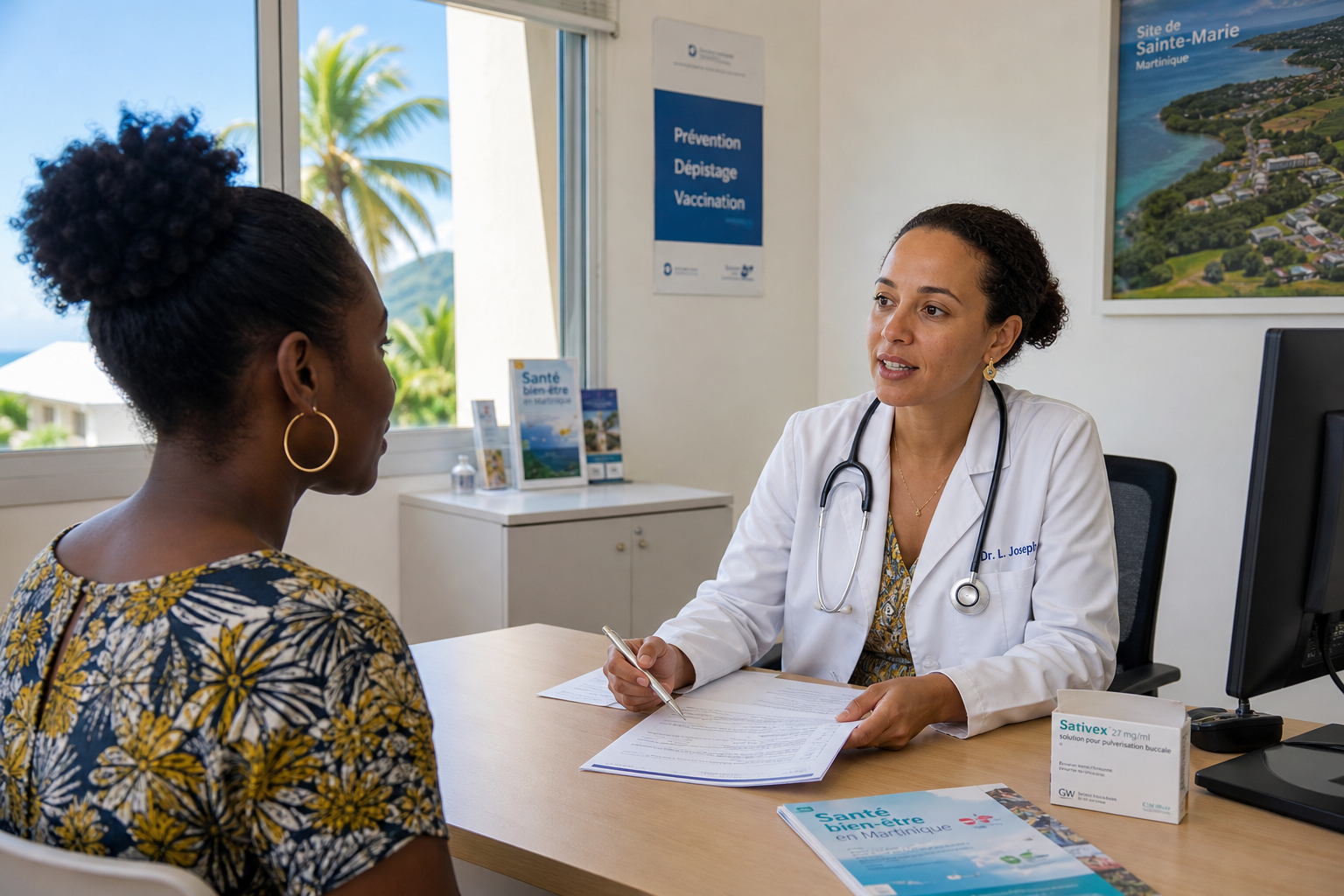
Understanding medical cannabis in Sainte-Marie Martinique requires separating a medical treatment from the wider cannabis market. Sainte-Marie follows French national law, not a separate local cannabis system. Patients cannot obtain cannabis for therapeutic use simply by asking a shop, ordering online, or relying on a general recommendation. Access depends on the current national framework, an authorised prescriber, an appropriate medical indication, and a legal pharmacy supply route.
The rules surrounding therapeutic cannabis in France have been changing. The national medical-cannabis experiment and later legislative developments mean that availability, prescribing conditions, and reimbursement arrangements may not always be straightforward. This guide explains the practical principles for residents and visitors in Sainte-Marie while avoiding assumptions about local availability. Always confirm the current position with a doctor, pharmacist, or official French health authority before making treatment decisions.
How medical cannabis in Sainte-Marie Martinique is regulated
Martinique is an overseas department and region of France. In practice, that means the core rules on controlled medicines, prescribing, possession, driving, and importation come from French national law. Sainte-Marie does not have a separate recreational or medical cannabis market that operates independently from mainland France.
French rules distinguish between authorised medicinal products and cannabis obtained through an informal source. A product may contain cannabinoids and still be unsuitable or unlawful for a particular patient. Flower, oils, extracts, and finished medicines can have different legal classifications, ingredients, strengths, and dispensing requirements.
The most reliable starting point is the official French public-service information on therapeutic cannabis. Because the regulatory framework can change, patients should check the latest national guidance rather than relying on old social-media posts, overseas advice, or claims made by sellers.
What the rules mean locally
There is no special Sainte-Marie licence that makes non-prescribed cannabis legal for medical use. A person who lives in the commune must use the same lawful medical pathway as other patients in Martinique. Local healthcare access may involve a general practitioner, a specialist, a hospital service, and a community pharmacy, depending on the treatment framework in force.
Some patients search online for “weed in Sainte-Marie” when they actually need information about a controlled treatment. That search can lead to illegal or misleading offers. Informal cannabis may have unknown THC levels, contaminants, or interactions with other medicines, and it does not provide the clinical monitoring expected of a prescription treatment.
Who may be considered for therapeutic cannabis?
Medical cannabis is generally considered only when a recognised clinical need exists and standard options are insufficient, poorly tolerated, or unsuitable. It is not a general treatment for everyday stress, routine insomnia, or recreational use disguised as healthcare. Eligibility depends on the current French rules and the patient’s diagnosis, previous treatments, health history, and risk profile.
Depending on the indication and the applicable framework, a clinician may consider cannabinoid-based treatment for severe or treatment-resistant symptoms. Examples discussed in French medical settings have included certain chronic pain situations, severe epilepsy, spasticity associated with neurological disease, and palliative-care symptoms. This does not mean cannabis is automatically appropriate for every person with one of these conditions.
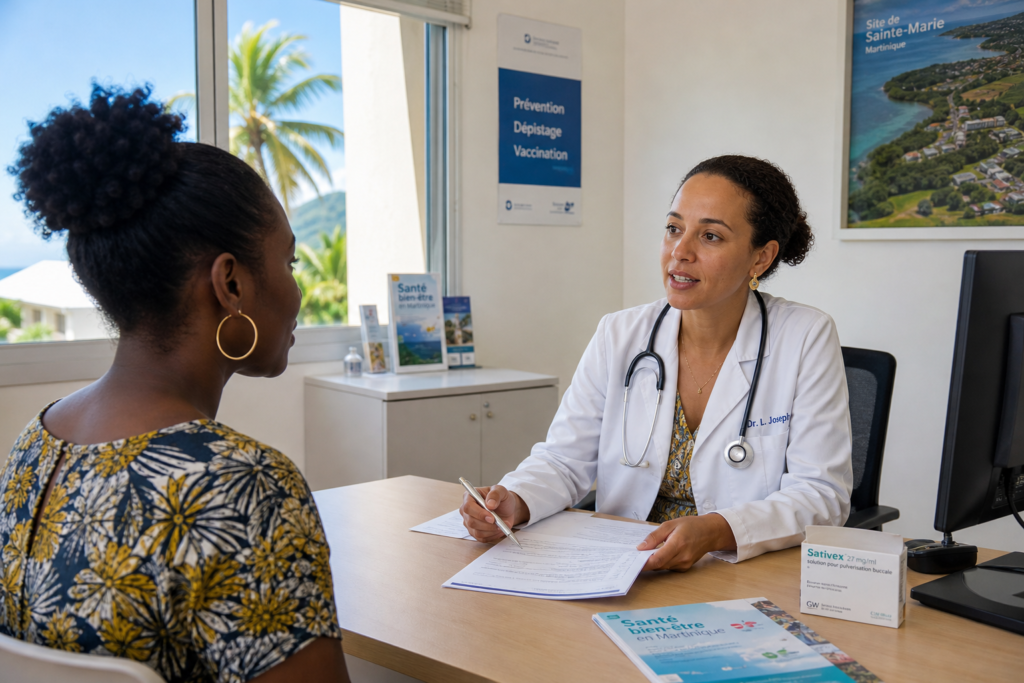
A doctor should assess the complete situation, including pregnancy or breastfeeding, cardiovascular disease, psychiatric history, addiction risk, age, other medicines, and the patient’s ability to avoid driving or hazardous work when impaired. A treatment decision should be individual and documented, not based on a product advertisement.
How to seek legal access in Sainte-Marie
1. Start with a healthcare professional
Begin with your treating doctor or another qualified healthcare professional. Explain the symptoms, diagnosis, treatments already tried, benefits and side effects, and what you hope to improve. Bring a current list of medicines, supplements, and relevant medical records. This information helps the clinician decide whether a cannabinoid treatment is medically reasonable.
A doctor may recommend an established treatment instead, refer you to a specialist, or explain that you do not meet the current criteria. A refusal is not a sign that the clinician is dismissing your symptoms; it may reflect safety concerns, a lack of evidence for the requested use, or the legal limits of prescribing.
2. Confirm whether the prescriber and product are authorised
Ask specifically whether the proposed treatment is part of the current French legal framework. The prescriber should explain the product type, cannabinoid content, dosage, titration plan, expected benefits, common adverse effects, and follow-up arrangements. Patients should also know which pharmacy can dispense it and whether the medicine must be ordered in advance.
The French medicines agency, ANSM, publishes regulatory and safety information relevant to medicines and controlled substances. Official guidance is especially important when a treatment is subject to a transitional arrangement or when implementation differs between a pilot scheme and ordinary healthcare practice.
3. Use a pharmacy rather than an informal seller
A community pharmacy may be able to explain whether it can dispense the prescribed product or direct the patient to an appropriate service. Do not assume that a CBD shop, market stall, social-media account, or overseas website can supply a legal medical medicine. A product labelled “medical,” “therapeutic,” or “pharmaceutical grade” is not automatically authorised in France.
Pharmacy availability in Martinique can involve ordering and delivery times. Patients should ask about stock, prescription requirements, payment, storage, and what to do if the product is unavailable. Do not replace a prescribed medicine with a different cannabis product without speaking to the prescriber.
What to expect from treatment and follow-up
When a cannabinoid medicine is considered appropriate, treatment commonly requires gradual dose adjustment. The aim is usually to find the lowest effective exposure while limiting sleepiness, dizziness, confusion, anxiety, impaired concentration, or other unwanted effects. Some people may experience benefit; others may not respond or may stop because adverse effects outweigh improvement.
Follow-up should review symptom change, daily functioning, side effects, use of other medicines, and any signs of problematic use. Keep a simple treatment record with the dose, time, symptoms, and unwanted effects. This can help the clinician make a safer decision than relying on memory alone.
THC-containing treatment can impair reaction time and judgement. Ask your doctor or pharmacist about driving and workplace restrictions. Never drive, operate machinery, climb, swim alone, or undertake other hazardous activities if you feel impaired. Alcohol and sedating medicines may increase impairment.
Possession, travel and driving considerations
A lawful prescription does not create a general right to carry any cannabis product anywhere. Keep medicine in its original packaging with the dispensing label and any supporting prescription documentation. Do not share it with another person, sell it, or alter it into an unapproved preparation.
Travel between Martinique and another country can create additional problems. The destination country may classify cannabis or THC more strictly, even when the medicine was lawfully prescribed in France. Before travelling, check the rules of every destination and transit jurisdiction with an official authority. Airline staff and border officials may ask for documentation, but paperwork does not guarantee entry.
Driving rules deserve particular care. THC may be relevant to French road-safety law even when the substance was used as a prescribed medicine. Patients should obtain individual advice and follow the instructions of their prescriber. If there is any doubt about fitness to drive, do not drive.
What “cannabis in Sainte-Marie” does not mean
The phrase cannabis in Sainte-Marie can refer to several different subjects: a prescribed medicine, CBD products, illicit cannabis, or general tourism information. These categories should not be treated as interchangeable.
- Prescribed medical cannabis: supplied under the applicable French medical framework and used with professional supervision.
- CBD products: subject to their own rules and not automatically equivalent to a medicine or proven treatment for a specific condition.
- Illicit cannabis: outside the authorised medical supply chain, with legal, quality, and health risks.
- Imported products: potentially subject to customs and medicines restrictions, even if purchased legally elsewhere.
Searching for “medical cannabis laws in Sainte-Marie” should therefore lead to national French sources and qualified healthcare advice, not promises of local dispensary access. A local address does not change the legal status of a product.
Safer alternatives when access is difficult
If a patient cannot obtain the proposed treatment, the next step is to contact the prescriber or pharmacist. They may clarify whether the prescription is valid, whether a different authorised product is available, or whether another treatment should be considered. Do not increase the dose, buy a substitute from an unverified source, or stop essential medicines suddenly.
Patients can also ask about pain clinics, neurology or oncology services, palliative-care teams, psychological support, physiotherapy, sleep treatment, and other evidence-based options relevant to their condition. The best plan may combine several approaches rather than relying on cannabis alone.
For broader regional context, readers can compare this topic with the guidance on medical marijuana access in Ducos, Martinique and the article about marijuana rules for visitors in Saint-Pierre. These locations remain subject to the same French national framework, although local healthcare availability can differ.
Key questions to ask a doctor or pharmacist
- Is my condition and treatment history compatible with the current French medical-cannabis rules?
- What product, cannabinoid content, dose, and titration schedule are being considered?
- What side effects or interactions should I watch for?
- Can I drive, work, or travel while using this treatment?
- Which pharmacy can dispense it in or near Sainte-Marie?
- What should I do if the medicine is unavailable or does not help?
- When will my treatment be reviewed?
Conclusion
Medical cannabis in Sainte-Marie Martinique is a controlled healthcare issue, not a local retail opportunity. The lawful route is to discuss the medical need with a qualified professional, confirm that the proposed product and prescriber are authorised, obtain it through a legitimate pharmacy, and attend follow-up appointments. Residents and visitors should also take driving, travel, storage, interactions, and changing national rules seriously. When in doubt, rely on current official French guidance and direct advice from a doctor or pharmacist rather than informal sellers or outdated online claims.