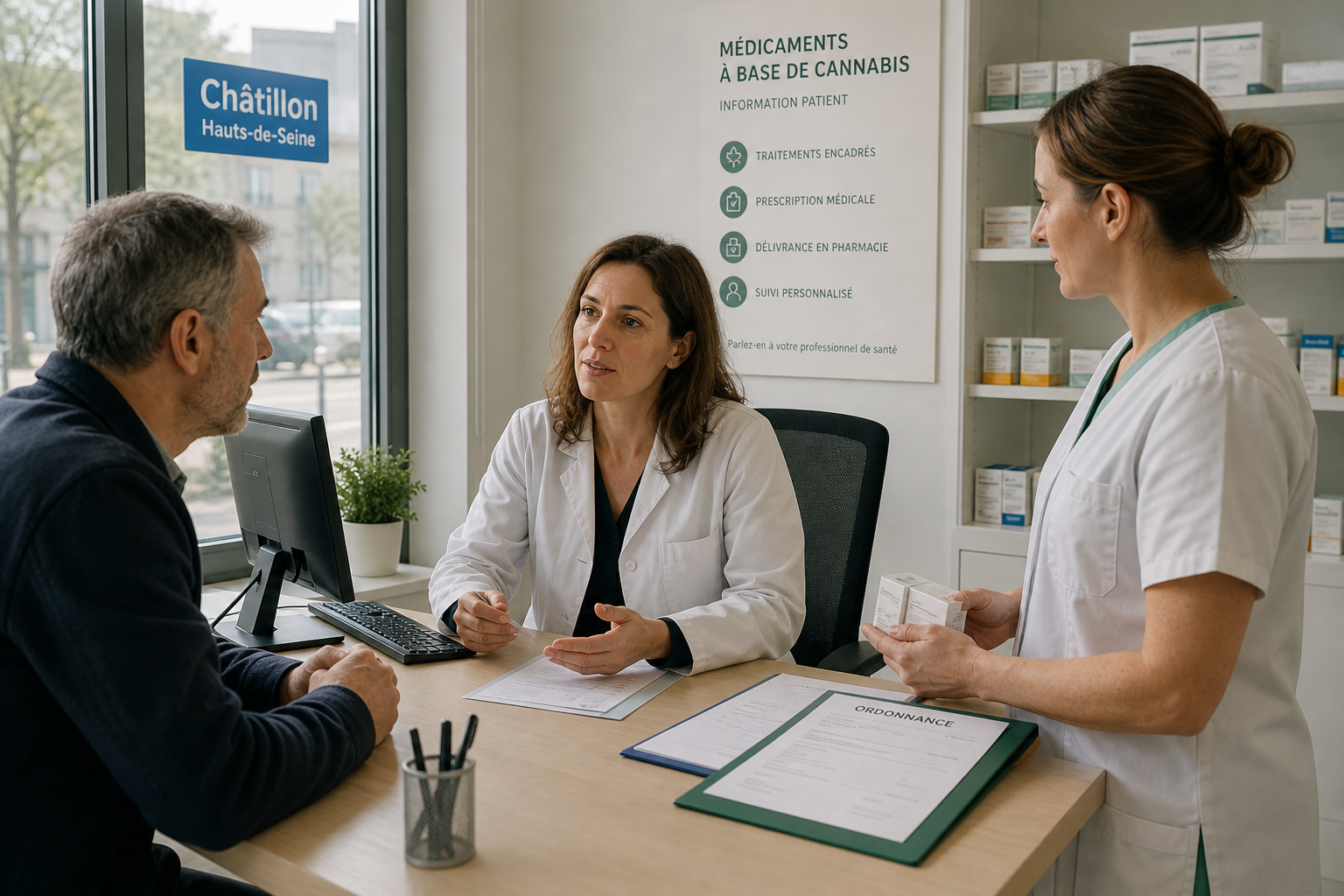
People searching for therapeutic cannabis in Châtillon usually want to know whether they can obtain a legal treatment, which doctor to contact and what the rules are. In France, access to cannabis-based medicine is not the same as buying cannabis or CBD from a shop. It depends on a medical indication, an authorised prescribing pathway and the national framework in force at the time of treatment.
Châtillon does not have separate municipal rules for therapeutic cannabis. The same French regulations apply in Châtillon, throughout the Hauts-de-Seine and across the country. This guide explains the practical steps, the limits of the system and the safety issues patients should discuss with a healthcare professional.
What therapeutic cannabis means in Châtillon
Therapeutic cannabis refers to regulated medicines containing cannabis-derived substances, rather than unregulated flowers, resin, oils or edible products purchased from informal sellers. A medical product has a defined composition, instructions for use, pharmaceutical packaging and a route of supply controlled by the healthcare system.
In France, the availability of cannabis-based treatment has developed through a tightly controlled medical framework. Rules and reimbursement arrangements may change as legislation and implementation progress. Patients should therefore confirm the current position with their prescriber, pharmacist and the official ANSM information on medical cannabis.
Searching for cannabis in Châtillon can produce results about recreational cannabis, CBD and medical treatment at the same time. These are legally and medically different categories. A product sold as CBD is not automatically a therapeutic medicine, and ordinary cannabis possession or use is not made lawful by saying that it is for health reasons.
How access to medical cannabis in Châtillon generally works
The first step is a medical assessment, not a visit to a cannabis shop. A patient should discuss symptoms, diagnosis, existing treatments and treatment goals with their doctor. Depending on the condition, the doctor may refer the patient to an appropriate specialist or hospital team.
Conditions and treatment situations
Cannabis-based treatment is generally considered only in specific clinical situations and when conventional options have been ineffective, poorly tolerated or unsuitable. The relevant question is not whether cannabis might be helpful in general, but whether an authorised medicine is appropriate for the individual patient.
Potentially relevant situations may include certain severe or treatment-resistant forms of pain, serious epilepsy, spasticity associated with conditions such as multiple sclerosis, or supportive care in oncology. This does not mean that every patient with one of these conditions qualifies. Clinical criteria, previous treatment and the precise medical indication matter.
The prescribing and pharmacy pathway
If a specialist or authorised medical team considers treatment appropriate, the prescription must follow the applicable French procedure. The medicine is then supplied through the approved pharmacy or healthcare channel specified by the programme or regulation. A local pharmacy in or near Châtillon may not keep the product in stock, so patients should ask in advance rather than assume immediate availability.
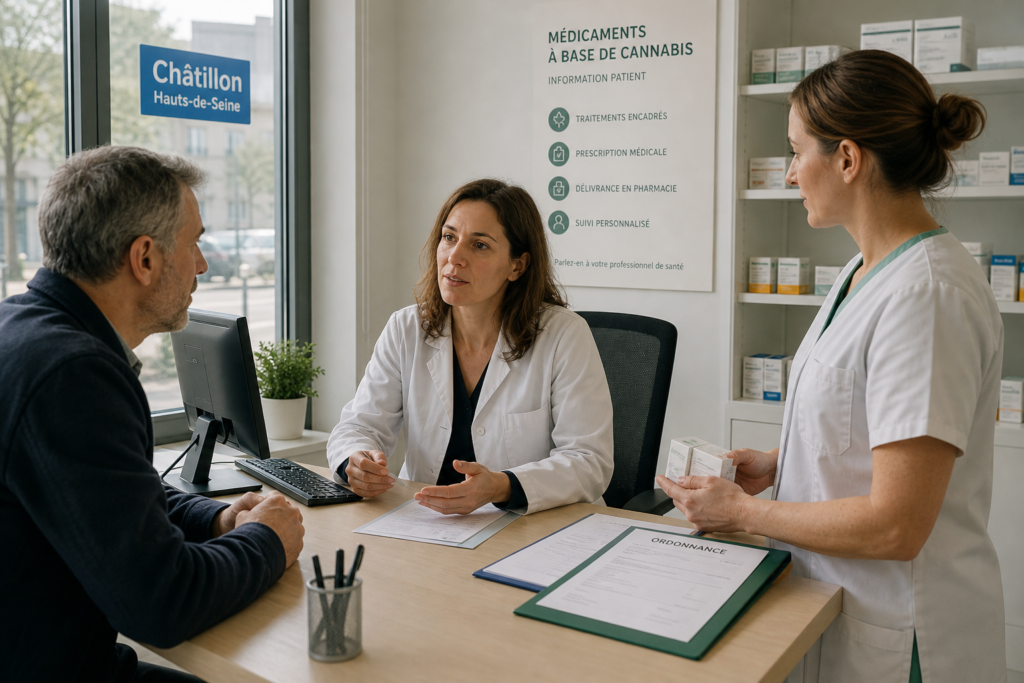
Patients should bring the prescription, relevant medical documents and a list of all medicines and supplements they use. The pharmacist can explain the product, dosage instructions, storage and renewal process. Never replace a prescribed formulation with an informal cannabis product because the appearance or reported cannabinoid content seems similar.
Cannabis laws in Châtillon: what patients must understand
The phrase cannabis laws in Châtillon refers in practice to French national law. Châtillon cannot create a local medical-cannabis market or authorise recreational sales. A legal medical prescription does not provide general permission to grow cannabis, share it, sell it or carry unrelated cannabis products.
- A prescription is personal and intended for the named patient.
- It does not authorise purchasing cannabis from an unlicensed seller.
- It does not make recreational possession or consumption legal.
- It does not automatically permit driving after taking a cannabis-based medicine.
- It does not necessarily permit carrying the medicine across an international border.
For broader background on how French rules differ from local assumptions, see this guide to cannabis laws and regulations in Caluire-et-Cuire. The legal principles discussed there are national rather than specific to that town.
Travel, driving and border crossings
Driving requires particular care. Cannabis-related substances can affect attention, reaction time and coordination, and French road rules can create serious legal consequences when a driver tests positive. A patient should ask the prescriber or pharmacist for precise advice and should not drive if the medicine causes drowsiness, dizziness, confusion or slowed reactions.
International travel is a separate issue. A prescription issued in France may not be enough to take a controlled medicine into another country. Travellers should check the destination country’s embassy or competent health authority before departure, carry the medicine in its original packaging and keep supporting documents available. Do not place cannabis-based medicine in checked luggage without first understanding the applicable rules.
Safety considerations before starting treatment
Cannabis-based medicines can cause adverse effects. Common concerns may include sleepiness, dizziness, reduced concentration, changes in mood, dry mouth, nausea or impaired balance. The risk may be greater when treatment begins, when the dose changes or when cannabis is combined with alcohol or other sedating substances.
- Follow the prescribed dose and schedule exactly.
- Do not share the medicine with relatives or friends.
- Avoid alcohol and ask about interactions with sleeping tablets, opioids, anxiety medicines and other central nervous system depressants.
- Keep the product secure and out of reach of children and pets.
- Record benefits and side effects so the prescriber can review the treatment.
- Seek urgent medical help for severe confusion, fainting, breathing problems, chest pain, a serious allergic reaction or other alarming symptoms.
People with a history of psychosis, serious cardiovascular disease, substance-use problems, pregnancy or breastfeeding should raise these issues before treatment. This list is not a substitute for an individual assessment. The safest plan depends on the patient’s diagnosis, age, other medicines and overall health.
How to evaluate claims about weed in Châtillon
The search term weed in Châtillon often leads to informal websites, delivery advertisements or social-media offers. These sources may make claims about pain relief, anxiety, sleep or cancer that have not been assessed for the product being sold. Packaging can also be misleading: a stated cannabinoid percentage does not prove purity, accurate dosing or medical effectiveness.
Do not use an unregulated product as a substitute for prescribed care. It may contain unexpected amounts of THC, contaminants or other substances, and its strength may vary from one batch to another. Products bought informally also create legal risks and make it difficult for a doctor to understand what the patient has taken.
CBD products require similar caution. CBD is not the same as an authorised cannabis-based medicine, and “natural” does not mean risk-free. CBD may interact with medicines or affect alertness. Patients should tell their doctor and pharmacist about any CBD product they use.
Practical checklist for a consultation in Châtillon
- Write down the symptoms, diagnosis and treatments already tried.
- List every prescription medicine, over-the-counter product, supplement and cannabis or CBD product currently used.
- Explain previous side effects, allergies, pregnancy plans and any history of addiction or mental-health problems.
- Ask whether the proposed treatment is authorised for the specific indication and what alternatives exist.
- Confirm the starting dose, dose changes, follow-up appointment and signs that require medical advice.
- Ask how the prescription will be dispensed and whether the local pharmacy needs advance notice.
- Discuss driving, work involving machinery, alcohol and travel before beginning treatment.
Patients can also compare general safety principles with our practical guide to cannabis safety in Vaulx-en-Velin. The article is not a prescription, but its risk-reduction approach is useful when discussing cannabis exposure with a healthcare professional.
What to do if access is difficult
Access may be complicated by limited prescriber availability, a pharmacy that does not stock the medicine or uncertainty about eligibility. The appropriate response is to contact the prescribing team, a hospital service or a pharmacist—not to turn to an unlicensed seller. Ask whether another authorised pharmacy can dispense the prescription or whether a specialist referral is needed.
If cost, transport or appointment delays are barriers, explain them directly to the healthcare team. They may be able to identify an appropriate local service or clarify the next administrative step. Keep copies of prescriptions and medical documents, but do not alter a prescription or attempt to extend treatment without review.
Frequently misunderstood points
Is therapeutic cannabis available from a Châtillon shop?
Ordinary cannabis shops are not a legal route to obtain a prescribed medical treatment. A regulated medicine must come through the healthcare pathway established by French authorities.
Can a patient grow cannabis for personal medical use?
A medical need does not by itself create an exemption from cultivation rules. Patients should not grow cannabis or make homemade preparations as a replacement for regulated treatment.
Can a doctor prescribe cannabis for any condition?
No. Prescribing depends on the applicable rules, the authorised indication and the clinician’s assessment. A request for cannabis should lead to a discussion of evidence-based options, risks and monitoring rather than an automatic prescription.
Conclusion
Therapeutic cannabis in Châtillon is governed by French national rules and should be approached as a medical treatment, not as a local retail product. The safest route is a consultation with a qualified healthcare professional, followed by supply through the authorised pharmacy pathway and careful monitoring of effects and interactions.
Whether someone searches for medical cannabis in Châtillon, cannabis in Châtillon or cannabis laws in Châtillon, the essential distinction remains the same: a prescription-based medicine is different from recreational cannabis, CBD and unregulated products. Verify the current framework with the prescriber, pharmacist and official health authorities before starting treatment, travelling or driving.