Understanding medicinal marijuana in Marcq-en-Barœul starts with one important point: cannabis medicine is governed mainly by French national law, not by a separate municipal system. Residents of Marcq-en-Barœul, in the Lille metropolitan area, must follow the same prescription, dispensing and possession rules as patients elsewhere in France.
People may search online for medical cannabis in Marcq-en-Barœul, cannabis in Marcq-en-Barœul or even weed in Marcq-en-Barœul. These phrases can describe very different things. A regulated medical treatment is not the same as recreational cannabis, an unverified product bought online or a CBD product sold in a general shop. This guide explains the practical distinctions, how to discuss treatment with a healthcare professional and what safety issues patients should consider.
Medicinal marijuana in Marcq-en-Barœul: what the law means
France does not operate a normal walk-in retail market for medicinal marijuana. Medical cannabis access has been developed through a tightly controlled national framework, including specialist prescribing and regulated pharmacy dispensing. The precise rules, eligible conditions and transitional arrangements can change, so patients should confirm the current position with a doctor, pharmacist or the French medicines regulator.
In practical terms, living in Marcq-en-Barœul does not create a local right to buy cannabis for treatment. A person cannot legally substitute a recreational purchase for a prescription, grow cannabis for personal medical use or import cannabis products from another country without checking the relevant rules. A prescription from a foreign clinician may also not be enough to authorize possession or dispensing in France.
The French medicines agency’s information on medical cannabis is a useful starting point for checking the national framework. Because availability and legal arrangements may evolve, online articles should be treated as general guidance rather than a replacement for current official information.
Who may be considered for medical cannabis in Marcq-en-Barœul?
Medical cannabis is generally considered only when conventional treatment has not provided adequate relief, is poorly tolerated or is unsuitable for a particular patient. It is not a first-line remedy for everyday stress, ordinary insomnia or minor pain. A healthcare professional must assess the underlying condition, previous treatments, other medicines and possible risks.
Depending on the current French framework, consideration may involve serious or difficult-to-treat situations such as certain persistent pain conditions, severe epilepsy that does not respond sufficiently to standard medicines, painful spasticity associated with neurological disease, or supportive care in serious illness. Eligibility should never be inferred from a symptom alone. The same symptom can have different causes and may require a completely different treatment.
Why specialist assessment matters
Cannabis-based medicines can contain different proportions of cannabinoids, particularly tetrahydrocannabinol (THC) and cannabidiol (CBD). THC may cause drowsiness, dizziness, impaired attention, anxiety or other psychoactive effects. CBD is not automatically risk-free and may interact with medicines. A clinician needs to decide whether the possible benefits justify those risks for the individual patient.
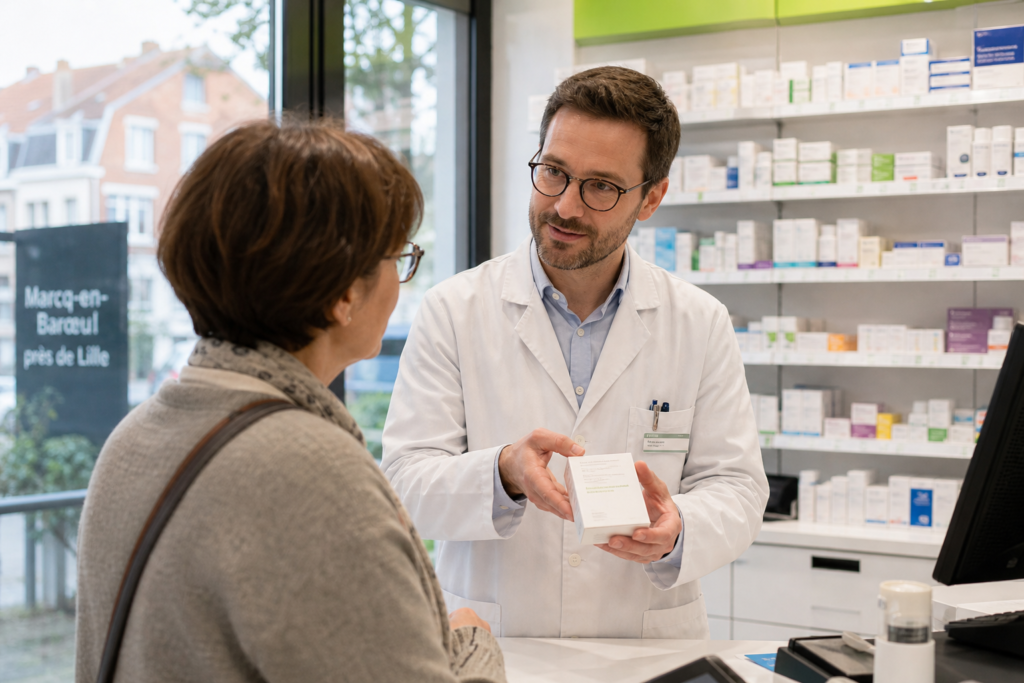
Patients should prepare a complete list of current medicines, allergies, previous treatments, alcohol use and relevant medical history before an appointment. It can help to bring information about symptom frequency, severity, sleep, mobility and side effects from earlier therapies. This gives the prescriber a clearer basis for a safe decision.
How access works for a resident of Marcq-en-Barœul
- Start with a healthcare professional. Discuss the condition with a GP, relevant specialist or hospital team. Ask whether cannabis-based treatment is legally available and clinically appropriate under the current French rules.
- Check eligibility and prescribing arrangements. Some pathways may require a specialist, a hospital service or participation in an authorized program. Do not assume that every doctor can prescribe or that every pharmacy can dispense the product.
- Use an authorized dispensing channel. If treatment is approved, the prescription should identify the appropriate medicine, formulation and instructions. The dispensing pharmacist can explain stock, administration and monitoring requirements.
- Arrange follow-up. The prescriber should review effectiveness, unwanted effects, dose changes and whether the treatment should continue. Patients should not increase the dose independently because the effect can be delayed or vary between products.
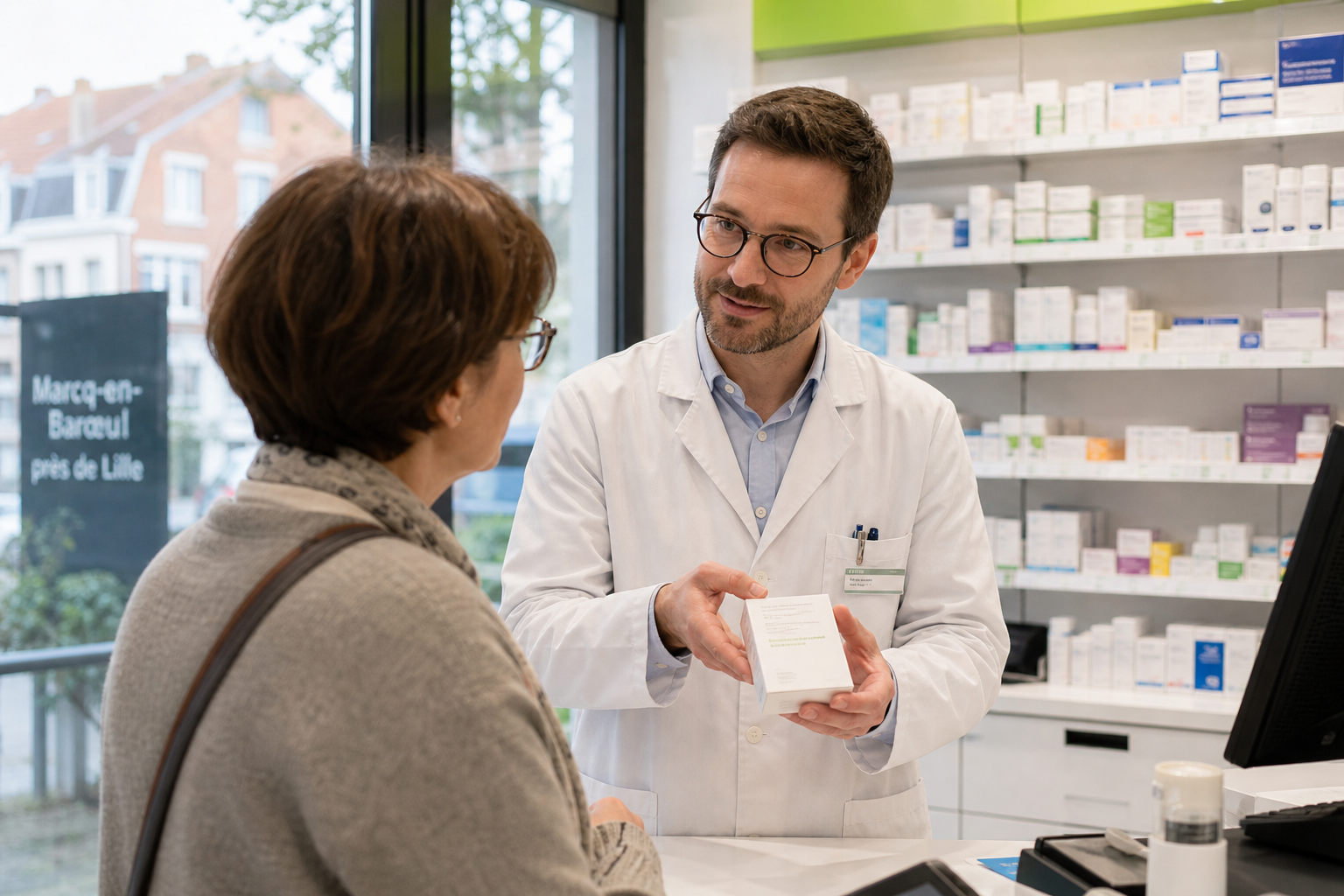
In Marcq-en-Barœul, a local pharmacy may need to order a regulated product or direct the patient to a pharmacy connected with the relevant hospital pathway. Calling ahead can prevent an unnecessary journey. Pharmacists can also clarify whether a prescription meets current dispensing requirements, but they cannot make an illegal product lawful.
For a broader comparison of practical access questions in another French city, see this guide to medical cannabis access and rules in Colomiers. The local details differ, but the key principle is the same: national regulation determines the legal route.
Medical cannabis, recreational cannabis and CBD are not the same
Confusion often arises because products may all be described casually as marijuana, cannabis or weed. Their legal status depends on the product, its cannabinoid content, its source, its labeling and the way it is supplied.
- Prescribed cannabis-based medicine: supplied through an approved medical route and used according to professional instructions.
- Recreational cannabis: possession, purchase, cultivation and use remain subject to French criminal and public-order rules. A medical need does not automatically excuse obtaining cannabis outside the legal medical pathway.
- CBD products: products meeting applicable THC and marketing requirements may be sold in some circumstances, but they are not automatically medicines and should not be presented as a substitute for prescribed treatment.
- Unregulated products: products from informal sellers or overseas websites may have inaccurate strength, contamination risks or an uncertain legal status.
Searches for cannabis in Marcq-en-Barœul can therefore lead to information about several unrelated categories. Patients should identify the exact product and its legal route rather than relying on a label such as “medical,” “natural” or “therapeutic.”
Cannabis laws in Marcq-en-Barœul: practical restrictions
The relevant cannabis laws in Marcq-en-Barœul are French national laws. A patient with authorized medicine should keep it in its original packaging and carry the prescription or supporting documentation when appropriate. This is particularly important when traveling to a consultation, collecting medicine or crossing a border.
Do not share prescribed cannabis with another person, even if that person reports similar symptoms. Do not resell it, leave it accessible to children or transfer it into an unmarked container. Storage instructions should be followed, especially where a product may be affected by heat, light or moisture.
Driving requires special care. Cannabis-based treatment can affect reaction time, concentration and coordination, and THC-related driving rules can be strict. Patients should ask their prescriber or pharmacist about driving and should not drive when drowsy, dizzy, confused or otherwise impaired. The official Legifrance database provides access to French legal texts, but a healthcare professional or qualified legal adviser may be needed to interpret how a rule applies to a particular case.
Safety issues patients should discuss
Side effects and interactions
Possible unwanted effects include sleepiness, dizziness, dry mouth, nausea, changes in mood, impaired memory or difficulty concentrating. THC-containing products may also worsen anxiety or trigger unpleasant psychological effects in susceptible people. CBD can affect how the body processes some medicines, so patients should disclose every prescription, over-the-counter medicine, supplement and herbal product they use.
Combining cannabis medicine with alcohol, sedatives, sleeping tablets, opioids or other substances may increase impairment. A pharmacist can review potential interactions and explain what symptoms require prompt medical advice.
People who need additional caution
Extra caution may be appropriate for adolescents, older adults, pregnant or breastfeeding people, and anyone with a history of psychosis, serious cardiovascular disease, substance-use problems or significant liver impairment. These factors do not answer the treatment question by themselves, but they make individualized medical assessment especially important.
Seek urgent medical help for severe confusion, loss of consciousness, chest pain, breathing difficulty, a serious allergic reaction or a severe psychiatric reaction. Keep medicines away from children and pets; accidental ingestion can be dangerous.
How to prepare for a consultation in the Lille area
A patient in Marcq-en-Barœul can make an appointment with their usual doctor and ask whether a referral to an appropriate specialist or hospital service is needed. It is useful to write down the main treatment goal, such as reducing nerve pain or controlling spasticity, rather than simply asking for “marijuana.” This keeps the conversation focused on diagnosis, evidence, alternatives and safety.
- Bring a current medication list and relevant medical records.
- Describe what has already been tried and what happened.
- Ask which formulation is being considered and how it should be used.
- Confirm whether the medicine is available through a particular pharmacy or hospital.
- Ask about driving, work, alcohol, travel and follow-up appointments.
- Verify the legal status before ordering any product online or abroad.
A prescription is not a guarantee that treatment will be suitable forever. The prescriber may stop or change it if benefits are limited, side effects are significant or another therapy becomes more appropriate.
What visitors and family members should know
Visitors should not bring cannabis into Marcq-en-Barœul from another country without checking French import requirements. Even where a product was legally prescribed abroad, border rules, documentation and permitted quantities may differ. Family members should also avoid carrying someone else’s medicine unless they have clear documentation and have checked the applicable requirements.
Patients traveling within France should keep medicines labeled and carry relevant paperwork. For personalized cross-border advice, contact the French embassy or consulate, the transport provider and the prescribing service before travel. Never rely on a social-media post or a seller’s assurance that a product is legal.
Conclusion
Medicinal marijuana in Marcq-en-Barœul is a regulated medical issue, not a separate local retail market. The safest route is to discuss the condition with a qualified healthcare professional, confirm eligibility under the current French framework, obtain any medicine through an authorized channel and follow the prescribed instructions carefully.
Whether someone searches for medical cannabis in Marcq-en-Barœul or asks about weed in Marcq-en-Barœul, the essential distinction remains the same: a prescribed cannabis-based medicine, a CBD product and recreational cannabis do not carry identical medical or legal consequences. Check current official information, ask a pharmacist about practical dispensing and seek professional advice before using any cannabis-based product.