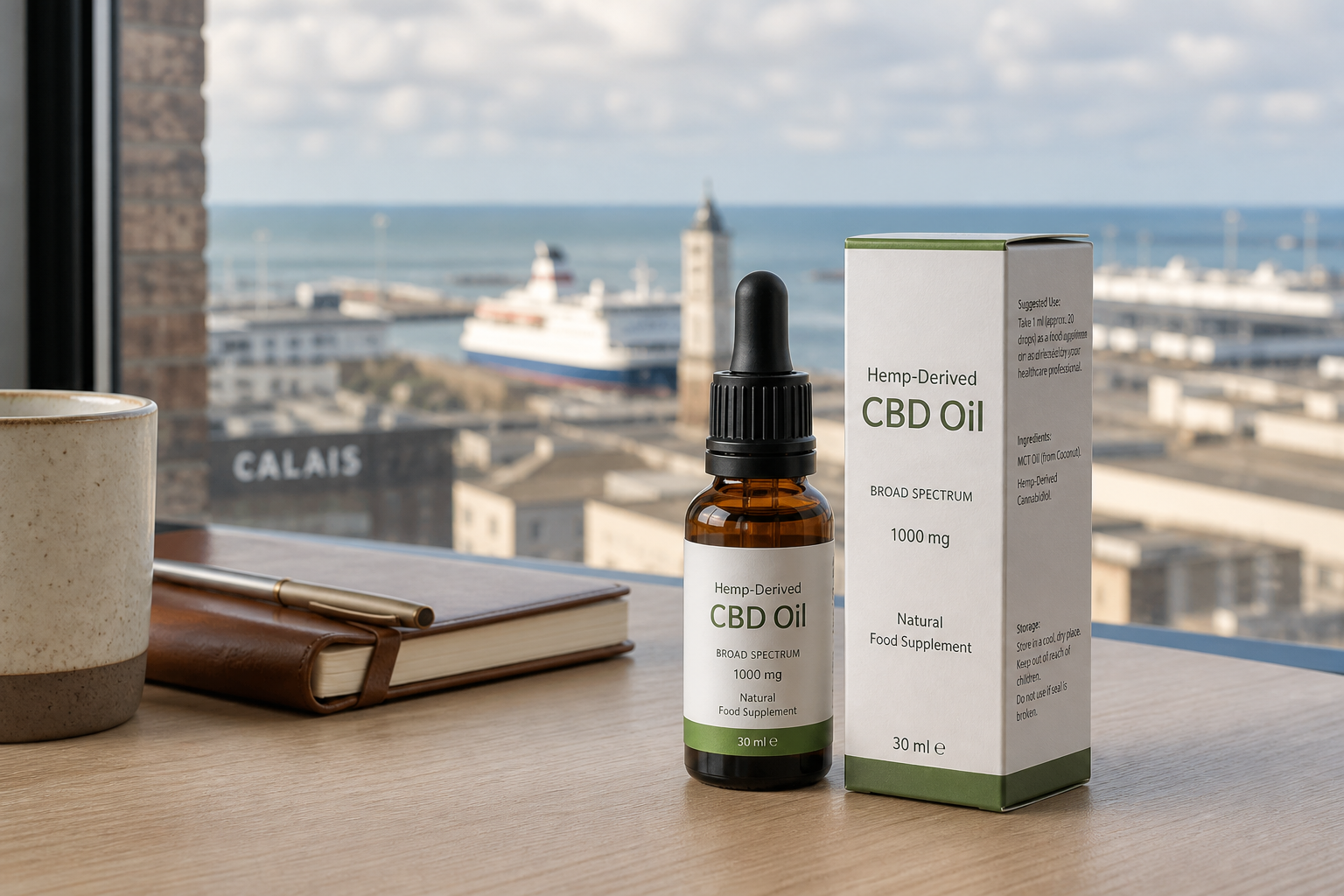
This CBD guide 2026 Calais explains what residents and visitors should know before buying or carrying cannabidiol products in Calais. CBD is widely associated with hemp, but it is not the same as intoxicating cannabis: products can differ substantially in ingredients, THC content, quality and legal treatment. French rules also apply nationally, so a product sold in Calais must meet French requirements rather than relying on a retailer’s description alone.
The practical approach is simple: check the label, understand the THC position, avoid unverified health claims and take extra care when travelling across borders. This guide covers the legal framework, product types, responsible purchasing, transport and health considerations without treating CBD as a guaranteed treatment.
CBD in Calais: what the product actually is
CBD, or cannabidiol, is one of the naturally occurring compounds found in the hemp plant. Unlike delta-9-tetrahydrocannabinol, commonly called THC, CBD is not generally considered intoxicating. That does not make every CBD product identical or risk-free. Oils, capsules, flowers, resins, cosmetics, drinks and vaping liquids may contain different concentrations, additives and instructions.
Some products are made from hemp extracts, while others use isolated CBD or synthetic ingredients. Labels may also mention minor cannabinoids, terpenes or flavourings. A responsible buyer should look beyond prominent words such as “natural” or “premium” and identify the full ingredient list, the CBD quantity and the stated THC content.
CBD should not be confused with recreational cannabis. Products containing illegal levels of THC, products from an uncertain source and products marketed as a way to get high create a different legal and health situation. Searching for cannabis in Calais can therefore lead to information about controlled cannabis rather than lawful, compliant CBD products.
CBD laws in Calais and the French legal framework
Calais follows French national law. In broad terms, hemp-derived CBD products may be sold when they comply with the applicable rules, including requirements concerning the permitted THC level and the type of product. The legal position can change as French and European authorities refine rules for hemp extracts, foods, supplements and novel foods, so a retailer’s assurance is not a substitute for compliance documentation.
French enforcement focuses on the product placed on the market, not simply on whether a package says “CBD.” A product with an excessive THC concentration, inaccurate labelling or prohibited presentation may create legal problems. Edible products and supplements can also be subject to food-safety and marketing rules that differ from those applying to cosmetics or e-liquids.
For current public information about drugs, controlled substances and national policy, consult the French government’s Drogues-info-service and public drug policy portal. For medicine-related safety information and regulatory updates, the French National Agency for the Safety of Medicines is a more reliable reference than social media or an anonymous product listing.
THC limits and why testing matters
French CBD products are generally expected to remain within the applicable legal THC threshold, commonly described in current consumer guidance as no more than 0.3% THC for permitted hemp products. However, the threshold alone does not answer every question. Product category, ingredients, intended use, labelling and the route of sale can also matter.
Look for a recent certificate of analysis from an identifiable, independent laboratory. It should state the tested batch, cannabinoid profile and THC result. A generic laboratory image, an undated document or a certificate that does not match the product batch provides limited reassurance. If a seller cannot explain where the product came from or cannot provide meaningful testing information, choose a different product.
Buying CBD in Calais: a practical checklist
Physical retailers and online businesses may offer oils, flowers, capsules, cosmetics and vaping products in or around Calais. Availability changes, and this article does not endorse a particular shop. Compare the information supplied by the seller rather than choosing solely on price, packaging or promises of rapid results.
- Check the business details: Look for a clear company name, contact information, terms of sale and a transparent returns process.
- Read the complete label: Confirm the amount of CBD per serving or container, ingredients, recommended use, batch number and expiry or best-before information.
- Ask about THC: The seller should be able to explain the stated THC level and provide batch-specific testing where available.
- Watch the claims: Promises to cure anxiety, pain, cancer, insomnia or other diseases are warning signs. CBD should not be presented as a replacement for professional care.
- Inspect the packaging: Avoid damaged, unsealed or poorly translated products with no traceable manufacturer.
- Be careful with edibles: Food products can be easy to overconsume because effects, if any, may not be immediate. Follow the label and do not assume a larger amount is better.
When comparing CBD shops in Calais, ask whether the product is intended for oral use, inhalation, skin application or another route. A topical cosmetic is not interchangeable with an oil designed for oral use, and a vape liquid should never be used in a device for which it was not designed.
CBD product types and sensible selection
Oils and capsules
Oils and capsules are often sold with a stated CBD concentration. Concentration can be expressed per bottle, per millilitre or per capsule, so compare like with like. An oil containing 10% CBD does not automatically tell you how much CBD is in one drop unless the label provides that information. Follow the manufacturer’s instructions and keep the product away from children and pets.
Flowers and resins
Hemp flowers and resins can look and smell similar to illegal cannabis. Even when a product is sold as compliant CBD, appearance is not proof of legality or of a negligible THC result. Keep the original packaging and purchase evidence when transporting such products, particularly if travelling. Do not smoke in public places or assume that a lawful purchase permits use anywhere.
Vapes, drinks and food products
Vaping introduces additional concerns involving device safety, inhaled ingredients and the quality of the liquid. Drinks, sweets and other ingestible products may be subject to food rules and can be confused with ordinary snacks. Check age restrictions, storage instructions and serving information, and avoid products with unclear ingredients or exaggerated effects.
Cosmetics
CBD creams and balms are intended for external use. They should be assessed as cosmetics, not as medicines. Avoid applying them to damaged skin unless a qualified professional advises it, and stop using a product if irritation occurs. A cosmetic label cannot establish that CBD will treat a medical condition.
Health, medicines and safer use
CBD can cause unwanted effects, including drowsiness, digestive symptoms or changes in alertness. It may also interact with medicines because the body processes CBD through pathways involved in the metabolism of some prescription drugs. People taking regular medication should ask a doctor or pharmacist before trying it.
Extra caution is appropriate during pregnancy or breastfeeding, for people with liver conditions, for older adults taking multiple medicines and for anyone with a history of sensitivity to cannabis-related products. Keep CBD away from children. If a child or pet accidentally consumes a product, seek urgent professional advice and provide the packaging.
Start with the lowest labelled amount if a qualified professional considers the product suitable, and change only one variable at a time. Do not combine CBD with alcohol, sedatives or other substances that can reduce alertness. Stop using it and seek medical advice if concerning symptoms develop.
Driving, work and public use in Calais
Do not drive, cycle in traffic or operate machinery after using a CBD product if you feel sleepy, dizzy or less alert. A compliant CBD product may still contain trace THC, and individual products can vary. A roadside or workplace situation is not resolved simply by saying that the product was purchased legally. If driving is essential, the safest option is to avoid using a product that could affect alertness or produce an unexpected test result.
French public-use rules also matter. Shops may sell CBD products, but that does not mean consumption is permitted inside the premises, on transport, at a station, in a hotel or in another public location. Follow venue rules and any smoking or vaping restrictions. Avoid using flowers or vaping products around children, crowds and entrances.
Travelling from Calais with CBD
Calais is an international travel hub, which makes transport especially important. A product that appears acceptable under French rules may be restricted in another country. Border officials may not be able to distinguish a CBD flower from cannabis by appearance alone, and a product bought legally in France can still create problems abroad.
Before travelling, check the rules of every destination and transit country through official government sources. Do not carry loose or unlabelled products. Keep sealed packaging, the receipt and any available analysis with the item, but understand that documentation is not a guarantee of entry. Never conceal CBD in luggage or transport it across a border when the destination’s rules are unclear.
Visitors seeking broader regional context can also read this guide to cannabis possession regulations in nearby Dunkerque. For a wider northern France travel perspective, the 2026 cannabis tourism guide for Cherbourg-en-Cotentin offers related practical guidance, although local geography does not change national French law.
Common mistakes to avoid
- Assuming “CBD” means a product contains zero THC.
- Buying loose flowers, oils or sweets without a batch number or manufacturer details.
- Trusting medical claims that are not supported by a licensed healthcare professional.
- Taking CBD alongside medicines without checking for interactions.
- Driving after use because the product was advertised as non-intoxicating.
- Carrying a product across an international border without checking destination rules.
- Assuming that a shop’s location makes consumption legal in public.
Key takeaways for CBD in Calais in 2026
The safest way to approach CBD in Calais is to treat it as a regulated consumer product, not as a risk-free wellness shortcut. Check the label and batch information, confirm the THC position, avoid disease-treatment claims and ask a pharmacist about possible interactions. Keep products sealed and traceable during travel, especially when crossing a border.
Rules and product standards can change, so confirm important decisions with current French authorities and, for medical questions, a qualified healthcare professional. This guide provides general information rather than legal or medical advice.
Conclusion
This CBD guide 2026 Calais gives residents and travellers a practical starting point: understand the difference between CBD and intoxicating cannabis, buy only traceable products, use them cautiously and respect public-use and travel restrictions. The phrase CBD laws in Calais ultimately refers to French national rules, but product category and destination-country requirements can still make a significant difference. When in doubt, pause the purchase or journey and verify the position through an official source.