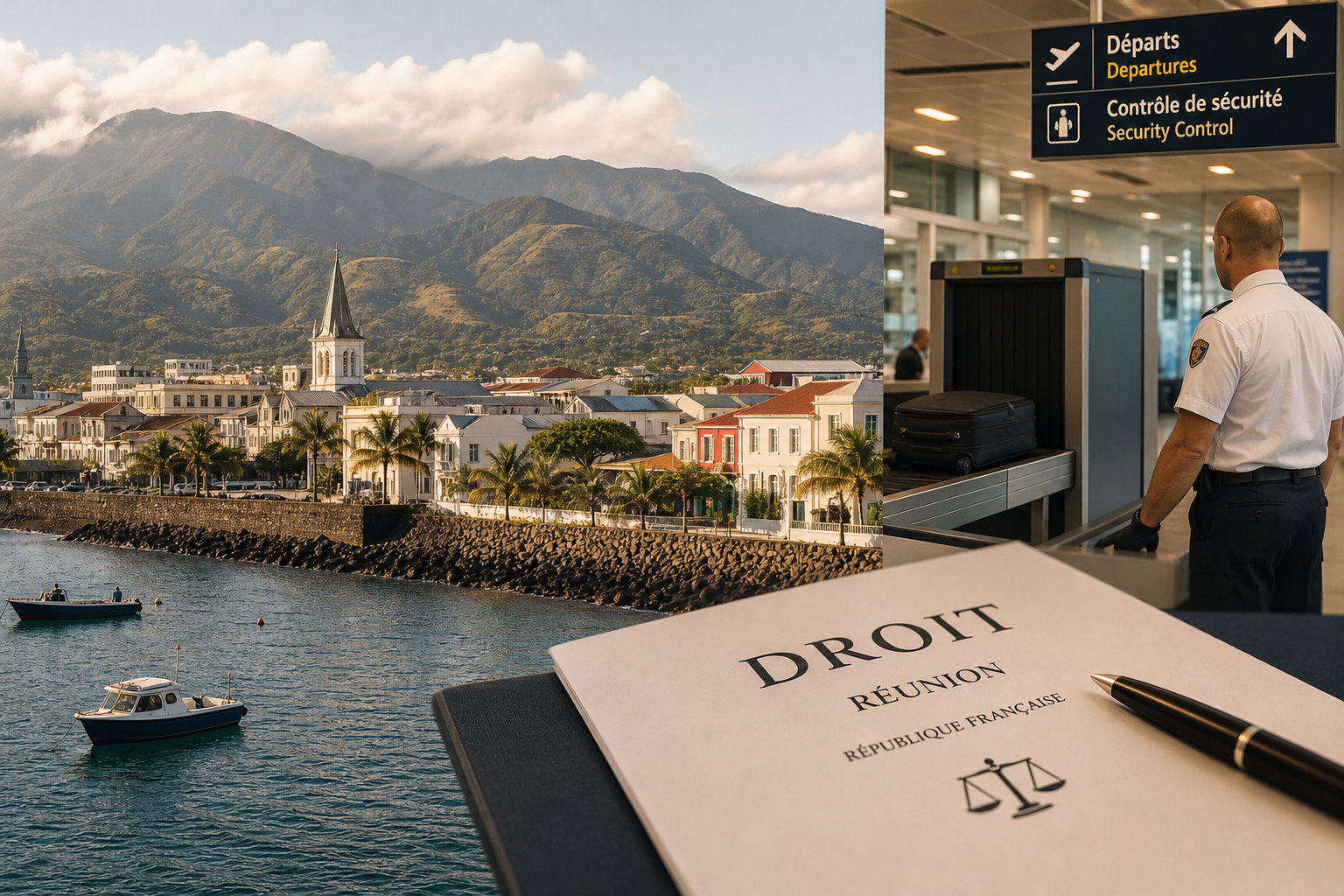
Understanding the cannabis laws and penalties in Saint-Pierre Réunion starts with one important point: Saint-Pierre follows French national law. Réunion is an overseas department and region of France, so cannabis possession, use, cultivation, supply and driving offences are governed primarily by the French Criminal Code and Public Health Code rather than by a separate local cannabis system.
This guide explains the rules most relevant to residents, visitors and people searching for weed in Saint-Pierre. It covers personal use, possession, public consumption, transport, driving, CBD, medical access and what to do after contact with police or customs. It is general information, not a substitute for advice from a French lawyer.
How cannabis laws in Saint-Pierre work
There is no legal recreational cannabis market in Saint-Pierre. Buying, selling, giving away, importing, exporting, producing and possessing cannabis can expose a person to criminal proceedings. The fact that cannabis is intended for personal use does not make it lawful.
French law distinguishes between the offence of using narcotics and the wider offences involving possession, transport, acquisition, production or trafficking. The response can depend on the quantity, the circumstances, any evidence of resale, previous convictions and whether other offences are involved.
Local police and national services may enforce these rules in streets, beaches, parks, nightlife areas, residential districts, transport facilities and other public places. A different enforcement priority in one neighbourhood does not create a legal exemption. The same national rules apply across Saint-Pierre and the rest of Réunion.
Penalties for cannabis use and possession
Use of cannabis
French law allows certain drug-use cases to be handled through a fixed criminal fine. For adult cannabis use, the commonly applied fixed fine is 200 euros, reduced to 150 euros when paid within the applicable reduction period and increased to 450 euros if it is not paid on time. The precise payment deadlines and procedure should be checked on the notice received.
A fixed fine is not the same as legalisation. It is a criminal-law response to an offence, and the case may be handled differently where the circumstances are more serious. Prosecutors can use ordinary criminal proceedings in situations such as repeated offending, refusal or inability to resolve the case through the fixed-fine procedure, or facts indicating additional offences.
Under the general statutory framework, unlawful drug use can also carry a possible prison sentence and fine when dealt with by the ordinary courts. The maximum available penalty is not an automatic sentence for every person caught using cannabis; courts consider the individual facts and applicable procedure.
Possession, acquisition and transport
Possessing cannabis, even a small amount, remains unlawful. Police may seize the substance and investigate where it came from, where it was going and whether it was intended for personal use or distribution. Possession may therefore create consequences beyond the fixed fine used for some simple-use cases.
French law provides severe maximum penalties for the unauthorised transport, possession, acquisition or transfer of narcotics. Where the authorities allege supply, organised activity, importation or another aggravated circumstance, the potential exposure is substantially higher than for simple personal use. The amount alone does not determine the outcome.
Searches, seizure, questioning and a criminal record can also create practical problems involving employment, immigration, travel or professional licensing. A person should not assume that a small quantity automatically means that the matter will be ignored or resolved without paperwork.
Public consumption and cannabis in Saint-Pierre
Using cannabis in a public place can lead to enforcement for drug use, while the setting may create additional practical and safety concerns. Public spaces can include roads, pavements, parks, beaches, vehicle areas, entertainment districts and shared residential spaces. Smoke or odour can also trigger complaints and police attention.
Do not treat a private balcony, holiday rental or hotel room as automatically risk-free. The legal position can depend on whether the location is genuinely private, whether the owner permits the conduct, whether other people are exposed and whether nuisance, possession or other offences are alleged. Hotels and rental operators may impose stricter contractual rules and can require guests to leave.
Visitors researching cannabis in Saint-Pierre should also remember that informal local advice is not a reliable statement of the law. A practice that appears common does not make possession or consumption legal.
Cannabis and driving in Réunion
Driving after using cannabis is a serious risk. French road law prohibits driving after using narcotics, and enforcement is based on testing for the presence of prohibited substances rather than on a person’s own assessment of whether they feel impaired. This means waiting until the effects seem to have ended is not a reliable legal safeguard.
A positive roadside screening can lead to further testing, licence consequences and criminal proceedings. Driving under the influence of narcotics can carry a prison sentence and a fine, with more serious consequences where alcohol, injury, death, refusal to test or other aggravating factors are involved.
The rule applies to cars, motorcycles and other motor vehicles. It is especially important in Saint-Pierre, where visitors may hire a vehicle to travel between coastal towns, inland areas and the airport. Never drive after using cannabis, and do not accept a ride from someone who has consumed it.
Carrying cannabis to or from Saint-Pierre
Réunion is part of France, but flights and maritime travel still involve border, customs and security controls. Carrying cannabis in luggage, a vehicle or a parcel can lead to seizure and investigation. A domestic route does not turn cannabis into a permitted travel item.
Bringing cannabis into Réunion from another country can raise importation issues, while taking it from Réunion to another country can raise exportation or destination-country offences. The same concern applies to cannabis products such as resin, flowers, oils, edibles and vape cartridges. Do not rely on packaging, a prescription from another country or a claim that the product is for personal use.
Travellers should keep all medicines in their original packaging and carry appropriate documentation. That advice does not authorise cannabis products that are prohibited under French law. If there is uncertainty about a medicine or product, ask the relevant French authority or a qualified lawyer before travelling.
CBD rules and the difference between CBD and cannabis
CBD products are not automatically equivalent to illegal cannabis, but the product must satisfy French and European requirements. In general, authorised hemp products must come from permitted varieties and stay within the applicable THC limit, commonly presented as 0.3 percent under current French rules. Product categories, labelling and marketing requirements also matter.
A CBD shop, online listing or colourful package is not proof that every item is lawful. Products may be mislabelled, contain more THC than stated or be sold in a form that creates separate legal problems. CBD flowers and resins can also look and smell like cannabis, which may lead to testing and temporary seizure while the product is examined.
Do not drive after using a CBD product that may contain trace THC. French drug-driving rules can create risk even when the user bought the product believing it was legal. Keep receipts and packaging where appropriate, but understand that these documents do not prevent testing or enforcement.
Medical cannabis in Saint-Pierre
People searching for medical cannabis in Saint-Pierre should distinguish regulated medical treatment from self-medication. France has developed tightly controlled access arrangements and medical-cannabis policy has changed over time. A patient cannot simply purchase recreational cannabis from a shop or bring a product from abroad because it is used for pain, anxiety, sleep or another condition.
Access, where available under the applicable French framework, depends on the patient’s diagnosis, treatment history, an authorised prescriber and the dispensing process. Patients should speak with a doctor or pharmacist in France rather than relying on social-media sellers or overseas recommendations.
For current information about medicines and public-health policy, consult the French government information on drug use and penalties and ask a healthcare professional about lawful treatment options. Do not stop prescribed medication or replace it with an unregulated cannabis product without medical advice.
What happens after a police stop or fine?
If police stop someone with suspected cannabis, the person should remain calm, avoid arguing about facts they do not understand and comply with lawful instructions. They should read any document carefully before signing it and request an interpreter if they do not understand French well enough to follow the procedure.
- Ask what offence is alleged and whether the document is a fixed-fine notice, an interview request or another procedural document.
- Keep copies of notices, receipts and laboratory or seizure paperwork.
- Do not provide false information or attempt to hide, destroy or transfer a substance.
- Contact a French lawyer promptly if the matter involves possession beyond simple use, supply allegations, a vehicle, a search, detention or a potential criminal record.
- Pay or challenge a fixed fine only according to the official instructions and deadline on the notice.
Visitors who are arrested or detained can contact their consulate for assistance, but consular staff cannot cancel French proceedings. Legal advice is particularly important where a person is under 18, has immigration concerns, is accused of trafficking or believes a search or test was handled improperly.
Health and safer-decision considerations
Legal risk is only part of the issue. Cannabis can impair reaction time, attention, memory and judgement. Combining it with alcohol or sedating medicines can increase danger. Smoking can expose other people to second-hand smoke, while edible products may take longer to affect a person and can lead to accidental overconsumption.
Anyone experiencing severe anxiety, confusion, chest pain, loss of consciousness or other alarming symptoms should seek urgent medical help. Do not drive to obtain care. Tell healthcare professionals what was taken, how much was used and whether alcohol or other substances were involved.
For broader context on research and public-health priorities in the territory, readers can review this background on cannabis research in Saint-Paul, Réunion. It should not be read as evidence that recreational cannabis is permitted in Saint-Pierre.
Key points for residents and visitors
- Saint-Pierre follows French national cannabis law; there is no local recreational market.
- Use may result in a fixed criminal fine, while possession, transport, supply and importation can lead to more serious proceedings.
- Public consumption is not a safe or lawful alternative to private possession.
- Driving after cannabis use can lead to testing, licence consequences and criminal penalties.
- Do not carry cannabis across airports, ports or international borders.
- CBD products must comply with applicable THC, product and marketing rules.
- Medical treatment requires a lawful French medical pathway; self-medication and imported products can create legal risks.
Conclusion
The main lesson from the cannabis laws and penalties in Saint-Pierre Réunion is that local setting does not override French national law. Cannabis remains prohibited for recreational use, and the consequences can range from a fixed fine for some use cases to much more serious criminal exposure for possession, supply, transport, importation or driving offences.
Whether you live in Saint-Pierre or are visiting Réunion, avoid carrying or using cannabis, never drive after consumption and treat CBD and medical products with care. When police, customs or medical questions arise, rely on official French information and qualified professional advice rather than informal assumptions.